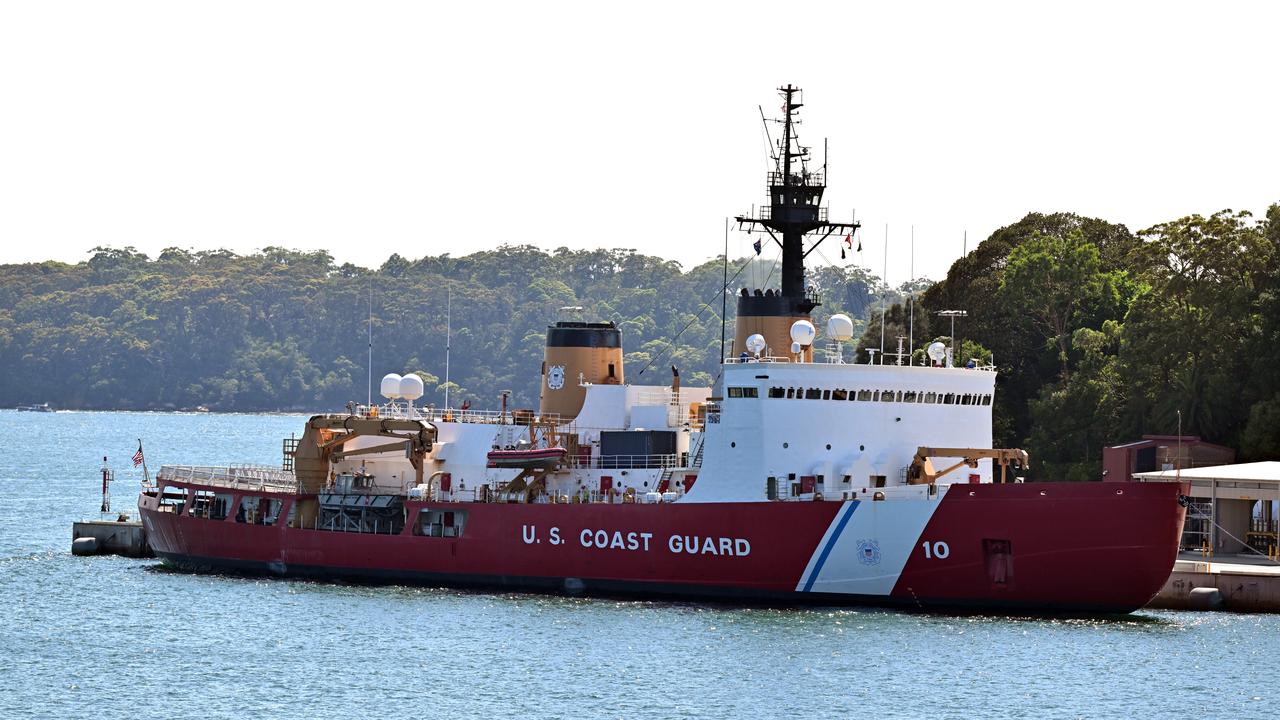
The United States Coast Guard plans to increase its Pacific Islands presence to deter illegal activity, saying it welcomes collaboration with China including in search and rescue missions.
The coast guard has launched Operation Blue Pacific, targeting drug and people smuggling along with illegal fishing while providing support to its Oceania allies.
Coast Guard Captain Jennifer Conklin on Friday provided an overview, saying the goal was to uphold American and Pacific Island sovereign rights.
The US was seeking to have a constructive relationship with China wherever possible, she said.
The US and China were both signatories to the Asia Pacific Search and Rescue Plan and their coordination centres frequently contacted each other to ensure an appropriate response, she said.
"There are areas that we do collaborate, and we welcome all legal and local actors in the region," she told reporters on Friday, speaking from Hawaii.
Asked about tensions over the South China Sea, Capt Conklin said that region was not under her purview.
Operation Blue Pacific would promote safety, security, and cooperation with allies and partners in Oceania, she said.
It will include US Coast Guard patrols to Australia, Fiji, French Polynesia, Kiribati, Marshall Islands, Micronesia, New Caledonia, Palau, Papua New Guinea, and Solomon Islands, she said.
The coast guard planned to continue increasing its Oceania presence, with the goal to disrupt illicit maritime activity like drug smuggling.
Trans-national criminal organisations were using the Pacific as a route for illicit narcotics trafficking, fuelling drug dependency in Pacific nations such as Fiji and Papua New Guinea, she said.
Search and rescue, disaster and pollution response, port safety and information sharing were other key coastguard missions in Oceania, Capt Conklin said.
A US Coast Guard cutter was set to visit Port Moresby with Australian and New Zealand counterparts aboard and for the first time a US cutter would visit Honiara to build cooperation with the Solomons, she said.
"We do consider ourselves part of the Pacific family, maybe a little bit more on the periphery," Capt Conklin said.