The United States and Iran have gone back to exchanging strikes that aimed infrastructure and military bases as the battle over Strait of Hormuz continues.
Get breaking news anytime, anywhere. Download the TOI app now!
The conflict has entered another volatile phase, with both sides exchanging sustained attacks over control of the strategic strait. The failure of an interim ceasefire has renewed uncertainty over prospects for peace, leaving no end in sight to the war initiated by the United States and Israel more than four months ago.
The latest exchange of fire that led to the collapse of a fragile truce has prompted Iranian hardliners to demand scraping negotiations with the US altogether.
In the weeks leading up to the outbreak of hostilities, hardliners intensified their criticism of the leaders who had signed the agreement with the United States.
“Mr President, if the leader’s conditions are not fulfilled, then it will be us, the blade and your throat. We will bring hell upon you,” said Mohammad Ali Bakhshi, a religious singer who is loyal to the Iranian regime, warning president Masoud Pezeshkian.
Abbas Araghchi, Iran's top diplomat who negotiated a ceasefire with the Trump administration and secured the easing of some sanctions on the Islamic Republic, was forced to flee the funeral of Ali Khamenei after protesters pelted him with rocks while chanting slogans branding him a "traitorous sellout," as cited by CNN.
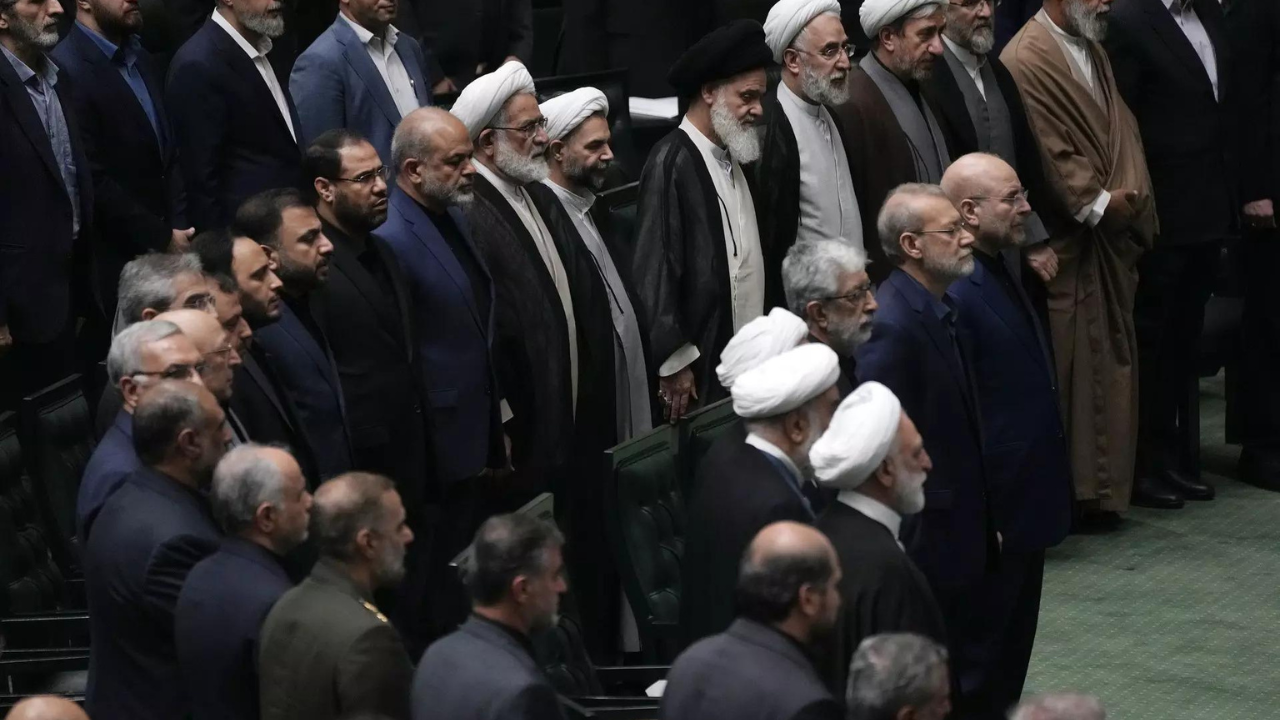
With Mojtaba Khamenei largely absent from public view, chief negotiator Mohammad Bagher Ghalibaf, Pezeshkian and foreign minister Abbas Araghchi have emerged as the most visible faces steering post-war Iran. Unable to directly challenge the new supreme leader, dissatisfied hardliners have instead accused the trio of orchestrating a coup.
Days before Khamenei's funeral, outspoken hardline lawmaker Mahmoud Nabavian took to X to warn of political upheaval, writing: “warning to the people of Iran: Is a coup on the way??”
“In these moments of farewell to the martyred Imam (Khamenei), we raise the banner of vengeance for his blood and stand firm against the coup,” he wrote days later.
Other officials facing growing scrutiny from hardliners include Iran's chief negotiator with the United States, Mohammad Bagher Ghalibaf.
A former Revolutionary Guard commander with decades of political experience, Ghalibaf emerged as one of the country's most influential figures during the war, assuming a central role in crisis management and becoming the regime's de facto lead operator with broad backing across the establishment.
In a video statement released in early July, hardline parliamentarian Kamran Ghazanfari accused the country's leadership of attempting to shift power away from traditional institutions.
“They are trying to elevate the role of the Supreme Council for National Security while diminishing the role of the supreme leader and parliament,” he said, referring to the council's growing authority over Iran's most sensitive wartime decisions. “This is the political coup they have designed and are carrying out step by step.”
On Tuesday, hardline lawmaker Mahmoud Nabavian, one of the fiercest opponents of the agreement and a leading voice warning of an alleged “coup”, was removed from the parliament's National Security Commission, along with another lawmaker critical of the deal.
Nabavian, who had previously served on Iran's negotiating team before breaking ranks and turning against the talks, sought to derail the agreement by leaking its text to the media ahead of its signing last month. He has repeatedly accused Iran's negotiators of violating the supreme leader's red lines in their negotiations with the United States.
The IRGC has also shown signs of internal divisions. While elements within Iran's intelligence and law enforcement agencies, whose powers were formally expanded under the 2023 Hijab and Chastity Bill, have backed continued enforcement, some current and former commanders have voiced concerns over the operational limits of heavy-handed crackdowns.