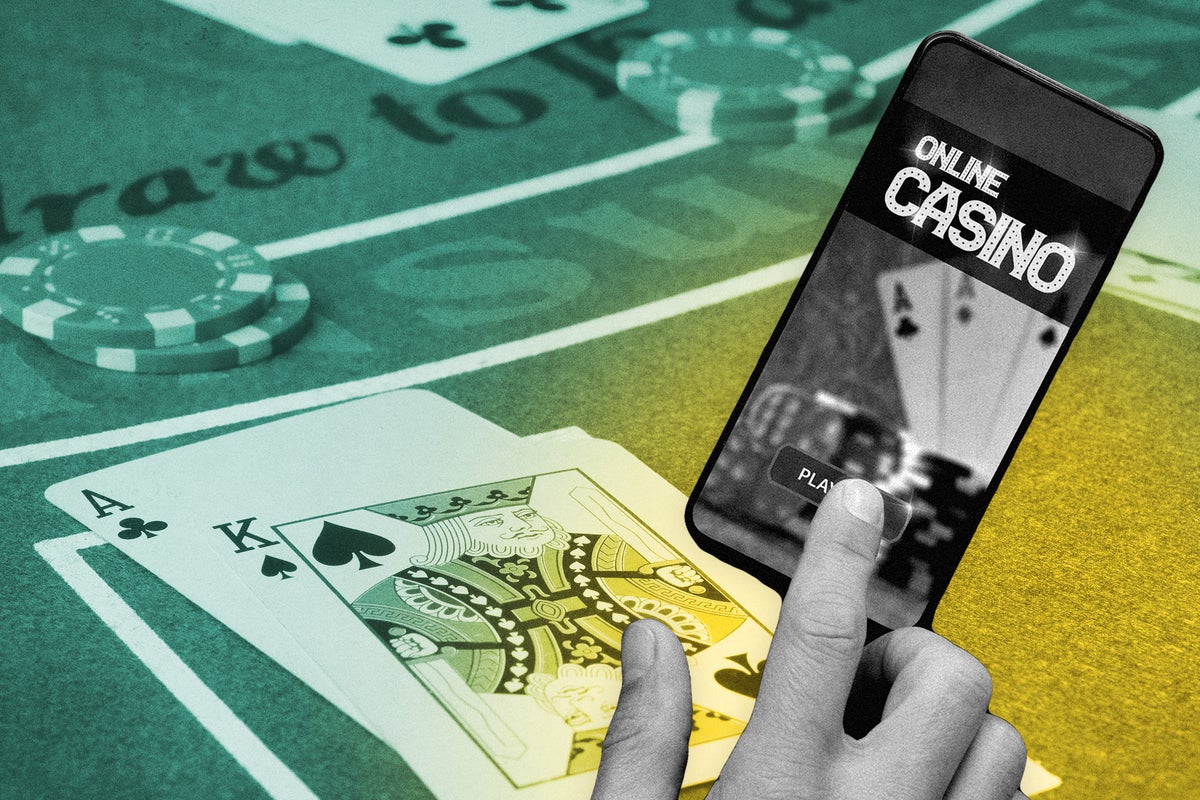
As one of the more traditional alternatives to card games such as poker, blackjack continues to be one of the most popular games at casino sites worldwide.
On the best blackjack sites, punters can choose from a huge range of standard blackjack games that are available to play online, as well as variations such as live games, Spanish 21 and European blackjack.
Part of the game’s appeal is that it is easy to learn, and though it does require both luck and strategy, it pays to learn the rules before you start playing online or in-person.
In simple terms, blackjack is a card game in which players compete against the dealer to have a hand closer to the value of 21, without going over that number.
In this guide, we will expand on that explanation, as well as detailing blackjack rules, player strategies, and tips for success when using the best casino apps.
How each hand of blackjack works
In this section, we briefly explain how every hand works, according to basic blackjack rules. You’ll find the same setup across both established operators and new casino sites for a regular game of blackjack. If using a variation the system may be different.
Initial setup
At first, players are dealt two cards face up, while the dealer receives one card face up and one face down (this is known as the hole card).
The goal is to have a hand total closer to 21 than the dealer, without exceeding 21. If you exceed 21, this is known as ‘going bust’, or ‘busting’.
Card values
Cards have different values in blackjack – some are self-explanatory, while others require learning and memorising.
Number cards (anything between 2 and 10) are worth their face value. Face cards (Jack, Queen, King) are worth 10 too.
Aces can be worth 1 or 11, depending on what benefits the hand.
Blackjack (natural 21)
A player automatically wins if they are dealt a ‘blackjack’, which as also known as a natural 21. This would consist of an Ace and a card with a value of 10.
However, you do not win if the dealer also has blackjack, in which case it’s a tie (this situation is also known as a ‘push’).
Player options
In this section, we will discuss what options each player has during their respective turns in blackjack.
Hit
A hit is when a player opts to take additional cards in order to get closer to 21. Of course, choosing to hit comes with the risk of busting if the total exceeds 21.
Stand
A player can choose to stand, meaning they keep their current hand and do not take additional cards, thereby staying on the current value.
Double down
A double down is the name given to the option to double the original bet and receive one additional card. This is a common move when the player has a hand total of 9, 10, or 11, as it is less likely that they will go bust.
Split
When a player has two cards of the same value, they can split them into two separate hands by placing an additional bet.
Once you split the cards into two hands, you’ll place your original bet with one hand and place an equal bet on the second hand. You will play the hand to your right first.
Surrender
Players also have the option to surrender, which is when a player forfeits half of their bet and ends their participation in the hand. This is typically used when the player has a weak hand against a strong dealer upcard.
Side bets in blackjack
Blackjack card game rules include side bets, which operate as optional wagers placed alongside the main blackjack game. They are usually staked at the beginning of the round, before the cards have been dealt, and they are placed alongside regular bets.
Many side bets come with fixed odds that typically offer higher payouts than the standard 2:1 reward for beating the dealer.
We have provided some detail on popular side bets below.
- Perfect pairs: This is a bet on whether the first two cards dealt to the player will form a pair.
- 21+3: This bet combines the player’s two cards and the dealer’s upcard into a three-card poker hand (such as a flush or straight).
- Insurance: A bet offered when the dealer’s upcard is an Ace, which then pays out if the dealer has blackjack.
Risk vs reward
While side bets can offer large payouts, they also carry a higher house edge and should be played with caution.
This is a strategy for a more advanced blackjack player and not someone who is still learning the rules – when starting out, it is better to simply stick to ‘normal’ blackjack in order to avoid any losses potentially piling up.
Basic blackjack strategy
Introduction to basic strategy
There are no guaranteed methods to win at blackjack. Basic blackjack strategy is based on statistical probabilities rather than anything a player can influence, and this helps players make the best decision for each hand.
Overall, the strategy is aimed at reducing the house edge and maximising the player’s odds of winning.
Strategy chart overview
Blackjack strategy charts are large charts that provide odds and probabilities based upon the value of your hand. They essentially recommend whether to hit, stand, double down, or split based on the player’s hand and the dealer’s upcard.
It is useful to memorise the different probabilities (for example, the chance of going bust) on different card values, though remember to use common sense too.
Budget control
Remember to manage your budget. Never get carried away with your success and never chase losses after a losing hand. New customers should also start with small bets before wagering larger amounts. Using casino bonus funds is a good way to avoid using your own funds when playing blackjack.
Key tips for blackjack players
Nevertheless, there are four key blackjack tips that can be easily remembered and incorporated into your game.
1. Always stand on a hard 17 or higher
2. Always hit on a hand of 8 or lower
3. Split Aces and 8s, but never split 10s or 5s
4. Double down on 11, or on 10 if the dealer has a weaker upcard (such as 9 or below)
Summary: Blackjack rules
Blackjack has become such a popular game because it is both easy to learn and play.
In some ways, the lack of concrete strategies, combined with the player’s inability to influence any events other than their own decision-making, have contributed to it becoming so widely enjoyed.
The simple goal for the player to beat the dealer by being closer to 21 makes the outcome straightforward.
Blackjack rules are arguably easier to understand than many other table games.
That said, memorising blackjack strategy charts will help you out while learning how to play blackjack to help you beat the dealer.
Make sure you have a solid understanding of the rules of blackjack before playing for real money.
Ensure you gamble responsibly when playing blackjack, and don’t hesitate to seek help if you need it.
Responsible gambling
Remember to gamble responsibly. Blackjack is only a form of entertainment, not a way to make money.
Gambling can addictive, so remember to never wager more than you can afford to lose, and take steps to remain in control of your budget.
The same apples whether you’re playing on blackjack sites, roulette sites, poker sites, betting sites or any other type of gambling medium.
Players should set limits before playing and to stick to them (whether they be limits on time, spending or both).
Setting a budget helps manage your time and spending, while also avoiding a situation in which you begin to chase your losses.
If necessary, you can make use of responsible gambling tools offered by gambling sites, such as deposit limits, loss limits, self-exclusion and time-outs.
If you want to seek help for gambling-related issues, there are several charities and healthcare providers who offer free support and information:
Blackjack rules FAQS
How do you win at blackjack?
According to the rules of blackjack, the player must try and beat the dealer by gaining a hand with a total value that is closer to 21 than the dealer’s hand. However, if the value of the hand exceeds 21, the player goes ‘bust’ and loses the hand.
What happens if both the player and dealer get 21?
If both the player and dealer get 21, this is known as a ‘push’. It is essentially a tie, as neither the player or the dealer wins the hand. Blackjack dealer rules say that if a player is dealt a perfect 21, also known as a blackjack, then they win unless the dealer has the same.
Can I split any pair of cards in blackjack?
The rules for playing blackjack state if you are dealt a pair of identically ranked initial cards, then you can split them into separate hands, but they must be a pair in order to split. Once you split the cards, you’ll place your original bet with one hand and place an equal bet on the second hand.
What is the house edge in blackjack?
House edge is the name given to the casino’s advantage over a player for a certain game. It also represents the profit that the casino expects to make on each game, and it is usually expressed as a percentage. The house edge for blackjack ranges between one per cent and two per cent.
What is insurance in blackjack?
An insurance bet is a type of side bet that can only be made when the dealer’s up-card is an Ace. This bet is essentially wagering that the dealer has a Blackjack – if they do, the insurance bet pays out at 2:1.
We may earn commission from some of the links in this article, but we never allow this to influence our content. This revenue helps to fund journalism across The Independent.