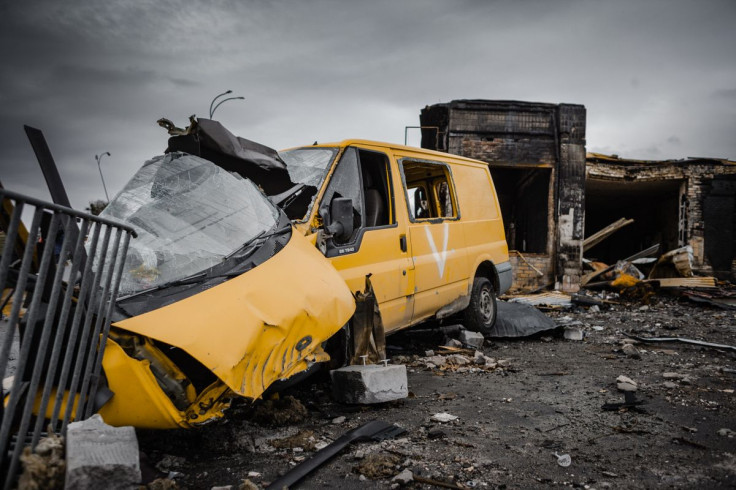
Residents across southeastern Moscow woke on Thursday, 18 June 2026, to smoke-filled skies and reports of black soot settling on cars, balconies and windows after a Ukrainian drone strike hit the Moscow Oil Refinery. Dark residue could be seen spread across residential neighbourhoods from online videos, with some residents describing the fallout as 'black rain'.
The facility, located in the Kapotnya district around 15 kilometres from the Kremlin, was among the targets during what Russian officials described as the largest drone attack on the capital since the start of the full-scale war. Moscow Mayor Sergei Sobyanin said Russian air defences intercepted at least 194 drones heading towards the city overnight. Russia's Ministry of Defence said nearly 1,000 drones were shot down across the country as part of a wider attack that stretched across several regions.
Authorities reported at least 17 people were injured, while flights were temporarily suspended at Moscow's major airports. While Kyiv has not publicly detailed all aspects of the operation, much of the attention quickly focused on the refinery fire and the layer of soot reportedly left behind across parts of the city.
Residents Report Soot and Smoke Across Moscow
Attention quickly turned to the environmental impact of the blaze after images emerged showing black residue covering vehicles, window ledges and residential buildings near the refinery.
Residents in Maryino, which borders Kapotnya, described hearing multiple explosions during the early hours of the morning before seeing thick smoke rising above the facility. Several reported a strong smell of burning fuel lingering for hours after the attack.
While some social media users described the fallout as 'black rain', Russian officials disputed suggestions that oil had fallen from the sky. Authorities said the material was soot generated by the refinery fire, although they acknowledged that smoke and particulate matter had spread across nearby districts.
Local authorities advised residents in affected areas to keep windows closed and limit time outdoors because of air quality concerns.
New footage confirms that an errant Russian surface to air missile was responsible for the tank roof toss at the Moscow Oil Refinery this morning. pic.twitter.com/H5kdsuO2pY
— OSINTtechnical (@Osinttechnical) June 18, 2026
HOLY SMOKES! Moscow right now 🔥🔥🔥 pic.twitter.com/Oxz4pLHIwQ
— Kate from Kharkiv (@BohuslavskaKate) June 18, 2026
Strike Targets Key Piece of Energy Infrastructure
The Moscow Oil Refinery is one of the capital's most important fuel-processing facilities, supplying fuel to Moscow and surrounding regions.
Energy infrastructure has become a recurring target of Ukrainian long-range drone operations as Kyiv seeks to disrupt sectors that support Russia's wartime economy. Oil and gas revenues remain a major source of state income, making refineries and fuel depots frequent targets.
Reports indicate this was the second strike against the facility within a week. Videos shared online appeared to show flames and thick black smoke rising from parts of the complex after the attack.
A Ukrainian kamikaze drone was intercepted by a Russian anti-aircraft missile when it was heading towards the Moscow oil refinery, but the falling debris caused a powerful explosion. pic.twitter.com/QV8h6UJm4B
— Visegrád 24 (@visegrad24) June 18, 2026
Russia and Ukraine Exchange Fresh Strikes
Russia said the refinery attack formed part of a large-scale Ukrainian drone operation that targeted multiple regions across the country.
Ukrainian President Volodymyr Zelensky described the operation as a response to recent Russian attacks on Ukraine, including strikes that damaged a UNESCO-listed monastery complex in Kyiv earlier this week.
Last night, our long-range sanctions once again reached the Moscow region – for the second time this week, the Moscow oil refinery was hit. Targets were also struck in the Rostov region and in temporarily occupied territories of Ukraine. This is a fully justified response to… pic.twitter.com/NhFl4FlT9L
— Volodymyr Zelenskyy / Володимир Зеленський (@ZelenskyyUa) June 18, 2026
Russia also launched another wave of attacks overnight. According to the Ukrainian Air Force, Russian forces fired seven missiles and 239 drones towards targets in the Kyiv and Poltava regions, with officials reporting damage to residential buildings, energy facilities and industrial sites.
While the military impact of the refinery strike is still being assessed, the most visible consequence for many Muscovites was immediate. By morning, attention had shifted from the drones themselves to the black residue coating cars, balconies and windows across parts of the Russian capital.