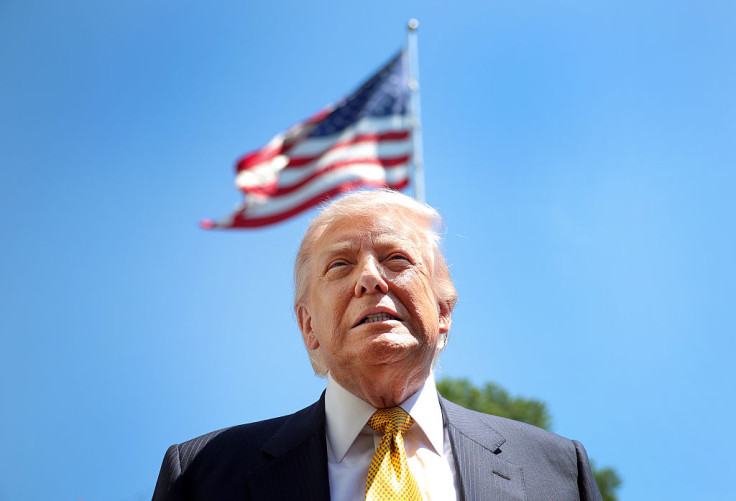
A bipartisan group of 35 retired federal judges has asked a federal court in Florida to reopen President Donald Trump's lawsuit against the IRS, arguing that the out-of-court agreement used to create the administration's $1.776 billion "Anti-Weaponization Fund" may constitute "fraud against the court."
In a filing submitted May 27, the former judges argued that Trump and the federal government failed to disclose a settlement agreement when they moved to voluntarily dismiss the case earlier this month.
The agreement, reached between Trump and the Justice Department, also led to the creation of a controversial compensation fund for individuals who claim they were targeted by political "weaponization" of government agencies.
"The Court was deceived," the former judges wrote in the 24-page filing, arguing that the settlement "commandeers the contrived sum of $1.776 billion from the United States Treasury, to be handed out to recipients chosen by a commission effectively controlled by the President."
The filing marks the latest legal challenge to the fund, which has drawn criticism from Democrats, ethics watchdogs, and some Republicans concerned about oversight and the potential for payments to Trump allies, including January 6 defendants.
Trump, his two eldest sons and the Trump Organization filed the lawsuit in January seeking up to $10 billion in damages over the leak of the president's tax returns by a former IRS contractor. Under the settlement announced by the Justice Department on May 18, Trump agreed to drop the lawsuit in exchange for a formal apology and the creation of the fund. The DOJ said Trump himself would receive no money.
The agreement also bars the IRS from pursuing certain preexisting tax claims involving Trump, his relatives or his businesses, according to an addendum released after the settlement became public.
The retired judges argued the arrangement bypassed judicial scrutiny because the plaintiffs voluntarily dismissed the lawsuit before U.S. District Judge Kathleen Williams could rule on whether the case represented a legitimate legal dispute. Williams previously questioned whether the parties were "sufficiently adverse," given that Trump was effectively suing agencies within his own administration.
The Justice Department has defended the fund as a lawful mechanism to compensate people who believe they were unfairly targeted by government investigations or prosecutions. Acting Attorney General Todd Blanche said the fund would ensure that "victims of lawfare and weaponization" could "seek redress."
Trump has also defended the initiative. "This is reimbursing people that were horribly treated," he told reporters on May 19. "They're getting reimbursed for their legal fees and the other things that they had to suffer."