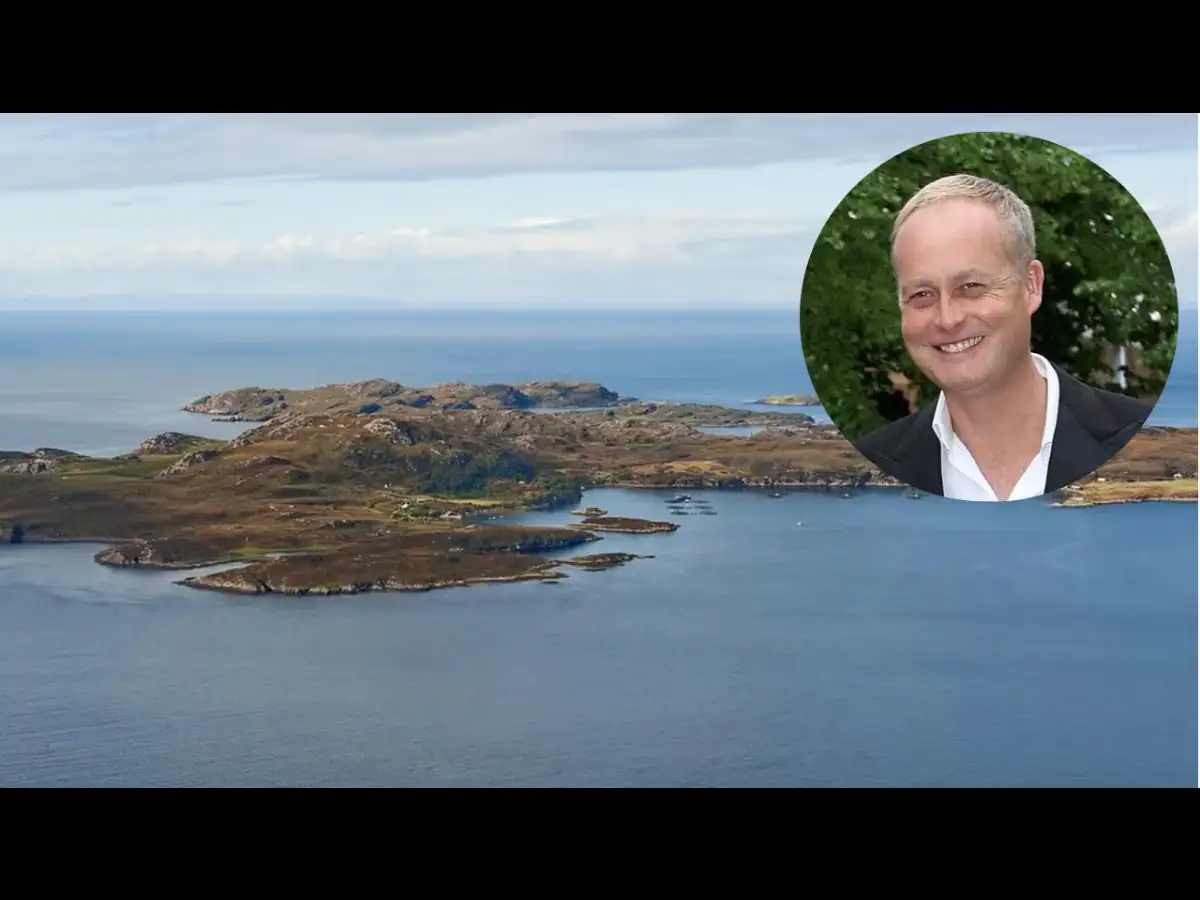
In 2017, when billionaire hedge fund manager Ian Wace bought Tanera Mòr in Scotland's remote Summer Isles, the 800-acre island was very different. Historic buildings had fallen into disrepair, the population had dwindled and large parts of the landscape had become overgrown.
Wace paid around £1.7 million, or $2.2 million at that time, for the island. But instead of transforming it into a private billionaire retreat, he took a unusual step. He embarked on a huge regeneration project that has now grown to around £100 million ($135 million).
From a thriving herring island to decline
Tanera Mòr, the largest of Scotland's Summer Isles, lies off the country's north-west coast near the Coigach peninsula. Once a hub of thriving fishing community, the island's history dates back to 1784 and at its peak, around 120 people worked there. But as the fishing industry declined, so did the island's population.
Over the years, buildings were abandoned and farmland fell into disuse. According to the Financial Times, Wace returned to Tanera and felt it was "dying". Rather than walking away, he saw an opportunity to restore the island while protecting its history and natural landscape.
More than 50 buildings restored
A major part of the Tanera Mòr regeneration project has focused on its historic buildings. More than 50 buildings have been restored, including cottages and other structures that had fallen into disrepair. The project has also created around 4.5 miles of roads, along with paths and other infrastructure.
The emphasis has been on restoring Tanera's existing character instead of replacing it with a collection of modern luxury developments.
More than 100,000 trees planted
The island's landscape has also undergone a dramatic transformation. More than 100,000 trees have been planted, while eight ponds have been restored with hundreds of native aquatic plants. The ponds provide around 1.5 million litres of freshwater habitat.
Around 28 acres of historic agricultural land have also been reclaimed, with work continuing to restore old orchards, pastures and other parts of the island.
Traditional Scottish crafts are returning
The revival also aims to preserve traditional Highland skills. Two historic herring luggers, Clan Gordon and St Vincent, were acquired and restored, with local boatyards contributing around 16,000 hours of skilled work, according to Tanera.
A restored loom now produces Tanera tweed, while workshops offer activities including sailmaking, breadmaking, art, writing, flower arranging and land management.
A community instead of a private retreat
Tanera's transformation includes shared facilities designed to create a functioning community. A former quarry has been turned into an operational centre with offices, accommodation and workshops. The island also has a pub, chapel, art studio, cinema, gym, sauna and communal cookhouse.
The island says more than 1,300 public-service workers from professions including the NHS, police and armed forces have taken part in restorative stays.
The revival reaches beyond Tanera Mòr
The project has also created employment opportunities, with Tanera saying more than 60% of its full-time workforce comes from the Scottish Highlands. In 2024, nearly 8,000 acres of mainland land were gifted to the Coigach Community Development Company, according to the Financial Times.
Since 2020, Tanera Mòr has been part of a charitable trust, with its work centred around regeneration, resilience and restoration.
What began as Ian Wace's $2.2 million purchase of a declining Scottish island has therefore become a roughly $135 million revival project — one focused not only on restoring buildings, but also on bringing back nature, heritage, jobs and community life.