Closing post
Time to wrap up…
It’s been the weakest August for Britain’s housing market since 2018, as sellers slash their prices in search of a buyer.
New data from Rightmove showed that the average price of a newly-listed home in Britain fell by 2% this month to £364,999 – that’s a much larger drop than in a typical August.
The decline means average asking prices are now 1.0% lower than a year ago. Rightmove also cut its forecast for house price growth this year to between 0% and -2%, down from a previous forecast of 2% growth.
Yet more bad news for sellers, for whom it has been a difficult year – but a boost for buyers…
Virgin Trains was granted track access by the rail regulator to run new services between London and Paris, Brussels and Amsterdam from 2030.
In a step forward for Virgin’s plans to break’s Eurostar’s passenger monopoly on the cross-Channel route, the Office of Rail and Road (ORR) said it had approved up to 20 new daily return services through the Channel tunnel.
The agreement, which covers 1 October 2030 to 31 December 2040, means Sir Richard Branson’s company has passed another important regulatory hurdle towards starting the international services.
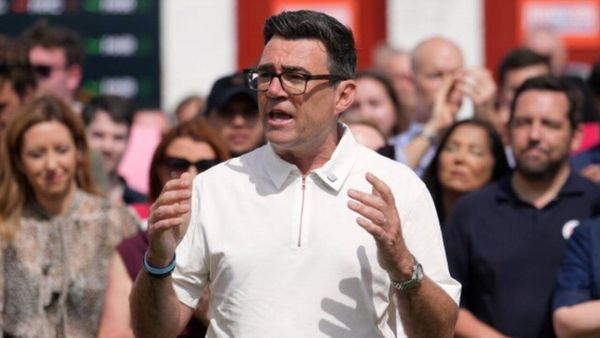
Massive Attack and Brian Eno were among 200 musicians to write to Andy Burnham urging him to reject plans for more North Sea oil and gas drilling.
The letter, signed by 211 artists such as Radiohead’s Thom Yorke and the xx singer Romy, called on the prime minister to reject the Rosebank oilfield, warning that the project would fail to lower energy bills or provide energy security.
The government’s consultation on the project, which lies about 80 miles north-west of the Shetland Islands, closed on Monday. Ministers will now decide on its future as well as that of the Jackdaw gasfield off Aberdeen, whose consultation concluded a week ago.
Jamie Dimon, the boss of the US bank JP Morgan, urged John Healey not to use his first budget as chancellor to increase taxes on banks’ bumper profits.
Dimon told Healey in a phone conversation that higher levies could hit jobs, citing a fall in finance roles in New York that he blamed on the city’s tax regime.
The call came after growing speculation that a windfall tax could be imposed on UK lenders to fund Andy Burnham’s cost of living agenda, with campaigners estimating such a move could raise £19bn.
And finally…
Government borrowing costs across several advanced economies hit their highest level since the 2008 financial crisis on Monday, amid fears the Middle East crisis will keep inflation persistently high.
Concerns over rising prices and government spending pushed up the cost of debt issued by Paris, Berlin, Washington DC, Tokyo and London, as investors fretted it would push up interest rates.
The yield, or interest rate, on 30-year French bonds rose to its highest level since September 2008 at 4.8558%, up one basis point (0.01 percentage point), LSEG data showed.
Updated
Winemakers cheer vintage year after heatwave
The spate of record breaking heatwaves this summer have roasted England and Wales, causing what is predicted to be the worst harvest in recent history, leaving farmers despondent.
But though we may face shortages of grain, potatoes and vegetables, the wineries are celebrating a vintage year.
Three Choirs Vineyards in Gloucestershire are celebrating what they describes as “excellent conditions” for their 75 acres of vines.
Winemaker Martin Fowke, said:
“It was wet early on in the year and so growth was rapid. Since early June it has been dry and hot. We are not irrigating the vines, as we don’t want to dilute the crop, although we are watering the young vines that aren’t cropping yet.
The vines are very forward and so there is scope for producing some very good wines again this year”.
16 people will be hand picking the ripe, sweet and juicy grapes during the harvest which is coming up soon.
The vineyard currently produces 250,000 bottles of wine a year. Best sellers include Classic Cuvee, Coleridge Hill, Rose and Bacchus.
US 30-year Treasury yield hits highest since 2007
US government long-term borrowing costs have also hit their highest level since the financial crisis.
The US 30-year Treasury yield has just reached 5.29%, its highest level since 2007.
Updated
Government bond yields rise as markets anticipate interest rate hikes
Government borrowing costs in France, Germany and Japan are all hitting multi-year highs today, as investors fear the Middle East crisis will keep inflation persistently high.
The yield, or interest rate, on 30-year French bonds has risen to its highest level since September 2008 – the start of the financial crisis – at 4.8558%, up one basis point (0.01 percentage point) today, Reuters reports.
France’s 10-year bond yield has hit its highest level since June 2009, up 1 bp to 4.0516%. The equivalent German bond has hit its highest yield since 2011 at 3.2138%, up 1.5bps.
The real drama is in Tokyo, though, where the 10-year Japanese government bond yield hit a three-decade high. The 10-year JGB yield rose to 2.93%, its highest level since September 1996, before dipping back slightly after Japan’s GDP report came in weaker than expected (see earlier post).
Fears that central banks will continue to tighten monetary policy, to prevent inflation bursting out of control, are pushing up bond yields – as traders seek a higher rate of return for holding government debt.
Axel Rudolph, chief technical analyst at IG, explains:
“Japan’s 10-year bond yield has surged to its highest level since 1996, as markets increasingly price in a Bank of Japan rate hike as soon as September.
The irony is that this comes despite weaker-than-expected GDP, with soft domestic demand raising questions over the strength of the recovery. Persistent yen weakness and inflation pressures are strengthening the case for action, while uncertainty over how the government will fund its proposed food tax cut adds another layer of fiscal concern.
Japan’s bond market is clearly becoming less forgiving, and the BOJ may soon have to choose between supporting a fragile economy and containing inflation.”
Last week, the US sold new 30-year bonds at the highest yield in 25 years, as Washington was forced to pay a higher rate on its debt to persuade buyers to snaffle it up [bond yields rise when bond prices fall].
Updated
Pricier gasoline pushes up Canadian inflation
Over in Canada, inflation has picked up, lifted by higher prices for motor fuel.
The Canadian Consumer Price Index (CPI) rose 3.0% year over year in July, up from a 2.8% gain in June.
Statistics Canada reports that higher prices for gasoline and travel tours in July pushed inflation higher, while food prices rose at a slower rate.
On a yearly basis, prices for gasoline jumped by over 25%, up from 20.5% in the year to June.
“The conflict in the Middle East, including the blockade of the Strait of Hormuz and the partial closure of Red Sea shipping routes in late July, put upward pressure on gasoline prices,” today’s inflation report says.
The first person to buy Ferrari’s polarising new electric supercar is reportedly an American billionaire optometrist who bid $40m (£29.5m) for the vehicle in an auction for charity.
Dr Herbert “Herbie” Wertheim, who has an estimated fortune of $4.9bn, bought the tailor-made edition of the car last week at Monterey Car Week, according to the Telegraph.
Often seen wearing a red fedora, Wertheim, 87, is a self-made billionaire who struggled at school but went on to found the optical equipment maker Brain Power Inc in 1971, and launch a philanthropic foundation six years later.
The car is only expected to sell for €550,000 (£470,000) when it is released commercially next year, so the auction price may yet provide some cheer for Ferrari’s embattled top brass, who saw shares in the company fall 8% when it was revealed to the public.
The Luce - pronounced “loo-chey”, Italian for “light” - faced widespread ridicule when it was launched in May, despite its design being led by the former Apple executive Jony Ive in collaboration with Marc Newson.
Its launch imagery drew unwelcome comparisons to the latest version of the Nissan Leaf, while Luca di Montezemolo, who led Ferrari for 23 years, said at the time: “We’re risking the destruction of a legend.”
Senior Russian banker fired after scathing speech on wartime economy
The chief economist at Russia’s second-largest bank has been fired after a series of critical comments about the state of the economy, including warnings that Moscow would not win a prolonged economic war with Ukraine.
Andrei Klepach, who had served in the role at the state-controlled development bank VEB since 2014, was fired days after Russian media reported on a scathing speech he had delivered to fellow economists in May.
In the remarks, first reported by the Moscow Times, Klepach said Russia was “falling behind” China and the US economically, and “in some respects, Ukraine”.
Klepach said pressures on Russia’s economy due to the war would inevitably lead to a “social crisis” that would erupt “when no one particularly expects it”.
More here, by our colleague Pjotr Sauer:
It’s not terribly unusual for economists attract criticism for their views, but rare for them to be fired over them.
In 2019, UBS economist Paul Donovan was briefly suspended, after commenting that a swine flu outbreak only “matters if you are a Chinese pig” or “if you like eating pork in China” – remarks wrongly interpreted to be racist.
And in January, Deutsche Bank’s George Saravelos upset Washington after writing that Donald Trump’s trade war threats could spur European investors could sell US assets.
In other energy news, French daily power prices have hit their highest since January 2025.
Bloomberg reports that day-ahead French power prices for Monday advanced to €177.34 a megawatt-hour, according to data from Epex Spot.
This is blamed on heat-related outages at France’s nuclear plants – several had to close due to rising water temperatures and falling river levels (and a swarm of jellyfish) – and cloudier conditions in Europe which curbed solar generation.
Here’s our news story on Jamie Dimon’s opposition to new bank taxes, and the backlash….
TUC: Banks should pay their fair share
The TUC has criticised JP Morgan’s CEO for his opposition to higher bank taxes (see earlier post).
TUC general secretary Paul Nowak said this morning:
“Let’s be clear. Jamie Dimon doesn’t want banks like his to pay their fair share. But while bank profits continue to soar, ordinary working people are paying more in bigger bills and higher mortgage rates.
“People are sick and tired of being told they have to tighten their belts while profits, dividends and bankers’ bonuses hit record highs. The new Chancellor has a clear opportunity to show working people he’s on their side by asking banks to pay fair taxes to cut energy bills.”
Oil and gas prices rise as Hormuz shipping activity slows again
Oil and gas prices are heading higher again this morning after reduced traffic through the Strait of Hormuz and rising concerns that a ceasefire may not be imminent in the region.
The number of ships passing through the strait ground virtually to a halt over the weekend after fresh attacks on oil tankers last week.
Data from the ship-tracking company Kpler said only five commodity vessels passed through the waterway on Saturday, while none were recorded on Sunday. That’s compared with 31 the weekend before.
Brent crude was trading at about $89.49 per barrel, up 1.1%. Gas prices were also up, with the UK’s one month ahead benchmark at 153p per therm, or 1.36% up.
Last week, president Donald Trump threatened to declare the strait of Hormuz as “a territory of the United States”, part of a pattern of escalating rhetoric that has dampened hopes of a ceasefire between the US and Iran.
Updated
Musicians urge Burnham to reject Rosebank
More than 200 musicians including Massive Attack and Brian Eno have written to Andy Burnham, urging him to reject plans for more oil and gas drilling in the North Sea.
The letter, signed by artists such as Olly Alexander and Paris Paloma, called on the prime minister to reject the Rosebank oilfield, warning the project will fail to lower energy bills or provide energy security as most of the oil is likely to be exported.
The government’s consultation on the project, which lies about 80 miles north-west of the Shetland Islands, closed on Monday. Ministers will now decide on its future as well as that of the Jackdaw gasfield off Aberdeen, whose consultation concluded a week ago.
Adura, the company behind both projects, has said the projects would result in £10.8bn in investment and support 3,500 jobs at the peak of construction, with 880 employees over its production lifetime.
Looking back at this morning’s Rightmove data – here are a few more charts showing how the UK housing market has weakened in recent months:
Updated
Pound hits three-month high as dollar weakens
Back in the markets, the pound has hit a three-month high against the weakening US dollar.
Sterling is up a third of a cent at $1.356, its highest level since 12 May.
The dollar is generally weaker today, after some disappointing US economic data last week – including a drop in retail sales last month, and a fall in consumer confidence.
That is prompting investors to lower their expectations for US interest rate increases this year.
Markets odds for a September rate hike have gone out from 50% to 30% in the last week, reports Neil Wilson of Saxo Markets.
Fears about the rising US national debt are also hitting the dollar, says Ipek Ozkardeskaya, senior analyst at Swissquote:
The longer-term outlook for the US dollar and US bonds looks bearish: investors dislike the boiling Middle East war, which is costing the US way more than it was supposed to (it was supposed to be a few-week operation), while the exploding US debt and the lack of budget discipline from the Trump government weigh on appetite for US debt, as the national debt is about to surpass the $40 trillion mark.
Virgin Trains wins track access for new Channel Tunnel routes from 2030
Transport news: Virgin Trains has been given permission to operate up to 20 new daily return services through the Channel Tunnel.
It will allow Virgin to compete with Eurostar by running services between London and Paris, Brussels or Amsterdam, from 1 October 2030 to 31 December 2040.
Martin Jones, deputy director for access & international at the Office of Rail and Road (ORR), says:
“This is an important next step in bringing competition and growth to the market for international rail services, and we welcome the progress Virgin Trains and London St Pancras High Speed have made.
While there is still more work to do, we are supporting Virgin and the wider industry to grow international services.”
Last October, Virgin was allowed to use a key depot in Leyton, east London, to help it operate services across the Channel.
AstraZeneca disappointed after halting lung cancer trial
AstraZeneca has halted a late stage lung cancer treatment trial.
The pharmaceuticals giant found that tests of experimental drug volrustomig plus chemotherapy in patients with metastatic non-small cell lung cancer were not meeting its goals of improved survival rates.
Susan Galbraith, executive vice president for Oncology Haematology R&D at AstraZeneca, explains:
“We initiated the eVOLVE-Lung02 trial aiming to improve the outcomes for patients whose lung cancers have lower PD-L1 expression and a less durable response to current immunotherapy regimens.
While we are disappointed, we will learn from this trial and are determined to continue pioneering new medicines from our industry-leading pipeline in our quest to improve outcomes for patients with lung cancer.”
Shares in AstraZeneca have risen by 1.4%, despite this setback.
FTSE 100 opens higher
After falling all of last week, the London stock market has risen in early trading this morning.
The blue-chip FTSE 100 share index is up 40 points at 107,90, a rise of almost 0.4%.
Mining stocks are leading the risers.
But could there be trouble ahead?
Axel Rudolph, chief technical analyst at investing and trading platform IG, suggests markets are starting to look a little too comfortable given the risks still lurking beneath the surface.
Rudolph explains:
The VIX volatility index falling to its lowest level since December and a 12th consecutive week of equity fund inflows suggest investors are becoming increasingly complacent, even as the Strait of Hormuz remains closed and oil prices continue to rise.
The latest retail sales and consumer sentiment figures provide another warning that the US consumer is beginning to feel the strain, while the surge in long-term Treasury yields points to a very different picture from the one implied by the recent equity rally. Three straight weeks of gains is impressive, but with volatility so low and risks still building, investors may be underestimating just how vulnerable this rally is to a fresh bout of bad news.”
The downturn in China’s property market has deepened, new data shows.
Property investment in China fell 19.2% in the first seven months from the same period last year, widening from the 18% drop in January-June, according to Reuters, citing official data.
Property sales by floor area fell by 11.8%, after falling 11.6% in the first half of the year.
New construction starts measured by floor area were down 24.0%, compared with a 23.4% slump in the first six months.
Japan's growth misses forecasts
Japan’s economy failed to meet growth forecasts in the last quarter.
Data released early this morning showed that Japanese GDP only rose by 0.3% in April-June, down from 0.5% in January-March.
On an annualised basis, GDP rose by 1.1%, barely half as fast as the 2% forecast by economists.
Deutsche Bank analysts explain:
The slowing came amid disappointing domestic activity, as business investment fell by -1.2% QoQ, while private consumption saw zero growth (vs. +0.4% exp.).
It’s another headache for Tokyo, after policymakers were forced to step in to support the yen earlier this month in a joint operation with the US.
The Nikkei stock index rose, though – gaining 506 points, or 0.75%, to 69,220 points.
Landlords drive hard bargain as housing market cools
Back in the housing market, there are signs that investors are driving a harder bargain when buying homes.
Hamptons reports that 56% of house offers from investors were at least 10% below the initial asking price in July – rising to 63% among landlords paying in cash.
David Fell, lead analyst at Hamptons, says:
“When the market slows, seasoned investors rarely stand on the sidelines for long. With homes taking longer to sell and chains proving fragile, landlords are using their liquidity and chain-free status to maximise their leverage when it comes to agreeing a price.
In a market where certainty has become more valuable, these benefits tend to be worth more than in hotter markets where sellers often have multiple options on the table.
FT: Jamie Dimon warns UK chancellor against higher bank taxes
Elsewhere this morning, the boss of JP Morgan has renewed his pressure on the UK government not to raise taxes on banks.
Jamie Dimon told chancellor John Healey that creating a more hostile tax environment for banks could cost jobs, the Financial Times reports.
They say:
The Wall Street executive told Healey in a call on Thursday that higher taxes often drive jobs elsewhere, citing a material decline in finance roles in New York that he attributed in part to the city’s tax burden, according to people briefed on the conversation.
This is the latest in a series of interventions from Dimon.
In May, Dimon threatened to scrap plans to build a new £3bn UK headquarters in London if Keir Starmer were replaced by a new Labour prime minister who is hostile to banks.
No sooner had Andy Burnham been appointed than Dimon was at it again – warning that bank taxes have “adverse consequences.”
However, pressure for higher taxes on UK banks have risen after they raked in bumper profits this year – HSBC, NatWest, Barclays and Lloyds reported earnings of £29.2bn over the first six months of the year.
"Mini Burnham bounce" in demand
Rightmove has also spotted a pick-up in the housing market since the change of prime minister.
Buyer demand is up 5% since Andy Burnham came to power on the 20th July, they report, explaining:
“The new Prime Minster has brought a general boost to optimism and has ruled out property tax changes in October’s Budget, meaning buyers have fewer reasons to wait around and see what happens.”
That could give the market a little more momentum going into autumn....
Introduction: Biggest August fall in British house prices since 2018
Good morning and welcome to our rolling coverage of business, the financial markets and the world economy.
Britain’s housing market is locked in its weakest August since 2018, as sellers slash their prices in search of a buyer.
New data from Rightmove this morning shows that the average price of a newly-listed home in Britain fell by 2% this month, to £364,999. That’s a drop of £7,360, much larger than in a typical August.
The decline means average asking prices are now 1.0% lower than a year ago, as mortgage rate rises in recent months have cooled the market.
In a further blow to sellers - but a boost to potential buyers! - Rightmove has cut its forecast for house price growth this year to between 0% and -2%, down from a previous forecast of 2% growth.
“The uncertain geopolitical picture, changing mortgage rate landscape, and new Chancellor’s first Budget in October making it difficult to predict the rest of the year,” it warns.
Today’s data also shows a widening North-South divide in the housing market over the last 12 months. Prices in the north of England are up by 1.5% compared with a year ago, while prices in the south of England are down by 1.8%.
Colleen Babcock, property expert at Rightmove, says:
“This month’s larger-than-usual August price drop is a sign that many sellers are recognising the reality of the market and pricing much more competitively from day one.
Buyers have the widest choice of homes for sale at this time of year in more than a decade, so standing out on price for the right reasons is hugely important. While no seller likes to come to market lower than they might have hoped, Rightmove analysis shows that those who price realistically are statistically proven to be giving themselves the strongest chance of finding a buyer and successfully completing a move. One tactic some sellers are using when considering lower offers on their home, is to also make a lower offer themselves on their onwards purchase, to see if they can make up the difference.”
The largest house price drop is in London, with prices down by 3.1% annually.
Wealthy areas have seen the biggest drop - the new asking price of a home in the Royal Borough of Kensington and Chelsea has dropped to £1,552,970. A month ago, the figure was £1,648,148, a difference of just over £95,000.
The agenda
-
8am BST: China investment, retail sale, house price and unemployment data
-
1.30pm BST: NY Empire State Manufacturing Index
-
3pm BST: NAHB index of US housing market