As traditional overseas destinations tighten visa policies and restrict post-study work pathways, Indian students are increasingly turning their attention toward Europe. France, in particular, is experiencing a surge in interest, as evidenced by rising enrolment numbers.
Get breaking news anytime, anywhere. Download the TOI app now!
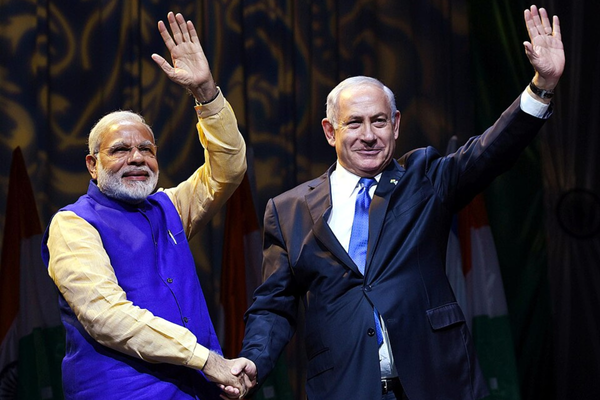
Education, research, innovation, and skills were central to Prime Minister Narendra Modi’s June 2026 visit to France. During the visit, both nations adopted the India-France Innovation Roadmap 2030—a long-term framework spanning technology, research, startups, education, and economic growth, with student exchange highlighted as a core pillar.
Further, French President Emmanuel Macron reaffirmed the French government’s goal to welcome 30,000 Indian students to France by 2030 and PM Modi invited French universities to establish campuses in India, underlining a shared ambition for deeper institutional integration.
“France’s growing appeal for Indian students begins with its own strengths: academic excellence, globally recognised degrees, access to the wider European education and employment market, and depth in fields such as engineering, artificial intelligence, aerospace, mathematics, hospitality, luxury management and international business. More than 1,500 programmes are taught entirely in English, so students can enter the French system without French language being a barrier at the outset,” Grégor Trumel, counsellor for cooperation and cultural affairs, French Embassy in India, said in an exclusive interview.
Indian student enrolment in France grew 55% over five years, reaching approximately 9,100 in 2024–25—a 17% year-on-year increase from 7,700. Counting exchange and short-term participants alongside long-term students, 12,000 Indian students held French visas or resident permits in 2025. This surge pushed India from the 13th to the 11th top source country for international students in a single year. Enrolment figures for 2025–26 will be published in September 2026 and are expected to show a rise.
There is a strong bilateral framework with Indian and French degrees benefitting from a mutual-recognition arrangement, and student mobility an explicit priority in the India-France partnership. “Indian students holding a French master’s degree can apply for a one-year APS residence permit, renewable once, to look for work or establish a company. In the current context, France is a stable choice for students, and its consistency is increasingly valued,” Trumel said.
France offers Indian graduates with a French master’s degree or higher an APS (Temporary Residence Authorization) residence permit for one year, renewable once. This proves very attractive for Indian students. “This provides up to two years in total to seek employment or create a company. During their studies, international students may also work up to 964 hours a year, roughly 20 hours a week, which helps them gain experience and build professional networks. Internships are also often part of the curriculum, as France’s higher education system values both practice and theory,” Trumel said.
To achieve its ambitious goal of hosting 30,000 Indian students by 2030, France is building a structured ecosystem of outreach, counselling, language preparation, and institutional partnerships. This network includes 10 Campus France offices in India, 15 Alliance Française centres, weekly informational webinars, the annual Choose France Tour, and an expanding alumni community. New pathways are also opening up—most notably the Classes Internationales programme launched in September 2024. This initiative offers Indian students, particularly those pursuing undergraduate studies, a dedicated foundation year combining French language training with academic methodology before they transition into degree programmes. Additionally, extending the average duration of study has become a key lever for sustaining long-term growth. At the institutional level, joint degrees, research partnerships, and a shared commitment to bilateral mobility continue to steadily expand the student pipeline. Addressing common misconceptions about studying in France, the counsellor for cooperation and cultural affairs, Trumel points out that language is rarely a true obstacle: “Language is more often a challenge raised by perception than a structural barrier. France now offers more than 1,500 programmes entirely in English, and most institutions provide French-language instruction as part of the international student experience.” Students can also begin building their language skills well before departure.
“Learning French is a worthwhile investment,” Trumel notes, emphasizing how it pays off both socially and professionally. “It makes day-to-day integration easier and materially improves internship and employment opportunities.” He adds that students won’t have to navigate this transition alone: “Indian student associations are active in major university cities—including Paris, Lyon, Toulouse, Grenoble, and Lille—while French campuses themselves are highly international. The support system is therefore much stronger than many prospective students assume.”