The pattern is not unfamiliar. Marcelo Bielsa arrives. The force of his personality, the radicalism of his ideas, his charismatic eccentricity, elevates everyone. Results are good, performances intoxicating. The football is not merely successful but comes to be regarded almost as a moral good: playing the right way for a coach who projects a profound sense of integrity.
Gradually the picture changes. Fatigue sets in. Players weary of their manager’s obsessive nature. Pundits and fans begin to wonder if everything has to be quite so relentless all the time. Bielsa’s quirks come to be regarded less with affection than with aggravation. Levels drop, Bielsa leaves.
Uruguay’s friendly against England on Friday brings Bielsa back to England four years after leaving Leeds. He was a hugely popular figure at Elland Road, inspiring promotion to the Premier League after a 16-year absence and, more than that, restoring a fanbase’s faith in football after years of miserable leadership and disillusionment.
He was admired far beyond West Yorkshire though: in a world that increasingly seemed to care for little other than revenue generation, Bielsa was a manager who understood football’s importance beyond the pitch. In his first week at the club, he had players pick up litter for an hour to try to instil an understanding of what fans in low-paid jobs were sacrificing every time they bought a ticket for a match. He had a clear sense of the role football plays in society and the responsibility footballers and coaches therefore have.
As such, he can expect a warm reception from the home crowd. Away fans, though, might be a little more reserved. It seems the Bielsa downturn has begun. A 5-1 friendly defeat to the USA last November is hard to downplay. That the Uruguayan Football Association felt the need to state publicly that Bielsa would be retained after the defeat told its own story; clearly serious thought had been given to the matter. Bielsa spoke of being “ashamed” – and it can’t have helped that the defeat was inflicted by Mauricio Pochettino, who had played for him at Newell’s Old Boys, and, if not a protege, had been influenced by his former manager.
Bielsa took the Uruguay job in May 2023. His peak probably came around six months later, as they drew away to Colombia in Baranquilla, then beat Brazil at home, beat Argentina in La Bombonera and thrashed Bolivia at home in successive games. Not only did World Cup qualification seem secure, but there was optimism about what Uruguay might achieve at the tournament this summer and, before that, the 2024 Copa América.
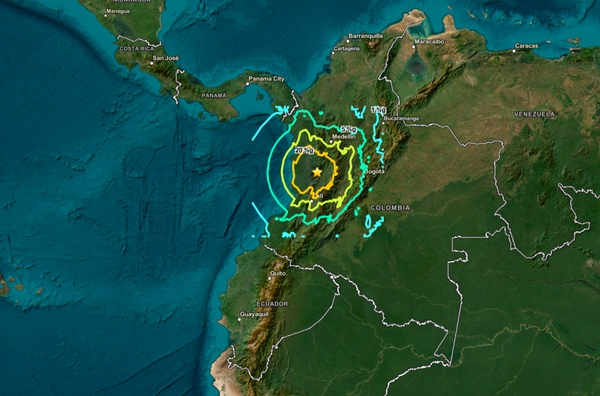
That tournament began well. They won all three group games, hammering Bolivia. They put Brazil out on penalties in the quarter-finals. But they lost 1-0 to Colombia in the semis, despite a first-half red card for Daniel Muñoz. At the end of a fractious game, a group of Uruguay players piled into the stand to, they said, protect their families. In the widespread brawling, Darwin Núñez was seen striking a Colombia fan, receiving a five-game ban. A further four players, including the defenders Ronald Araújo of Barcelona and José María Giménez of Atlético Madrid, were also suspended for their part in the clashes. The disruption hurt Bielsa’s Uruguay; nothing has been quite the same since.
Uruguay went four World Cup qualifiers in a row without scoring. They won only two of the 10 games that followed the Copa América. In September 2024 Luis Suárez retired from the international game. He was 37 with his pace deserting him so to an extent it was to be expected. What was not was the remarkable attack he then launched on Bielsa, accusing him of isolating the players and creating a culture of fear.
He described how at half-time in Uruguay’s 2-0 win in La Bombonera, Bielsa had brought Núñez to tears with the severity of his criticism. Suárez consoled him, Núñez had a much better second half, running far more than he had before the break. For Bielsa, Suárez said, that was evidence his approach had worked.
Bielsa admitted his authority had been undermined but there was a sense of drift, with qualification almost certain but a sense of unease. From the middle of last year, there had appeared to be some improvement, as Uruguay went unbeaten in three qualifiers and in three friendlies – albeit against unremarkable opposition – but the USA defeat brought the doubts rolling in again.
For all sides already qualified, this international break brings an opportunity to resolve any remaining problems but, for Uruguay, Friday’s game, and the subsequent friendly against Algeria in Turin, have the additional benefit of bringing a chance to restore confidence. The concern is that Bielsa’s intensity may not be best suited to arresting a downturn.
Núñez, whose style as a slightly wilder Fernando Llorente seems so ideally suited to Bielsa’s football, has not scored an international goal since returning from his ban, extending his dry spell to 11 games. Getting him back in form is a key requirement; he should at least be rested, the Saudi Pro League having paused two weeks ago because of the conflict in the Middle East.
Bielsa has coached at two World Cups. His highly rated Argentina were luckless in 2002 and eliminated in the group, his hyper-attacking Chile won hearts in 2010 but went out in the last 16. His third World Cup may be his last chance to really make his mark on the global tournament; it begins, though, amid uncertainty.