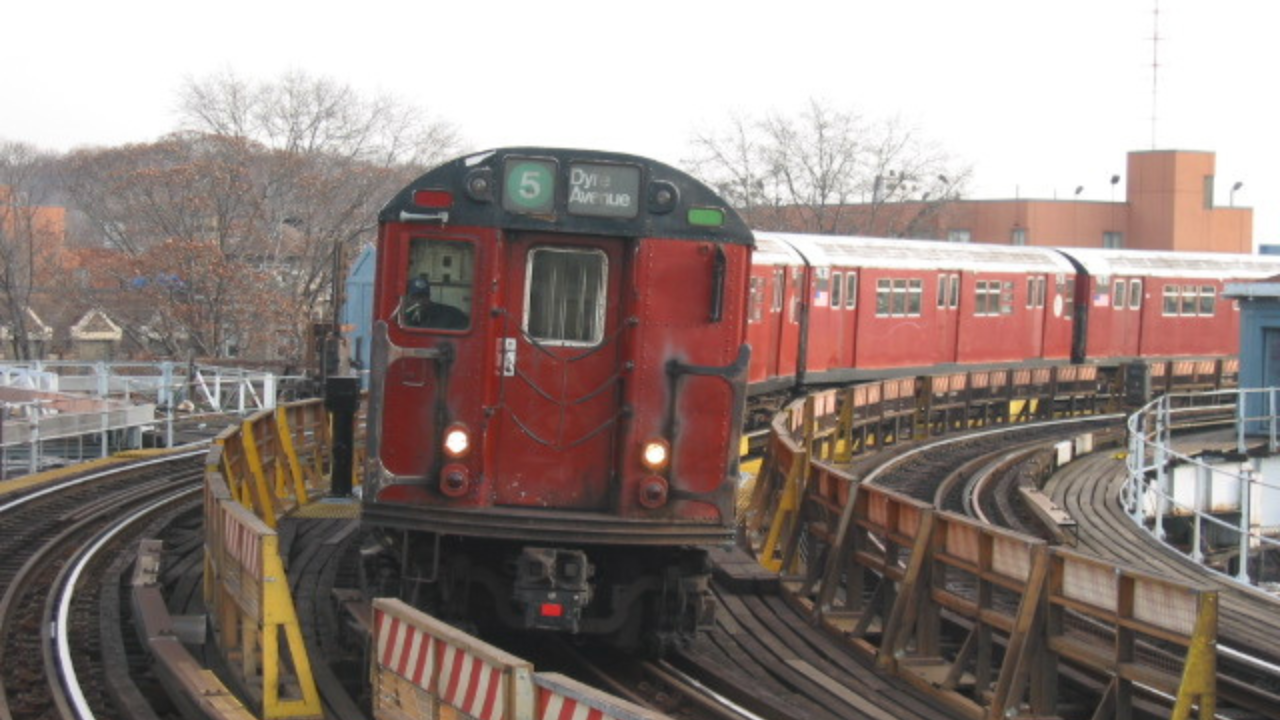
For nearly a decade, hundreds of retired New York City subway cars left rail yards not for scrapyards, but for the Atlantic Ocean. Between 2001 and 2010, Delaware deliberately sank 997 decommissioned stainless-steel subway cars several miles off its coast, placing them on the seafloor as part of the state’s artificial reef programme. The project transformed obsolete transit equipment into underwater habitat, adding structure to stretches of relatively featureless seabed where marine life could settle, feed and reproduce. Divers soon began exploring the unusual site, while recreational anglers discovered that fish were increasingly congregating around the submerged train cars. Today the location is widely known as Redbird Reef, a name borrowed from the bright red paint once carried by many of the city’s subway trains. According to the Delaware Department of Natural Resources and Environmental Control (DNREC) , the reef now contains 997 retired New York City subway cars, making them the dominant feature of one of Delaware’s largest artificial reef complexes.
Get breaking news anytime, anywhere. Download the TOI app now!
Old subway cars found a second life beneath the Atlantic
The idea behind Redbird Reef was straightforward. Much of Delaware’s offshore seabed consists of sand and sediment with relatively little hard structure for marine organisms to colonise. Artificial reefs create surfaces where barnacles, mussels, corals, sponges and algae can attach, gradually attracting larger animals that feed on them. Before deployment, each subway car underwent extensive environmental preparation, including the removal of hazardous materials and components that could pollute the ocean. The cleaned cars were then transported offshore and carefully lowered onto designated reef sites managed by the state. Over time, Delaware expanded the reef using additional materials, including retired military vehicles, barges, and eventually the decommissioned cruise ship SS United States, which was announced as a future addition in 2019. According to DNREC’s Artificial Reef Program , Redbird Reef forms part of a network of fourteen permitted artificial reef sites established to improve marine habitat while supporting recreational fishing and diving opportunities along Delaware’s coast.
Scientists tracked how the underwater railway settled onto the seafloor
The deployment of hundreds of subway cars also provided researchers with an opportunity to study how large artificial structures interact with the marine environment over time. Oceanographers monitored changes in the surrounding seabed, measuring how waves, tides and currents gradually reshaped the sediment around the submerged rail cars. Rather than remaining exactly where they landed, many cars became partially buried as sand shifted naturally across the continental shelf. A peer-reviewed study published in Continental Shelf Research found that the structures reached a relatively stable condition after several years, with the surrounding seabed adjusting to the presence of the reef through predictable patterns of erosion and sediment deposition. The research concluded that understanding these geological changes is important for designing future artificial reefs and predicting their long-term stability on the ocean floor.
Beyond providing physical shelter for fish, artificial reefs like Redbird Reef play a much broader role in coastal ecology and natural resource conservation. By supplying a stable substrate, the submerged train cars host diverse communities of encrusting organisms that form foundational food sources for migratory species across the Mid-Atlantic. Furthermore, concentrating recreational fishing and diving activity around these artificial sites relieves ecological pressure on fragile natural reefs elsewhere. As ocean temperatures shift and marine ecosystems evolve, ongoing observation of these habitats provides crucial data for future conservation projects.
An engineering project that continues to support recreation and marine habitat
More than two decades after the first subway cars were lowered into the Atlantic, Redbird Reef remains one of Delaware’s best-known conservation and fisheries projects. Although the train cars no longer carry commuters, they continue to serve a different purpose beneath the waves by providing hard surfaces that become colonised by marine organisms and create underwater structure where relatively little existed before. State officials continue expanding and maintaining Delaware’s artificial reef network, balancing habitat enhancement with recreational use for anglers and divers. According to DNREC , the programme has grown into one of the largest artificial reef systems along the U.S. Mid-Atlantic coast, demonstrating how obsolete infrastructure can be repurposed into long-lasting marine habitat instead of being discarded on land.