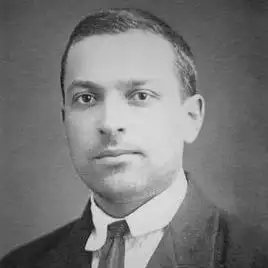
Best quote of the day by Lev Vygotsky : Learning is often imagined as a solo journey where a child gradually develops skills through repetition, practice, and personal effort. However, educational psychology suggests that learning is deeply connected to social interaction and shared experiences. From classrooms to playgrounds, children constantly learn by observing others, asking questions, and receiving guidance from teachers, parents, and peers. These early interactions play a crucial role in shaping how they think, solve problems, and build confidence. Group activities, peer mentoring, and guided instruction are widely used to help children grasp concepts that might be difficult to understand alone. Over time, this support helps learners develop independence, allowing them to perform tasks on their own after first experiencing them with assistance. This process reflects the idea that growth is not immediate but built step by step through cooperation and shared understanding.
Best Quote of the Day Today: Lev Vygotsky on Learning Through Cooperation
Russian psychologist Lev Vygotsky highlighted this social aspect of learning, as he said, " What a child can do in cooperation today, he can do alone tomorrow, ” as per a BrainyQuote report.
Lev Vygotsky's Quote Explained: Why Children Learn Better Together
Vygotsky’s quote reflects his core belief that learning is fundamentally a social process. He argued that children do not develop skills in isolation but first acquire them through interaction with others. When a child works alongside a teacher, parent, or more capable peer, they are exposed to new ways of thinking, problem-solving strategies, and methods of completing tasks. This guided experience acts as a foundation for future independent performance.
Life Lesson from Lev Vygotsky: How Guidance Builds Independence
The key idea behind the quote is progression. A task that is initially too difficult for a child to complete alone becomes manageable when support is provided. Through repetition and shared practice, the child gradually internalizes the skill. Eventually, what once required assistance becomes something they can do independently. This shift from dependence to independence is at the heart of Vygotsky’s view of learning.
How Teachers, Parents, and Peers Shape a Child's Development
The quote also highlights the importance of encouragement and scaffolding in education. Support does not create dependence; instead, it builds confidence and competence. Teachers and caregivers play a crucial role in providing the right level of help, enough to guide learning but not so much that it replaces effort. This balance allows children to stretch their abilities and grow.
From Dependence to Independence: Understanding Vygotsky's Learning Theory
Beyond classrooms, this idea applies to daily life. Many skills in adulthood are first learned through collaboration, observation, and mentorship. Whether in academics, work, or personal development, people often begin by learning with others before mastering tasks on their own. Vygotsky’s insight reminds us that independence is not the starting point of learning but its outcome.
Who Was Lev Vygotsky
Lev S. Vygotsky (November 5, 1896–June 11, 1934) was a Soviet psychologist known for his influential work on human development and learning. Born in Orsha, Russia, he studied linguistics and philosophy at the University of Moscow before turning to psychological research, as per a Britannica report.
Lev Vygotsky's Contributions to Psychology and Education
Vygotsky worked at Moscow's Institute of Psychology from 1924 to 1934, where he became one of the leading figures in post-revolutionary Soviet psychology. His research focused on how social and cultural factors shape human consciousness. He also explored the relationship between signs, language, and the development of speech, ideas that later influenced psychologists such as A.R. Luria and Jean Piaget, as per the Britannica report.
His best-known book, 'Thought and Language' (1934), was briefly suppressed because it was viewed as a threat to Stalinism.
Inspirational Psychology Quotes by Lev Vygotsky
Here are a few more quotes by Lev Vygotsky.
- "In play, a child is always above his average age, above his daily behavior; in play, it is as though he were a head taller than himself," as per BrainyQuote.
- "Somehow our society has formed a one-sided view of the human personality, and for some reason everyone understood giftedness and talent only as it applied to the intellect. But it is possible not only to be talented in one's thoughts but also to be talented in one's feelings as well," as per BrainyQuote.
- "The most significant moment in the course of intellectual development, which gives birth to the purely human forms of practical and abstract intelligence, occurs when speech and practical activity, two previously completely independent lines of development, converge," as per BrainyQuote.