LAS VEGAS _ From the High Sierra to the Las Vegas Strip, Democrats in Nevada streamed to more than 2,000 community gatherings Saturday to put their Western stamp on a 2020 presidential campaign that has stubbornly defied any semblance of order or predictability.
Vermont Sen. Bernie Sanders, who staked a commanding lead in early returns, was the favorite to win the caucuses, given his ardent following among younger votes and Latinos as well as residual support from his White House run in 2016.
Elee Oak caucused for Sanders four years ago and turned out for him again Saturday, this time in the band room at Rancho High School in Las Vegas.
"I think he can beat Trump," said the 55-year-old UNLV English professor. "It's just his history and seeing him involved in the process, ever since the '60s."
Other candidates, led by Joe Biden, were looking for the fund-raising and momentum boost that a strong showing could deliver ahead of South Carolina's Feb. 29 primary, and, beyond that, the multi-state blizzard of balloting on March 3, Super Tuesday.
For their part, Democratic Party leaders were striving simply to avoid the catalog of breakdowns that turned Iowa's caucuses, the opening contest of the campaign, into a political disaster.
The balloting in Nevada, the third state to weigh in, held out the prospect of more clearly defining the Democratic contest, which has been a multi-candidate muddle since Iowa yielded an effective tie between Sanders and Pete Buttigieg, and Sanders only barely won New Hampshire's first-in-the-nation primary.
That assumed, however, the results were delivered in a timely fashion and deemed trustworthy.
Democratic National Committee Chairman Tom Perez, who traveled to Nevada to help oversee the caucuses, would not commit to releasing complete results on Saturday. "Our North Star ... is accuracy," he told the Associated Press.
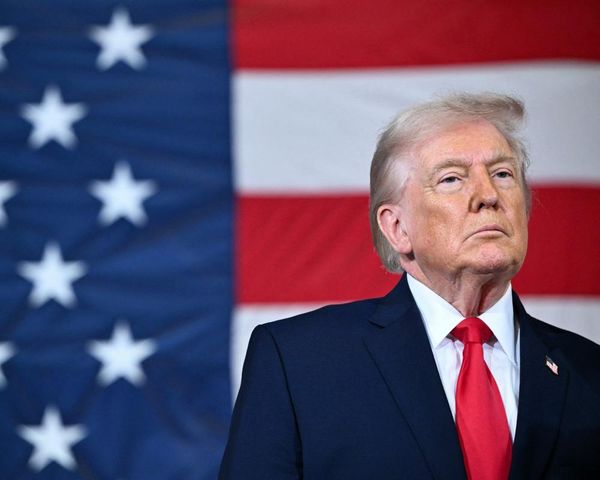
The contest here was strictly on the Democratic side; Republicans canceled their caucuses as President Donald Trump glides virtually unopposed to the GOP nomination.
Perhaps no candidate had more at stake than former Vice President Biden, whose assertions of electability suffered grave damage after poor showings in Iowa and New Hampshire. With signs that his support was rapidly ebbing, Biden was counting on a turnabout in Nevada to restore the faith of black voters, who had been his staunchest backers and are key to winning South Carolina, the next contest.
Entrance poll interviews showed Biden winning just over a third of Nevada's black vote, followed by Sanders with 28% support.
Thea Thomas voted for Biden, who was running second in early returns, without much enthusiasm but a goodly dose of pragmatism. She cited his decades in elected office, service as President Obama's vice president and foreign policy expertise. Besides, the 45-year-old computer programmer said, she had her doubts about other candidates.
"His math doesn't add up," she said of Sanders' healthcare and free-college proposals. "And neither does [Massachusetts Sen.] Elizabeth Warren's."
Several candidates were fighting alongside Biden to emerge as the more moderate alternative to Sanders, whose talk of political revolution and embrace of democratic socialism frightens many in the party, though not younger or more progressive voters.
The 78-year-old senator was winning the youth vote by crushing margins, according to entrance polls, and also led handily among Latinos and liberal voters.
Chris Winchester, a 23-year-old casino card dealer, backed the senator after his first choice, self-help guru Marianne Williamson, quit the contest earlier this year.
"I just think that power needs to be given back to the people," said Winchester, who caucused for Sanders at a senior center in East Las Vegas. "It's time for that and he stands for every single point that everyone who I feel with common sense has."
Without Sanders' loyal following and vast nationwide fund-raising base, other candidates faced a crucial test in Nevada, which differed greatly from the first two.
With large populations of black, Latino and Asian American voters, the state presented candidates with a more challenging and diverse electorate than they faced in overwhelmingly white Iowa and New Hampshire. More than three in 10 caucusgoers were people of color, according to entrance polls, with Latinos making up the largest portion at 18% of the electorate
Former South Bend, Ind., Mayor Buttiegieg, in particular, was trying to show he could broaden his appeal beyond the more affluent white voters who have been his base of support.
He was in close fight with Warren for third place.
Warren, who shares many of the same positions as Sanders, hoped to capitalize on a fiery debate performance Wednesday night in Las Vegas to bounce back from a disappointing fourth-place finish in New Hampshire. Minnesota Sen. Amy Klobuchar, who placed a surprising strong third, was also fighting to keep her momentum alive.
Billionaire Tom Steyer, who is richly funding his campaign, made his presence felt by vastly outspending rivals on Nevada's television airwaves in an effort to break through after receiving paltry support in the first two contests. He was a distance fifth in early returns.
Former New York City Mayor Michael R. Bloomberg, who bore the brunt of attacks in his debating debut, was not competing in Nevada. He has skipped the early contests and spent hundreds of millions of dollars on advertising in California and 13 other states that vote March 3.
Nevada is a relative newcomer to the opening phase of the presidential race, holding its early caucuses only since 2008. (By contrast, New Hampshire this year celebrated the 100th anniversary of its first-in-the-nation primary.)
Still, Democrats responded with enthusiasm. Nearly 75,000 cast ballots during an early-voting window that ended Tuesday, making it virtually certain the overall number will top the 84,000 who turned out in 2016. That was reassuring to party leaders anxious to see if the political energy that helped Democrats win control of the House in 2018 has stayed strong.
But that high number also presented complications.
On Saturday, the ranked-choice preference of early voters _ who could select up to five candidates _ had to be calibrated with those voting in person to determine which candidates achieved either a 15% or 25% viability threshold, depending on the precinct, making them eligible to win delegates.
The caucuses are run by volunteers, not professional staff or government employees, and organizers were bracing for several frantic hours aimed at avoiding the mishaps that left Iowa's results inconclusive after nearly three weeks. Nevada quickly abandoned the software that had been used in Iowa and instituted other precautions aimed at avoiding a similar fiasco.
(The balloting Saturday was part of an attenuated process that will ultimately result in the awarding of 36 pledged delegates to this summer's Democratic nominating convention.)
Despite its early place on the calendar, Nevada has been something of an afterthought for much of the campaign, drawing the full measure of candidates' attention only after Iowa and New Hampshire cast their ballots.
Some Democratic leaders waited until those results came in before choosing whom to endorse, or deciding not to endorse at all. Among those who stayed neutral were Gov. Steve Sisolak and Harry Reid, the former Senate Majority leader and architect of the early caucuses.
Perhaps most consequentially, the Culinary Workers Union _ which is 60,000 members strong and a powerhouse in state politics _ remained neutral. The union's leadership did, however, make known its opposition to Medicare for all, one of Sanders' signature proposals and a plan embraced by Warren, fearing its implementation would take away the gold-plated healthcare benefits the union spent years negotiating and securing for its members.
Sanders fought back by insisting his plan would not take away workers' coverage but rather make healthcare better and cheaper for all.
He was winning among union households, according to entrance polls, with the support of nearly 4 in 10 caucus goers.