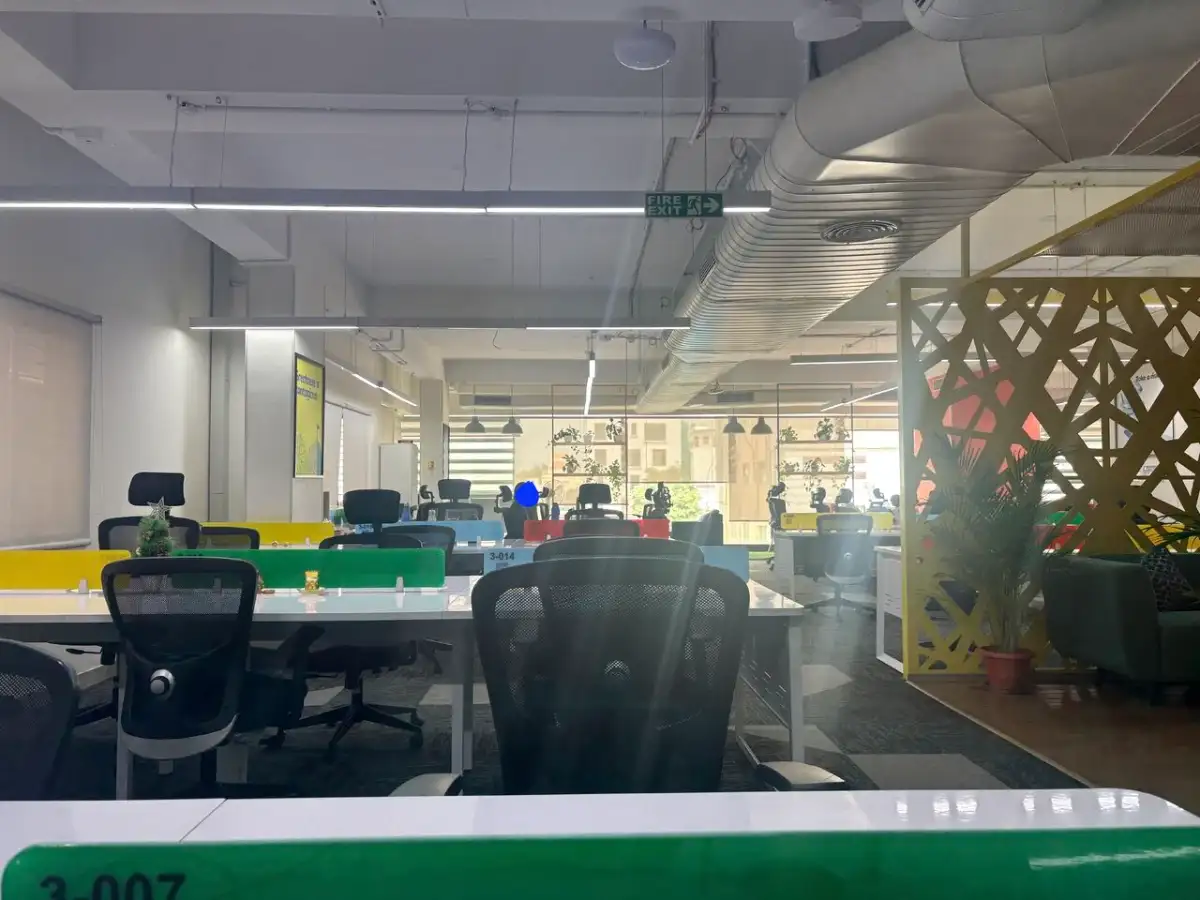
A Bengaluru-based startup founder has raised concerns over the city's traffic after finding his office nearly empty at around 10am, saying long and exhausting commutes are leaving employees drained before their workday even begins.
Bala Panneerselvam, founder of Applied AI Studio and the Applied AI Club community, shared a picture of his office on LinkedIn showing several vacant desks. He said the issue was not employees' willingness to work, but the time and energy required to reach the workplace.
‘How do we expect to do good work if we don't show up?’
Sharing the photograph, Panneerselvam wrote on LinkedIn, "How a Bangalore office looks at 10:15 in the morning. How do we expect to do good work if we don't show up?"
He argued that the underlying problem was the effort involved in commuting rather than the employees themselves.
According to Panneerselvam, travelling a four-kilometre stretch around HSR takes about 20 minutes by scooter and 30 minutes by car. During peak hours, another 10 minutes can be added. He said navigating traffic, including two-wheelers jumping signals, leaves people exhausted by the time they reach work.
He also said the return journey creates another problem. Leaving after 6pm can take twice as long to reach home, while even those who leave at 5pm may arrive too tired to spend time on their personal lives. He linked this exhaustion to employees arriving late the following day.
Panneerselvam said his own journey from Whitefield to HSR, a distance of 17 km, took two hours at 4pm the previous day despite it being a non-peak period and there being no delays caused by rain or other factors.
Founder calls for better public transport and cycle lanes
Panneerselvam said the city's traffic problems were affecting productivity and the ability of people to think and work effectively.
"We're absolutely destroying our ability to do good work in this city. If you're so overwhelmed with noise all around you, how do you spend time thinking?" he wrote.
He suggested reducing the number of cars on the roads, improving public transport and creating cycle lanes. According to him, densely populated cities elsewhere have managed to address similar problems, so Bengaluru should not treat the situation as beyond repair.
He also proposed dedicated cycle-only lanes through the city's narrow streets. He argued that cabs, trucks and buses should not be allowed on already congested roads where adequate infrastructure has not been developed.
Panneerselvam acknowledged that a significant part of Bengaluru's economy and political base depends on cars and autorickshaws, making such changes difficult to implement.
Users suggest decentralising Bengaluru offices
The post prompted discussion among LinkedIn users, with several people suggesting ways to reduce the burden of commuting.
One user proposed creating smaller co-working offices across north, east, south and central Bengaluru so employees could travel shorter distances while still maintaining face-to-face interaction. The user suggested startup founders should consider such models.
Another commenter attributed productivity losses to infrastructure problems and extreme weather, arguing that India's growth is being supported by people's resilience and improving foreign perceptions despite weak foundations.
A third user said Bengaluru's traffic problems had become normalised and warned that rapid urbanisation without supporting infrastructure could eventually overwhelm the city. The commenter also suggested that the absence of strong Tier 2 cities in Karnataka had contributed to the pressure on Bengaluru.
Commuting experiences fuel wider debate
Other users shared personal experiences of losing significant amounts of time to traffic.
One commenter recalled travelling to an event in Whitefield and spending three hours commuting on a Friday, leaving little energy to reflect on the event or continue with other activities afterward.
Another user argued that office timings themselves should also be examined. They said companies should consider whether employees can actually leave by 4.30pm or 5pm before expecting them to start at 9am. According to the commenter, business requirements and overlaps with Western geographies often prevent employees from adopting such schedules.
A separate suggestion was to establish corporate centres in Tier 2 cities such as Kochi, Coimbatore, Hosur and Mysuru, with the argument that this could encourage reverse migration from Bengaluru.
Another user compared Mumbai and Melbourne, saying an average 10-km commute in Mumbai took about 50 minutes, while 15 km could be covered in around 23 minutes by public transport in Melbourne. The commenter also praised Melbourne's public transport for being well-maintained, convenient and generally punctual.
One commenter, however, argued that companies should focus on solutions such as flexible working hours and hybrid models instead of blaming traffic, saying management should adapt when commuting begins to affect productivity.