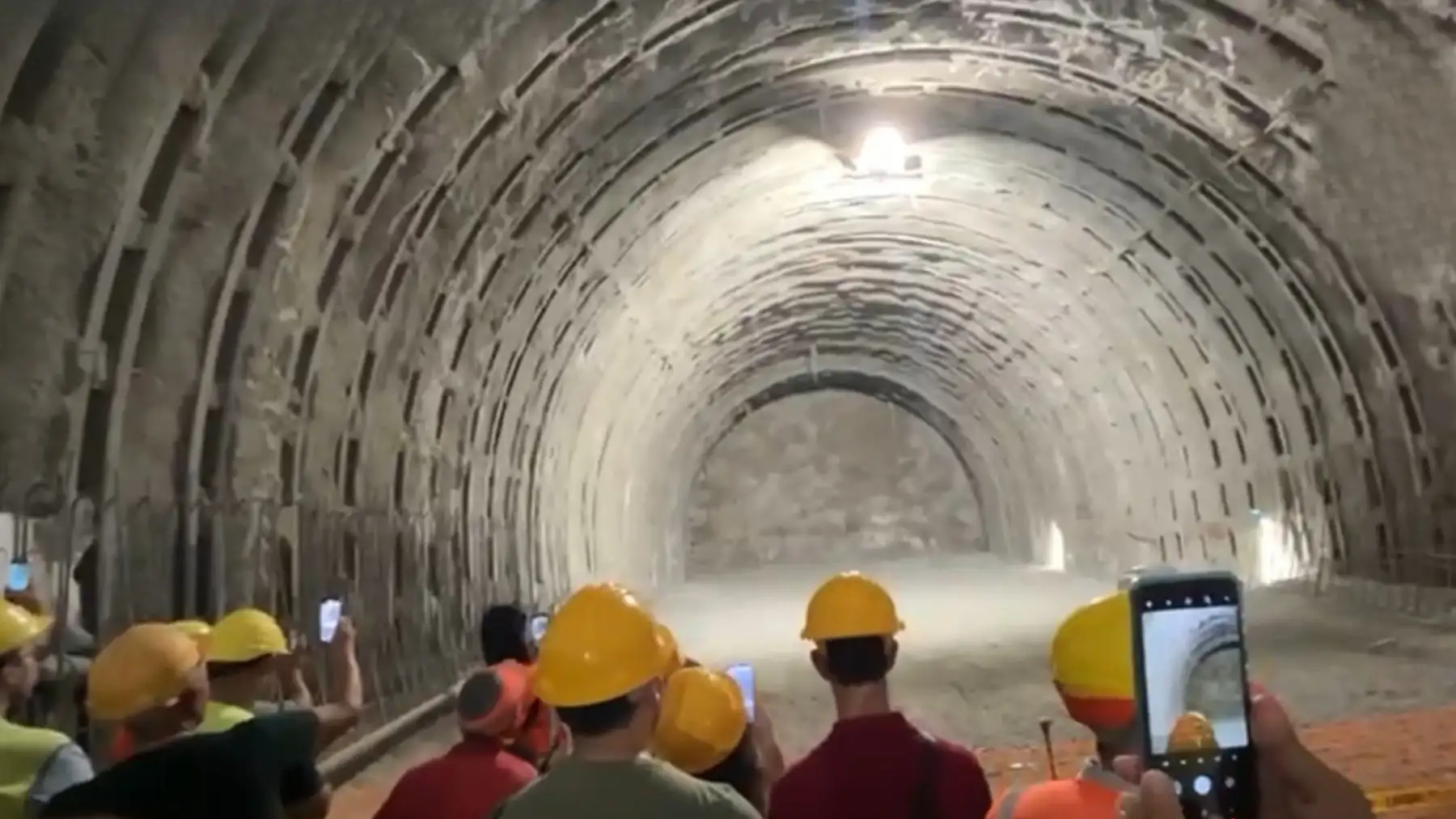
A train disappears beneath the Swiss Alps, and millions of passengers barely notice the hidden world around them. Switzerland’s underground country is a massive engineering network built beneath mountains, with more than 1,400 tunnels stretching across the nation. This hidden infrastructure is changing how Europe moves while reducing pressure on fragile Alpine landscapes.
The Switzerland underground tunnels project is not just about faster travel. It represents a long-term climate strategy created through engineering, policy, and environmental planning. Beneath the Alps, more than 2,000 kilometers of tunnels and galleries connect railways, roads, water systems, and energy routes.
For travelers, a dark railway section may feel ordinary. However, behind those silent walls lies one of Europe’s biggest infrastructure transformations. The country has spent decades carving through rock to create a cleaner transport system and protect mountain ecosystems.
The most powerful example is the New Rail Link through the Alps (NRLA), which includes the Gotthard Base Tunnel, Lötschberg Base Tunnel, and Ceneri Base Tunnel. Together, these routes created a flatter rail corridor beneath the mountains.
How Switzerland underground tunnels became a climate solution beneath the Alps
The story of Switzerland underground tunnels began with a major environmental concern. Alpine valleys were becoming crowded with heavy trucks carrying goods across Europe. Diesel emissions, traffic noise, and road accidents affected communities living near major transit routes.
In response, Swiss voters supported the Alpine Initiative in the 1990s. The policy pushed long-distance freight transport away from roads and toward railways. Engineers then created tunnels that could handle heavier trains with fewer obstacles. The Gotthard Base Tunnel became the centrepiece of this transformation. Opened in 2016, it stretches around 57 kilometers beneath the Alps and remains the world’s longest railway tunnel.
The Switzerland underground tunnels system changed freight economics. A flatter route means trains use less energy because they avoid steep climbs. This allows longer freight trains to carry more goods efficiently across Europe.
Rail transport produces significantly lower emissions per tonne-kilometer compared with heavy trucks. Switzerland’s approach shows that climate action is not always about reducing movement. Sometimes, it is about redesigning the way movement happens. Today, rail carries around three-quarters of cross-Alpine freight in Switzerland.
What happens inside Switzerland’s hidden underground infrastructure?
The Switzerland underground tunnels network is far larger than passenger rail lines. Thousands of underground passages support highways, hydropower systems, water management, and emergency routes. Building this hidden world required enormous resources. The Gotthard Base Tunnel alone involved removing millions of tons of rock and using large amounts of construction material.
The environmental challenge was unavoidable. Digging through mountains changes landscapes and consumes energy. Swiss planners focused on reducing damage during construction through strict monitoring and restoration programs.
The Switzerland underground tunnels network also provides safety advantages as climate risks increase. Alpine regions face stronger rainfall events, landslides, and changing weather patterns. Protected routes can keep transportation running when surface roads become dangerous.
The tunnels are also a reminder that climate adaptation requires patience. Many of these projects took decades from planning to completion. Their impact became visible slowly, but their influence continues to grow.
Can Switzerland’s underground country inspire the world?
Switzerland underground tunnels offer a powerful example of how nations can rethink transportation. The country did not build tunnels simply for speed. It built them to solve a larger environmental and economic challenge.
Other countries facing congestion and pollution can learn from this model. However, tunnels alone cannot create a cleaner future. They work best when combined with strong public transport, smart pricing policies, and environmental regulations.
The Swiss experience proves that infrastructure decisions shape daily life. A passenger sitting quietly on a train may only see darkness outside the window, but beneath the mountains is a decades-long effort to balance mobility and nature.
The underground country beneath Switzerland shows how engineering can become a climate tool. It is not a perfect solution, but it demonstrates what happens when technology, public support, and environmental goals move together.
The next time a train disappears into the Alps, that silent moment represents much more than a shortcut through rock. It represents a nation’s attempt to build a future beneath its own feet.
FAQs:
Where is Switzerland’s underground tunnel network located?It runs beneath the Swiss Alps, connecting northern and southern Switzerland and linking major European transport routes.
What is the most famous tunnel in the network?
The Gotthard Base Tunnel, the world's longest railway tunnel at 57 kilometers.
How many tunnels are part of the network?
Switzerland has more than 1,400 tunnels with a combined length exceeding 2,000 kilometers.
Why was the tunnel system built?
To move freight from roads to rail, reduce pollution, ease traffic, and protect Alpine landscapes.
Why is Switzerland’s hidden tunnel network considered a second country beneath the Alps?
Switzerland’s underground country stretches across thousands of kilometers of tunnels, galleries, and transport routes beneath the mountains. This hidden infrastructure connects rail, roads, energy systems, and water networks while quietly supporting daily life and cleaner mobility across Europe.