
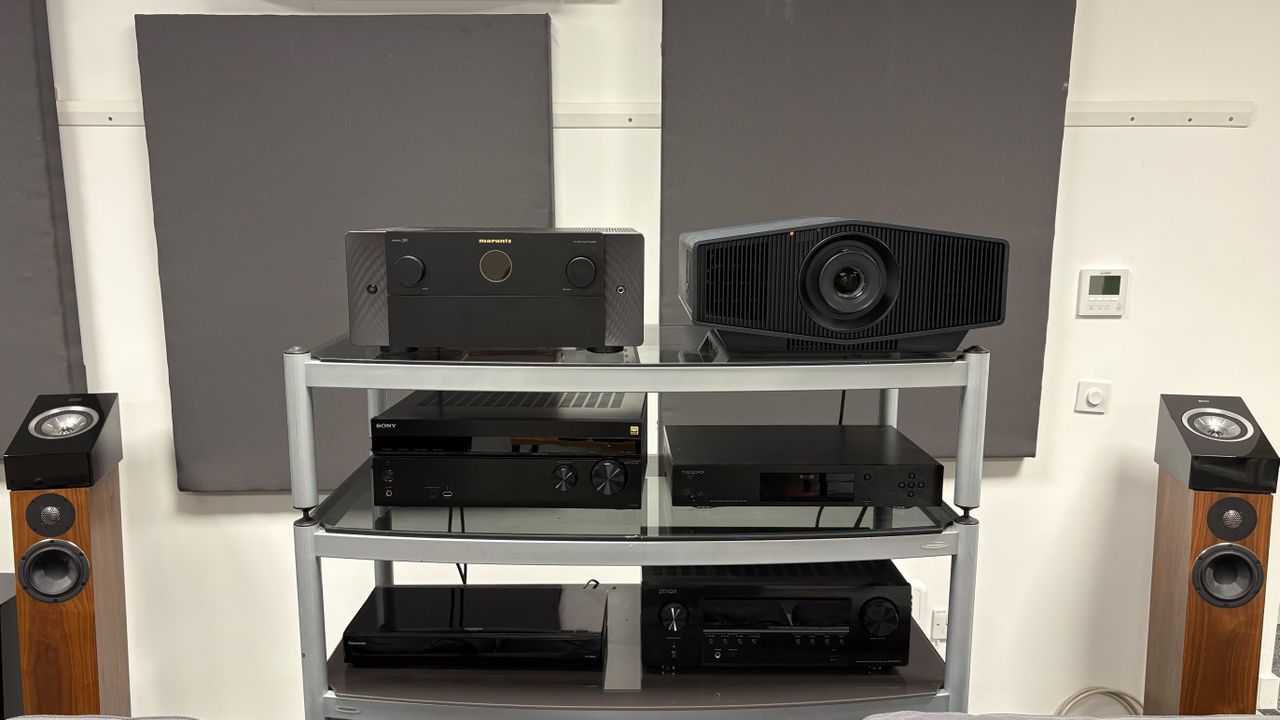
Our home cinema testing room is an integral part of our review process.
Every TV, projector, speaker package, soundbar, AVR and streamer that we review is tested in this room, which ensures crucial consistency across all of our reviews.
In the spirit of Home Cinema Week, we're giving you a glimpse into this space, sharing the reference products that we use on a daily basis, and even sharing a few of our favourite 4K Blu-rays to test with.
We initially shared a look into this room last year, and in truth very little has changed. We're auditioning a few speaker packages in hopes of finding a more up-to-date reference system, and we have just reviewed the Denon AVC-A1H, which could well replace our beloved Marantz Cinema 30.
Behind the Scenes in the What Hi-Fi? AV Testing Room
A photo posted by on
Before we dig any further into the reference system, we'll get some of the specifications of the room out of the way.
Our home cinema room measures 2.3 x 6.0 x 5.0m (hwd), meaning it is suitably sized to house a full 7.2.4 surround-sound speaker set-up, with plenty of room for an AV rack which houses our amplifiers and projectors.
There is also room for two 65-inch TVs to sit side by side, a 96-inch projector screen, and we couldn't forget about our trusty sofa.
We also have adjustable acoustic panels affixed to the walls and bass traps in the corners of the room to ensure that interference from the room itself is minimised for our audio-focused reviews.
Last (but by no means least), we have Chord Company cables throughout the room to power our surround-sound speaker package.
Now onto the fun part, our reference home cinema set-up...
Two 4K reference displays from Sony
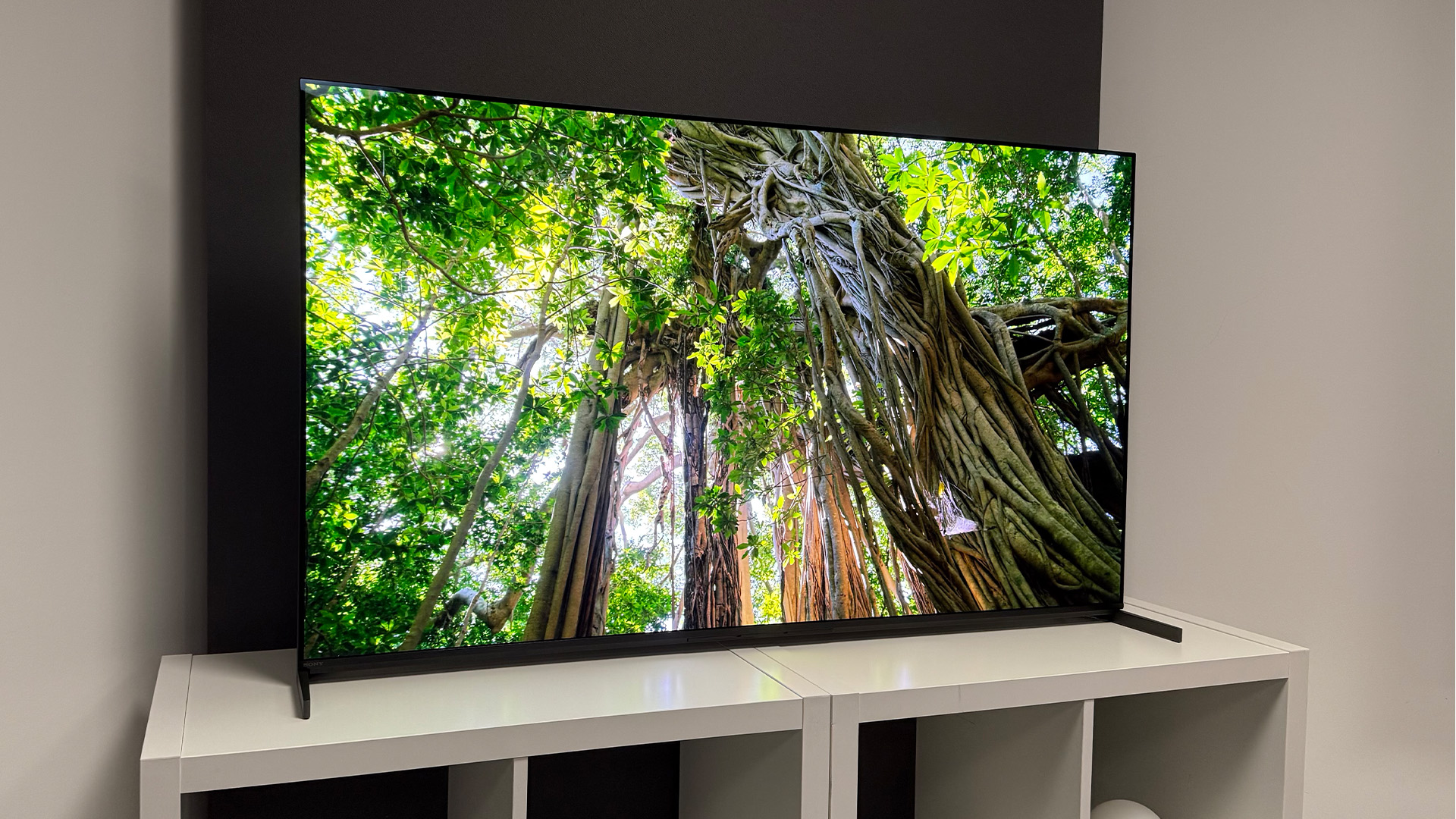
It's imperative that we always have a 4K reference display on hand, so we've got two, just to be safe.
One is an Award-winning OLED TV, the other is an Award-winning 4K home cinema projector, both of which are made by Sony.
We'll start with the Bravia 8 II, a TV that launched last year and yet it continues to blow us away every time we switch it on.
This QD-OLED set beat the LG C5 and G5, Samsung S95F, Panasonic Z95B, and Philips OLED910 during last year's Awards shootout, and it continues to set the benchmark for flagship OLED TVs.
Sony has opted to keep the TV in its lineup, with no direct replacement for 2026; however, we take no issue with this as it's a damn good TV.
It sports a 144Hz panel with Dolby Vision support, as well as Sony's excellent picture processing, which puts it at the top of our list and makes it a reference product to pit other TVs against.
We've used it to test a handful of streaming devices, soundbars and other TVs recently, and it's already proving to be a fine addition to our system.
When we're not using a TV for testing, we have our Sony VPL-XW5000ES 4K projector, which comes into play for AVR and surround-sound speaker system reviews.
It's a serial Award-winner, and while it's not the flagship model in Sony's range, we find it to be the sweet spot in the lineup. We reviewed it at £5999 / $5998 / AU$9990, which puts it in the premium sector, but not out of reach entirely for those who want to get serious about home cinema.
While it's not a budget projector by any means, it sits well below the flagship Bravia Projector 9, which costs £27,599 / $31,999, and it still provides a crisp, detailed image with excellent black levels.
A duo of Award-winning AV amplifiers (and a couple more for good measure)
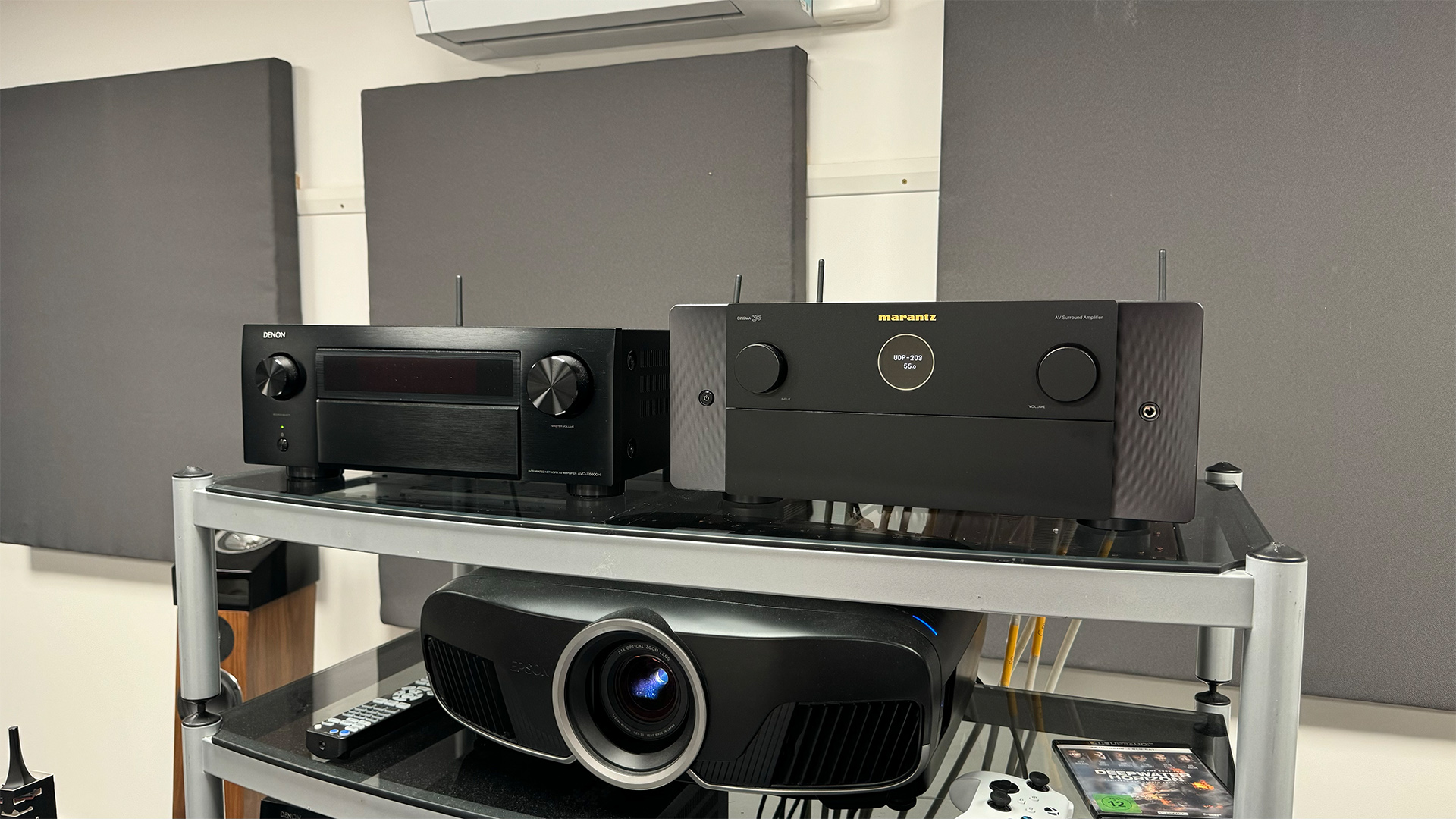
If there is one thing we have an abundance of in our AV testing facility, it's AV amplifiers. On average, there are four set-ups at all times, each occupying a specific price point or feature set.
Starting with the headliner, and our overall pick for the best AV receiver, we have the Marantz Cinema 30. With its superb specification, rich and powerful sound and stylish chassis, the Cinema 30 is an all-around stunner.
It's pricey, £4000 / $4500 / AU$7900 to be exact, but there are more costly AV amplifiers in our testing room.
The JBL Synthesis SDR38, for example, is our high-end pick that we have set up for premium AVR comparisons, and that amp comes in at a cool £7300 / $8550 / AU$16,999.
The Marantz remains our preferred method, as it boasts 11 channels of amplification, which means it can support a full 7.4.4 channel speaker system, perfect for us.
Not all great AVRs are wildly expensive, however, as we also have the Sony TA-AN1000 and Denon AVR-X2800H on hand for comparison to more affordable AVRs.
These are two brilliant home cinema amplifiers in their own right, and we often find ourselves switching over to the Product of the Year-winning TA-AN1000.
It's important to test surround-sound packages with a couple of amplifiers, as pairing your speakers to your amp is just as important in the world of home cinema as it is in the realm of hi-fi.
Some may say four AVRs are too many, but we think we could squeeze another one on our rack.
A surround-sound system that's stood the test of time
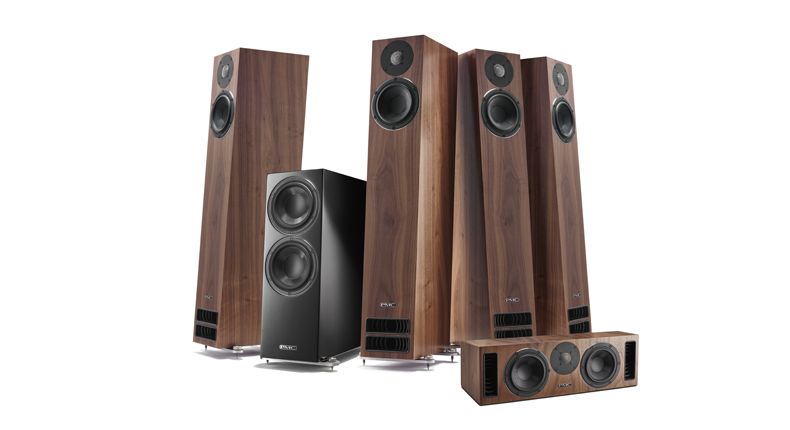
While our TV and amplifiers are on the newer side of things, our speaker system is a well-established favourite.
The PMC Twenty5.23 system, which we reviewed all the way back in 2017, has remained our reference speaker system ever since.
We admit that it's probably time for an upgrade, and we've seen our fair share of five-star surround-sound systems, but none are as revealing and insightful as the PMC set.
This really is the full package, as these speakers sound fantastic and can easily identify weaknesses in any source that we plug them into.
AVR lacking in dynamics? Streamer dropping the ball when it comes to detail? There's no hiding from the PMCs.
We've added KEF's R50 Dolby Atmos toppers into the mix too, and we're using two of PMC's Twenty5.sub subwoofers for a full 7.2.4 system, which sounds glorious in tandem with the aforementioned Marantz Cinema 30.
A beloved Blu-ray player (that you can no longer buy)
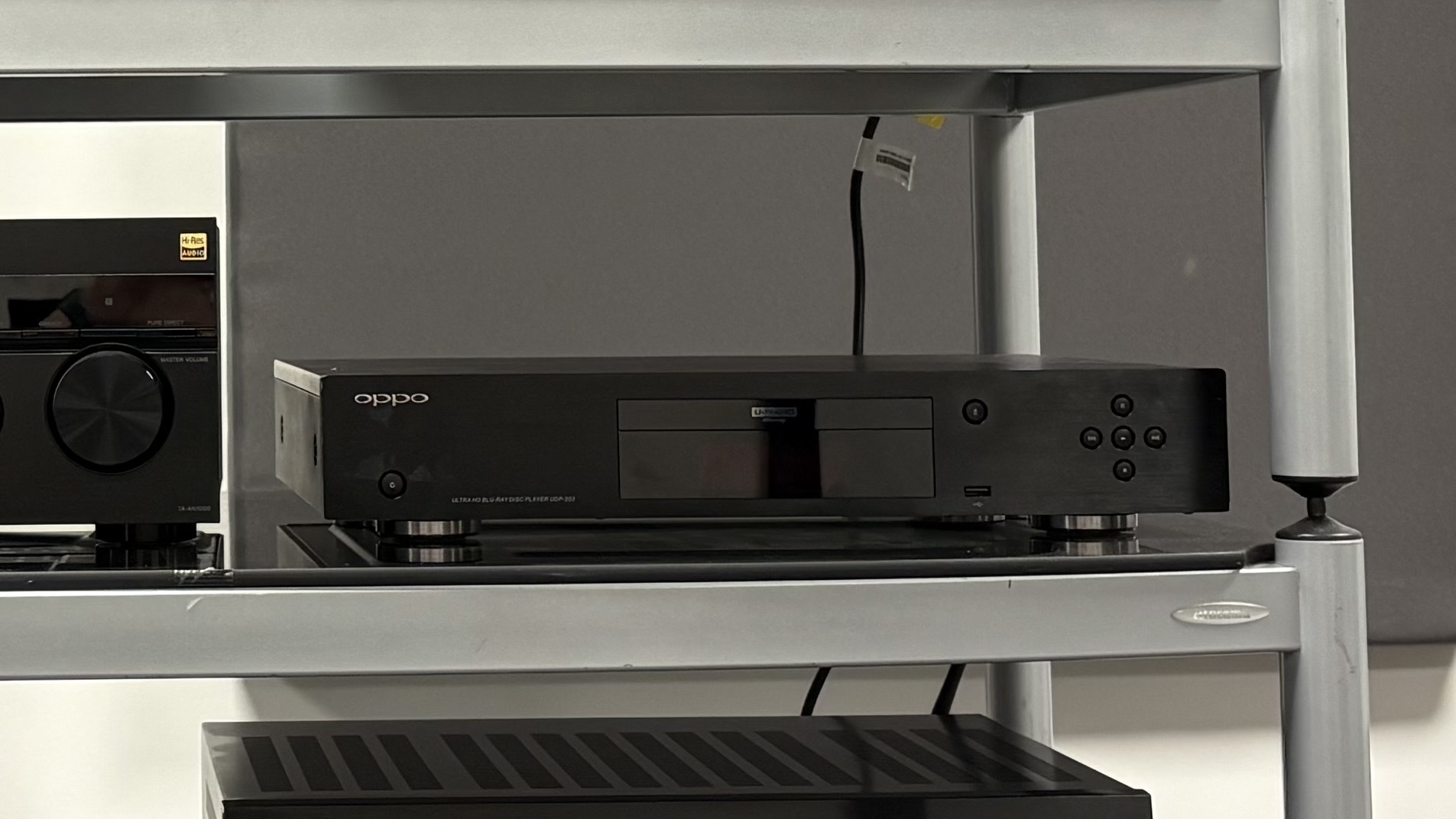
Last, but by absolutely no means least, is our trusty Blu-ray player. We're using the Oppo UDP 203 4K Blu-ray player, a legend in the world of home cinema that's unfortunately no longer on the market.
Its performance remains top notch, and while the likes of Magnetar and Panasonic have premium players on the market, the Oppo remains a popular choice for home cinema purists who don't mind hunting one down on the second-hand market.
We do have a more mainstream player in the form of the Panasonic DP-UB820EB, which is still widely available and a lot cheaper.
You may have seen references to our favourite 4K reference discs in our reviews, but in case you haven't, then these are some of our favourites:
- Blade Runner 2049 (2017)
- Top Gun: Maverick (2022)
- Dune: Part Two (2024)
- Civil War (2024)
- Oppenheimer (2023)
- The Batman (2022)
- Pan (2015)
- Alien Romulus (2024)
- No Time To Die (2021)
- F1: The Movie (2025)
- Thunderbolts* (2025)
And that brings our tour of the What Hi-fi? AV testing facility to a close. We're eagerly awaiting whatever our next addition to this set-up will be.
Stay tuned, as any new products that enter our reference set-up will get a shout-out, and we have plenty of home cinema reviews coming up throughout this week.
MORE:
Check out our picks for the best projectors
As well as the best OLED TVs
And these are the best movie scenes to test your home cinema setup