Customer experience has been the buzz phrase of recent times, especially in the area of experiential marketing: the discipline that provides consumers with a close and personal experience of a brand.
The revolution in digital technology has had a significant impact on the face-to-face marketing opportunities available to brands. Experiential has always been quick to seize on the possibilities of tech to deepen consumer interactions; it’s a sphere where novelty finds a home and where consumer attention needs to be hooked instantly and retained.
With that in mind, what will we see over the next 12 months in terms of experiential marketing’s adoption of technology?
Big Data
Big data will grow in importance in experiential, a sector that has been accused of lacking measurability in the past but is now awash with data. RFID wristbands can be used to track activity of participants at events, and was a successful element of the fan experience at the Ryder Cup at Gleneagles.
Wristbands might also be used more actively to manage an experience. Having visited one part of an event, a message could be sent to an individual’s smartphone or laptop to move them on to another area where another element of the brand message is emphasised.
Spatial tracking technology can also be useful for understanding hot spots at events to clearly show where people are engaging most. This in turn can inform future initiatives such as stand design and location. Measurability is an important element of such tracking opportunities. As brands invest more in event and experiential activity, it has to be based on more than a hunch.
Beacons
If 2014 has been the year of trialling beacon technology, then 2015 will see their use become more focused. Rolls-Royce showed how beacons could be used to help create a multi-sensory experience for its Inside Rolls-Royce exhibition at the Saatchi Gallery. By linking beacons to smartphones, brands will be able to bring new elements into a live event space, for example by unlocking interactive content that adds depth to the overall experience.
Technology will bring a new level of playfulness to the experiential arena that allows the individual to discover a brand at their own pace and in their own way. For instance, Lufthansa used an augmented reality app to demonstrate to passengers the increased amount of space available in its new premium economy seats. App users could fill the space of the seat with fun items such as cricket balls or rubber ducks and win tickets by guessing how many jelly beans the seat would hold.
Tools such as Microsoft’s Kinect platform are also commonly used to create brand experiences. Mumm champagne used it to allow F1 fans to have the same podium experience as their racing heroes. Technology was used to let them virtually “spray” one another with the official winner’s fizz and then upload socially to share with friends, linking a physical experience to digital and amplifying its message.
Personalisation
Personalisation is another growth area. Biometric tracking can detect gender, age and even moods to provide brands with a way of second guessing consumers, providing an even more individual experience. The technology is also capable of recognising logos, allowing competitor activity to be spotted and money-off coupons issued in real-time to reward brand loyalty.
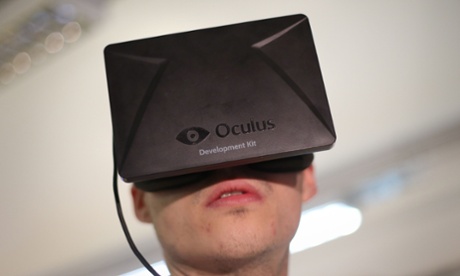
There is no shortage of technology available to brands; from Oculus Rift white-knuckle rides to 3D-printed event memorabilia, the tools are there. The real skill for marketers will be in using them in a relevant way. The winners of the future will be those that adopt technology to create an experience that lives with the recipient and informs their view of a brand longer than it takes to find the next piece of novelty. That, however, is the hard part.
Jon Spary is head of new business at Space
This advertisement feature is brought to you by the Marketing Agencies Association, sponsors of the Guardian Media Network’s Agencies hub.