The BBC’s strategy chief has said everyone would lose out if the BBC became a subscription service, which he said would hit Sky revenues and advertising on ITV and Channel 4.
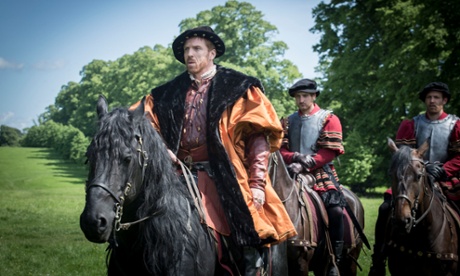
In response to a select committee report into the future of the BBC which called for the abolition of the BBC Trust and an exploration of other funding models, James Purnell championed the BBC’s Hilary Mantel adaptation, Wolf Hall, which has just finished on BBC2, which he described as “one of the best programmes for generations”.
He also praised ITV’s murder mystery Broadchurch, Sky’s big-budget drama Fortitude and Channel 4’s Oscar-winning documentary Citizen Four, saying the entire sector would lost out if the BBC lost the licence fee.
John Whittingdale’s culture, media and sport select committee, in a report published on Thursday, said the BBC should look to raise a portion of its revenue through subscription services.
Purnell told Radio 4’s Today programme: “What would that actually gain the public? People would end up paying more and getting less. The system works really well, if you introduced a subscription model for the BBC, the price people would pay would go up and there would be fewer programmes.
“There would be no gain for audiences and for the industry it would take away revenue that goes into subscription for Sky and into potential advertising for ITV and Channel 4.”
Whittingdale said his committee did “see a case for at least an element of subscription in the longer term. You can’t bring it in straight away … it would require some kind of conditional access”.
Responding to Purnell, the Conservative MP said: “Under our suggestion, at least an element of the licence fee would be voluntary so if people wanted to watch some of the great programmes James has just listed, they could choose to do so; but if they didn’t, they would have the ability to pay a smaller amount.”
But Whittingdale also said there was a case for regarding the funding of the BBC in the same way that people looked at health or education.
“The number of people who don’t use the BBC at all is very small,” he said. “It has always been a principle that there are certain public expenditures which are a good thing – education, health, social services – and it doesn’t depend on whether or not you use them, people pay for education whether or not they have children.
“We do think there is a case for public service broadcasting that should be publicly financed.”
Whittingdale said the governance of the BBC had to be overhauled, including the abolition of the trust, after a “series of disasters” at the corporation.
The plans as laid out in the committee’s report would establish “very clear responsibility with a board to run the BBC with a very strong non-executive chairman … like any other big organisation”.
Its proposed public service broadcasting commission would be “much smaller than the trust, commenting on strategy but which wouldn’t be second guessing the management board, which is what has happened”.