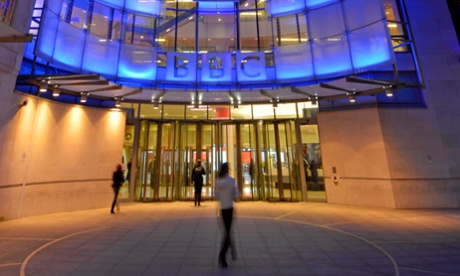
The licence fee should be maintained, the corporation is underserving Britain’s youth audience with changes to BBC Three, and TV and radio programmers must stop chasing ratings. These are the views of the majority of 580 media professionals recently surveyed by the Guardian. The results are set to inform a series of Guardian fringe debates about the BBC at this year’s party conferences, ahead of the 2016 royal charter renewal.
Rhetoric on the licence fee has become increasingly aggressive over recent months with prominent critics and public surveys suggesting it should be scrapped altogether, and others saying it should be cut and revenue diversified.
But an overwhelming majority (83%) of media professionals asked said the licence fee should at least be maintained at the current level. Nearly half (48%) said the fee should stay the same but be complemented by a greater contribution from BBC Worldwide, which sells advertising and programmes abroad, and 35% said it should grow via public funding. In March, an internal report revealed the BBC was aiming to tie the fee to inflation. Just 12% of those we asked said it should shrink.
A consensus for greater investment in the BBC could be linked to the value placed on the corporation. Almost half (49%) strongly agree that the BBC provides good value for money, with 29% agreeing and only 12% disagreeing or strongly disagreeing. This sentiment was supported by many respondents in answers to the question: “What does the BBC mean to you, and what do you think its future should be?”
One respondent said: “Keep it licence fee funded and ignore those who happily pay Sky hundreds of pounds a year but refuse to acknowledge the value for money the BBC represents.” Another commented: “I despair at the constant attack on the BBC from certain quarters. My whole family love the BBC output, it plays a really large part in our lives every day – TV, radio, online. It is amazing value for money and raises the bar on quality. We feel a genuine sense of pride in the BBC.”
But praise for the corporation’s value does not equate to widespread enthusiasm for all of its programming quality or for the decision to cut funding for BBC Three. We asked media professionals whether they agreed with the statement: “The BBC is wrong to recommend that BBC Three be switched to an online-only service and cut its budget from £85m to £25m. They are underserving Britain’s youth audience.”
While more respondents ticked the disagree box (29%) than any other option, once the number of strongly agree and agree responses are combined it shows the majority agreed the funding cut was a bad decision (45%). By comparison, only 39% said the BBC had made the right move.
This proved to be one of the most divisive questions we asked. Some respondents used the open-ended question to say they thought the move to online was wise but that the funding cut was too “drastic”, as one respondent phrased it. Interestingly, while more people said the BBC was wrong to cut the channel’s funding, only 15% chose youth content as one of four areas for prioritisation under the next charter. This could potentially be due to the age of participants, very few of who are in “entry level, assistant or similar” positions (4%).
Where findings on BBC Three are divisive, answers on ratings-chasing are more definitive. Of those surveyed, 40% said they strongly agree with the statement: “The BBC chases ratings like commercial broadcasters do. It’s funded differently and needs to put more of a commissioning focus on quality content and serving smaller audiences with a variety of content.” Another 38% said they agree with that sentiment and only 22% said they neither agree nor disagree/don’t know, disagree or strongly disagree.
A sample shows this was again reflected widely in the written answers. One commenter said: “Too many bland, ratings-grabbing programmes, and not enough that challenges, provokes, threatens or annoys.” One described the BBC’s radio output as exceptional but added “the same cannot be said for TV, which seems to chase rating with poor quality programming”. Another said: “Quality TV content must be a priority, not chasing ratings.” And one, mirroring the statement almost exactly, said: “It should not chase ratings – it is not supposed to be commercially-driven. That’s not the point of the licence fee.”
Currently 48% of BBC television programming is produced by independent producers. The majority of our respondents said that was “about right”. By comparison, only 17% of BBC radio programming is produced by independent producers. Unsurprisingly then, the majority (61%) said this was too low. One commenter said: “Radio desperately needs to be opened up to at least 50% independent production.”
Those surveyed are receptive to the BBC’s digital strategy. 52% of respondents said the corporation was “responding quickly enough and adapting adequately to changing technology” and 45% agreed that “if costs are saved which would allow quality and quantity of output to be maintained, the BBC should consider switching more broadcast services to online-only instead of completely cutting services.”
One surprise is that our respondents prioritised factual content over entertainment. Asked to choose four areas for prioritisation, 69% chose documentaries and educational content and 61% chose news and current affairs. Sport, surprisingly, is chosen most often on the “lowest priority” list (38%) followed closely by weather at a drizzly 37%.
If the survey reveals one fact it is that media professionals are largely united in their desire to preserve the BBC’s quality, at a time when its future has never looked less certain.
Read more on this issue:
BBC royal charter renewal: Scottish no vote could lead to a federal corporation
To get weekly news analysis, job alerts and event notifications direct to your inbox, sign up free for Media Network membership.
All Guardian Media Network content is editorially independent except for pieces labelled ‘Advertisement feature’. Find out more here.