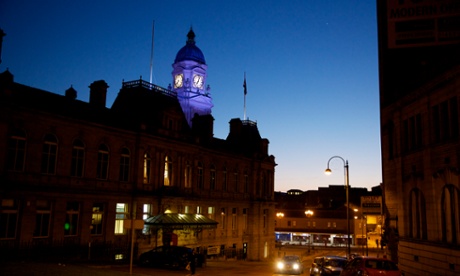
Dewsbury is a fairly traditional Tory-Labour marginal, where barrister Simon Reevell, a Conservative, is defending a 1,526 majority against a determined attack from Labour, which until 2010 had held the seat since the early 1980s.
Yet at the Guardian’s latest focus group in the West Yorkshire town, it was the smaller parties which had caught the imagination at this stage of the campaign. Two older men, both 47, said they were thinking of voting for Ukip after seeing Nigel Farage in the leaders’ debate (“It was good to hear his policies beyond just immigration and leaving the EU”) and were now deciding whether to switch their usual vote from Labour. For the younger participants, however, the party still seems racist. Marketing student Yedidia, 19, said he wouldn’t vote for Farage but still thought him a “stand-up bloke” who he’d like to go to the pub with.
But for some of the women, it was one of the female leaders who impressed most. Both chemistry student Husna, 24, and 36-year-old bar worker and mother-of-three, Colette, said they rather wished they could vote for the Scottish National party after seeing Nicola Sturgeon on TV. They liked the way the Scottish first minister took Farage to task for his controversial remarks about HIV sufferers and health tourism, and thought her policies would be good for young people in particular.
No one was blown away by the Green leader. Shown a photograph of Natalie Bennett and asked to come up with three words describing her, they could mostly muster no more than simply: “Australian.” As one participant put it: “I don’t understand why the Greens have got this Australian woman as their leader.”
Ed Miliband fared little better. “I wouldn’t want him running the country,” said Colette. “He doesn’t look like a winner,” said engineering student David, 21. “He lacks confidence,” reckoned Yedidia. Both young men said they were most likely to vote Labour regardless, but had yet to make up their minds.
The group was split on whether there was any point voting for a small party. “It’s just a protest vote,” said window fitter, Michael, 47. Personal trainer Bryan, 47, said it felt as if the minor parties were “on the rise”.
Casting a ballot for them might not make a difference this time, he thought, but would help them make a more meaningful mark in 2020. “You could vote for a small party and help them build a platform and over the years maybe they could be one of the main three,” said Colette, who usually votes Conservative. But Husna said that in Dewsbury: “None of the small parties are really doing much.”
Asked to choose their four favourite policies from a selection announced by Labour and the Conservatives this week, they chose “end zero-hours contracts” (Labour), “protect tax credits in the next parliament to support working families” (Labour), “guarantee an apprenticeship to each school leaver who gets the grades” (Labour) and “guaranteed £8bn spending increase per year above inflation for the NHS by 2020” (Tory).