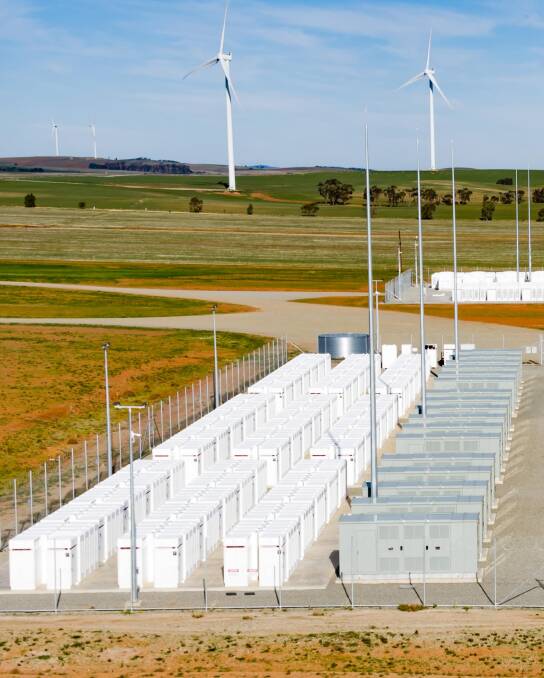
A new study shows large-scale battery storages provide superior cost and performance for electricity peaking services over gas-fueled versions.
The Clean Energy Council's study 'Battery Storage - The New, Clean Peaker' compared a new 250 megawatt gas peaker with a 250 megawatt four-hour grid-scale battery.
It found the battery provided cost savings of more than 30 per cent while offering greater flexibility and reduced emissions intensity.
"Batteries can provide a premium peaking service in periods of high demand traditionally met by peaking gas plants," Clean Energy Council chief executive Kane Thornton said.
"Batteries can ramp up quickly, have near zero start-up time and provide a better frequency response.
"Electricity demand must match supply at all times, and so on very hot days when demand spikes we quickly need more supply to respond. Sometimes, it's only for a few seconds; other times, it's for a couple of hours. In this respect, the capability of large-scale batteries is unrivalled. Over the past three years, batteries have been essential in keeping the grid stable and keeping power flowing to energy users."
The Federal Government is weighing up whether to build a 750 megawatt gas-fired peaking plant at Kurri Kurri as part of its gas-led economic recovery strategy.
It has asked the energy industry to show by the end of this month how it will replace the 1000 megawatts that will be lost from the closure of Liddell power station in 2023.
It will make a final decision about the Kurri plant following the April 28 deadline.
The Australian Energy Market Operator anticipates that between 6 gigawatts and 19 gigawatts of new dispatchable resources will be needed across the National Electricity Market by 2040.
Since 2018, 8.9 gigawatts of large-scale battery storage has been financially committed, proposed and/or approved in Australia.
This represents 42,000 construction jobs and 11,000 ongoing operations and maintenance jobs.
The momentum has seen 15 large-scale battery storage projects announced this year alone, representing 6.6 gigawatts of capacity and $4.3 billion in investment.
"The commercial case for batteries will continue to improve as battery technology advances and new markets are established to reward the services they provide," Mr Thornton said.