
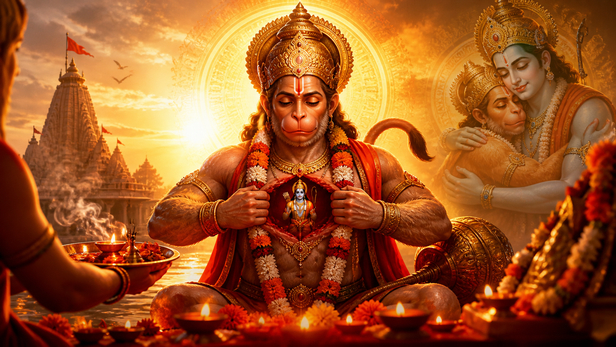
Every year, as the intense heat of the month of Jyeshtha arrives, a unique spiritual energy begins to build across North India, especially in places like Uttar Pradesh, where devotees gather in large numbers to celebrate Bada Mangal, a series of powerful Tuesdays dedicated entirely to Lord Hanuman. Unlike many festivals that are observed for a single day, Bada Mangal spans multiple Tuesdays and is considered one of the most spiritually charged periods for seeking strength, protection, and relief from life’s obstacles.
The vrat and katha associated with this day are not just rituals but expressions of deep faith rooted in the life and divine actions of Hanuman, whose unwavering devotion continues to inspire millions.
The Divine Meeting That Gave Birth to Bada Mangal
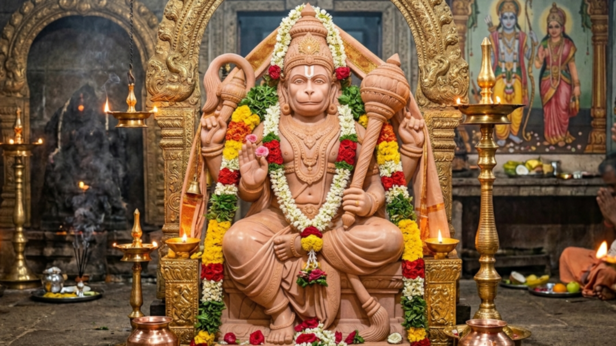
The origin of Bada Mangal is closely linked to one of the most important moments in the Ramayana, the first meeting between Lord Hanuman and Lord Rama. According to traditional belief, this sacred encounter took place on a Tuesday in the month of Jyeshtha, a moment that would change the course of the epic forever. When Hanuman first approached Rama, he did not come as a warrior or a god, but as a humble servant filled with devotion, and it was this pure bhakti that immediately created an unbreakable bond between them. From that moment onward, Hanuman became not just a devotee but the very embodiment of loyalty, courage, and selfless service.
It is believed that this divine meeting sanctified the Tuesdays of Jyeshtha, transforming them into Bada Mangal, a time when devotees can connect more deeply with Hanuman’s blessings.
The Vrat Katha: Hanuman’s Devotion That Changed Destiny
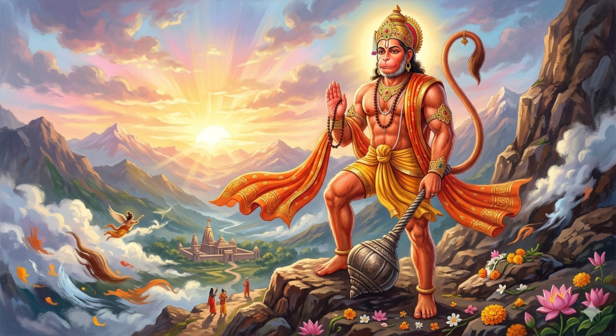
The central katha of Bada Mangal revolves around Hanuman’s extraordinary role in the Ramayana, especially his journey to Lanka in search of Goddess Sita and his unwavering service during the war against Ravana.
According to traditional narratives, after discovering Sita in Lanka and delivering Lord Rama’s message, Hanuman displayed unmatched courage by burning the city of Lanka, symbolising the destruction of evil and the triumph of dharma. Later, during the war, he carried the Sanjeevani mountain to save Lakshmana’s life, demonstrating that his strength was not merely physical but rooted in devotion and purpose. It is believed that these acts of selfless service are the reason Bada Mangal is dedicated to him, as they reflect the ultimate ideals of faith, courage, and surrender to the divine.
The vrat katha teaches that Hanuman’s power did not come from ego or ambition, but from complete devotion to Lord Rama, making him one of the most revered figures in Hindu tradition.
Why Devotees Believe This Day Brings Miracles
On Bada Mangal, devotees observe fasts, visit Hanuman temples, chant the Hanuman Chalisa, and perform acts of charity, believing that the spiritual energy of this period amplifies their prayers and intentions. What makes this day unique is not just ritual, but the belief that Hanuman is especially receptive to devotees during this time, offering protection from difficulties, strength in adversity, and clarity in moments of confusion.
In many cities, large community feasts known as bhandaras are organized, where food and water are freely distributed, reflecting the spirit of service that Hanuman himself embodied. This combination of devotion and generosity transforms Bada Mangal into a living expression of faith rather than just a ritual observance.
The Deeper Meaning Behind the Vrat Katha
Beyond the story and rituals, the Bada Mangal vrat katha carries a profound spiritual message. It teaches that true strength lies not in power or dominance, but in humility, discipline, and unwavering devotion.
Hanuman’s life represents the ideal balance between strength and surrender, where immense power is guided by selflessness and purpose. His story reminds devotees that even the greatest challenges can be overcome when faith is strong and intentions are pure. In this way, Bada Mangal is not just about seeking blessings, but about transforming oneself through devotion, courage, and service, following the path that Hanuman himself walked.
Conclusion: A Day Where Faith Becomes Strength
As Bada Mangal arrives, it brings with it an opportunity not just to pray, but to reconnect with the deeper values that Hanuman represents. His story continues to inspire because it speaks to something universal, the idea that devotion, when pure and unwavering, has the power to overcome even the greatest obstacles. For millions of devotees, this vrat katha is not just a story from the past, but a living reminder that faith, when combined with action and humility, can truly change destiny.
Explore the latest trends and tips in Health & Fitness, Spiritual, Travel, Life Hacks, Trending, Fashion & Beauty, and Relationships at Times Life!