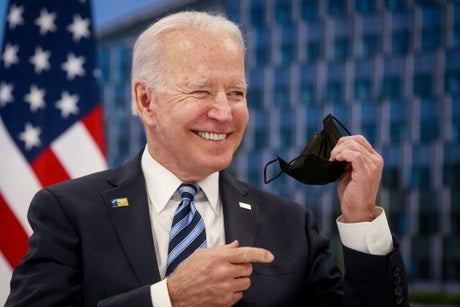
Joe Biden’s first Nato Summit as US President ended with the Alliance declaring that China challenged the rules-based international order and Western security through its authoritarian and aggressive behaviour.
The decision to critically focus on China in the official communique by Nato - an organisation set up to counter Russia in post-Second World War Europe - follows efforts by the US administration to get Western allies to confront Beijing’s expansionist policies and abuse of human rights.
On the way to the conference in Brussels, the US National Security Advisor, Jake Sullivan, had stated that said “China will feature in the communiqué in a more robust way than we’ve ever seen before…” and the Alliance leaders’ agreed to the strong statement, although the ultimate decision was taken to refer to the Chinese “challenge” rather than “threat.”
The document stated: “China’s "stated ambitions and assertive behaviour present systemic challenges to the rules-based international order and to areas relevant to Alliance security".
It continued: “China is rapidly expanding its nuclear arsenal, is "opaque" in the modernisation of its military and is co-operating militarily with Russia. We remain concerned with China’s frequent lack of transparency and use of disinformation.”
Nato’s statement followed criticism of China in the meeting of G7 group of states hosted by the UK in Cornwall at the weekend, over human rights abuses of the Uyghur community in Xinjiang and after the takeover of Hong Kong and military threats towards Taiwan. The European Union has meanwhile designated Beijing a "systemic rival".
There is, however, apprehension among a number of Nato states that taking too combative a stance with Beijing will harm them economically.
Boris Johnson was forced to reverse his government’s decision to let the Chinese multinational, Huawei, into the UK’s 5G network after fierce pressure from the US. Arriving at the Summit, Johnson said "I don’t think anybody around the table wants to descend into a new Cold War with China”.
Nato Secretary-General Jens Stoltenberg said the summit was a "pivotal moment" for the Alliance.
“We know that China does not share our values... we need to respond together as an alliance. China is coming closer to us. We see them in cyberspace, we see China in Africa, but we also see China investing heavily in our own critical infrastructure”, he added.
Diplomats stated that President Biden consulted with allies to ensure that there is “full support and solidarity” when he meets with the Russian leader later in the week.
Biden’s approach was in direct contrast to that of Donald Trump who also went to a Nato conference before his first summit with Putin, in Helsinki three years ago.
At the meeting in Brussels he attacked allies, with Germany’s Angela Merkel a particular target, while declaring that dealing with the Russian President might be easier than leaders of the Alliance.
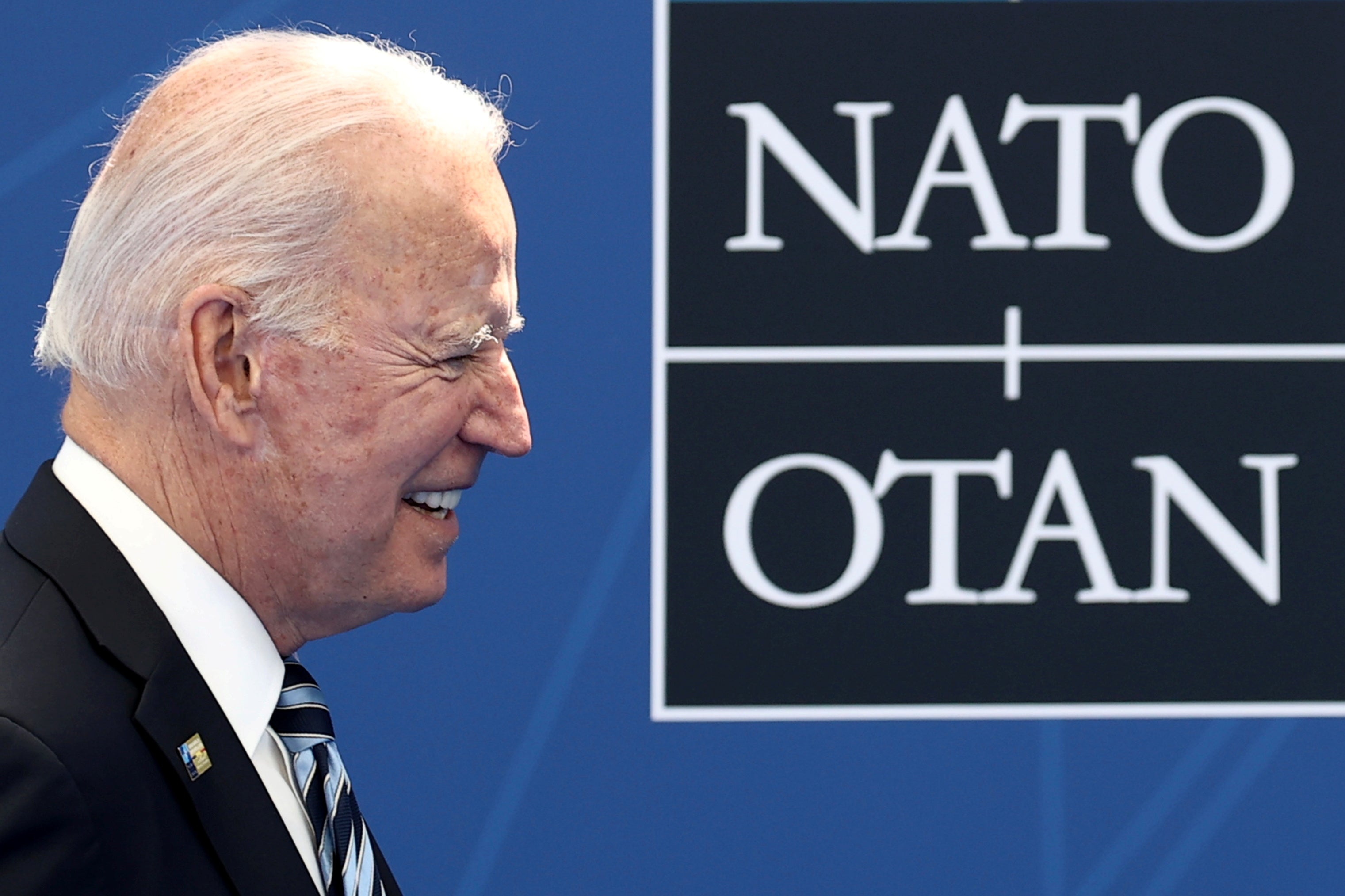
Biden told fellow Nato leaders at the Summit that the alliance’s mutual defence pact was a "sacred obligation" for the United States. “I want all Europe to know that the United States is there, Nato is critically important to us”, said the US President.
Merkel, attending her last Nato conference before stepping down in September, described Biden’s arrival as the “opening of a new chapter”.
There were expressions of relief from other leaders about the passing of the Trump era.
The Netherlands Prime Minister, Mark Rutte said relations are now “more normal” than they had been, while Italian Prime Minister Mario Draghi held that the Alliance is “rebuilding’” after years of “undecided” policy from Trump, while Belgian Prime Minister Alexander De Croo added that it was time to ‘turn the page’ after ‘turbulent times’.