The Australian share market has fallen after Middle East peace talks broke down at the weekend and the United States said it would begin its own blockade of the Strait of Hormuz.
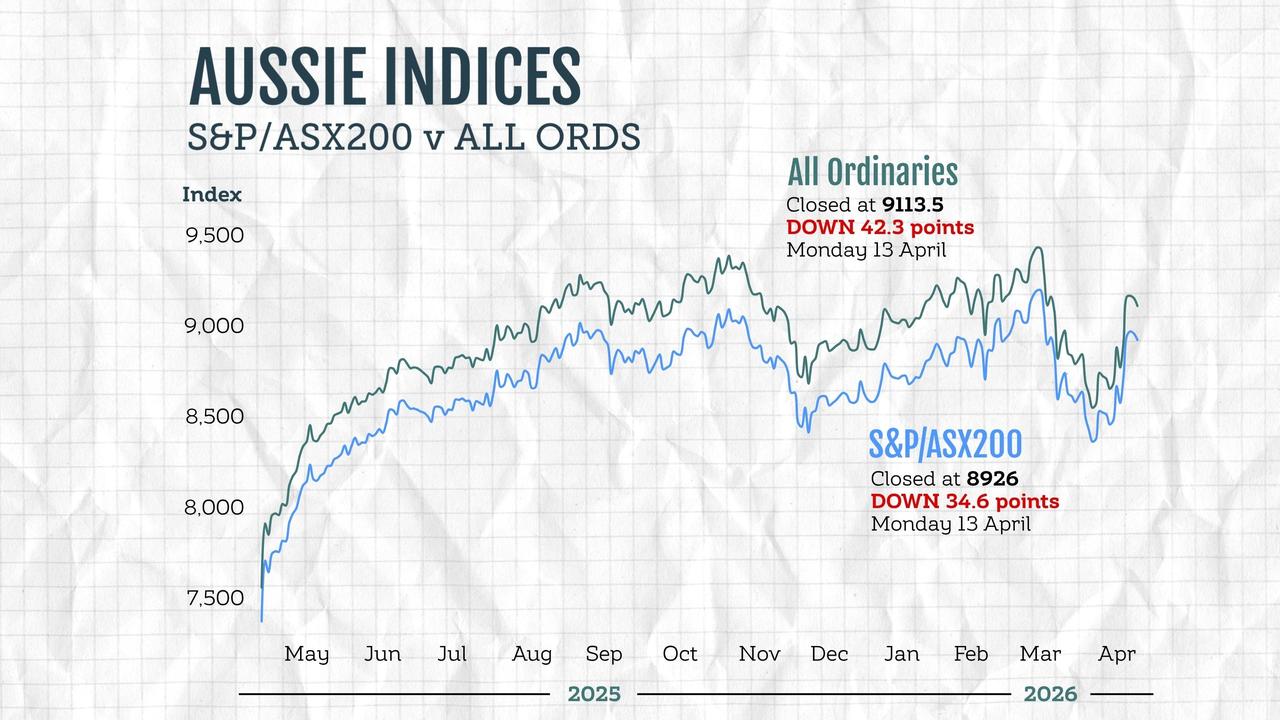
The benchmark S&P/ASX200 index on Monday finished down 34.6 points, or 0.39 per cent, to 8,926.0 while the broader All Ordinaries dropped 42.3 points, or 0.46 per cent, to 9,113.5.
Brent crude jumped back over $US100 a barrel for the first time in almost a week, climbing seven per cent to $US102, after US President Donald Trump announced the US Navy would begin imposing the blockade on the crucial waterway from midnight Monday AEST.
An adviser to Iran's supreme leader warned the country had "large, untouched levers" to counter any naval blockade, while the Speaker of Iran's parliament and its top negotiator warned Americans they would soon be nostalgic for $4 to $5 gas.
Capital.com analyst Kyle Rodda said the stage was now set for a hot war where things potentially escalated out of control, including possible strikes on Gulf energy assets and civilian infrastructure.
Etoro market analyst Josh Gilbert said the window for a clean resolution was narrowing, and investors needed to be positioned for the possibility that things could worsen before they got better.
Eight of the ASX's 11 sectors finished down, with telecommunications and utilities modestly higher and energy growing 2.1 per cent on the spike in oil prices.
Woodside and Ampol both climbed 2.6 per cent, while Santos grew 1.7 per cent and New Hope added 4.6 per cent.
The ASX's tech sector was the worst performing, dropping 1.8 per cent, in part due to a big fall by Life360.
Shares in the family location-sharing platform dropped 8.1 per cent to an 18-month low of $17.91 after chief executive Lauren Antonoff on Friday announced job cuts and plans to restructure the company around an AI-led strategy.
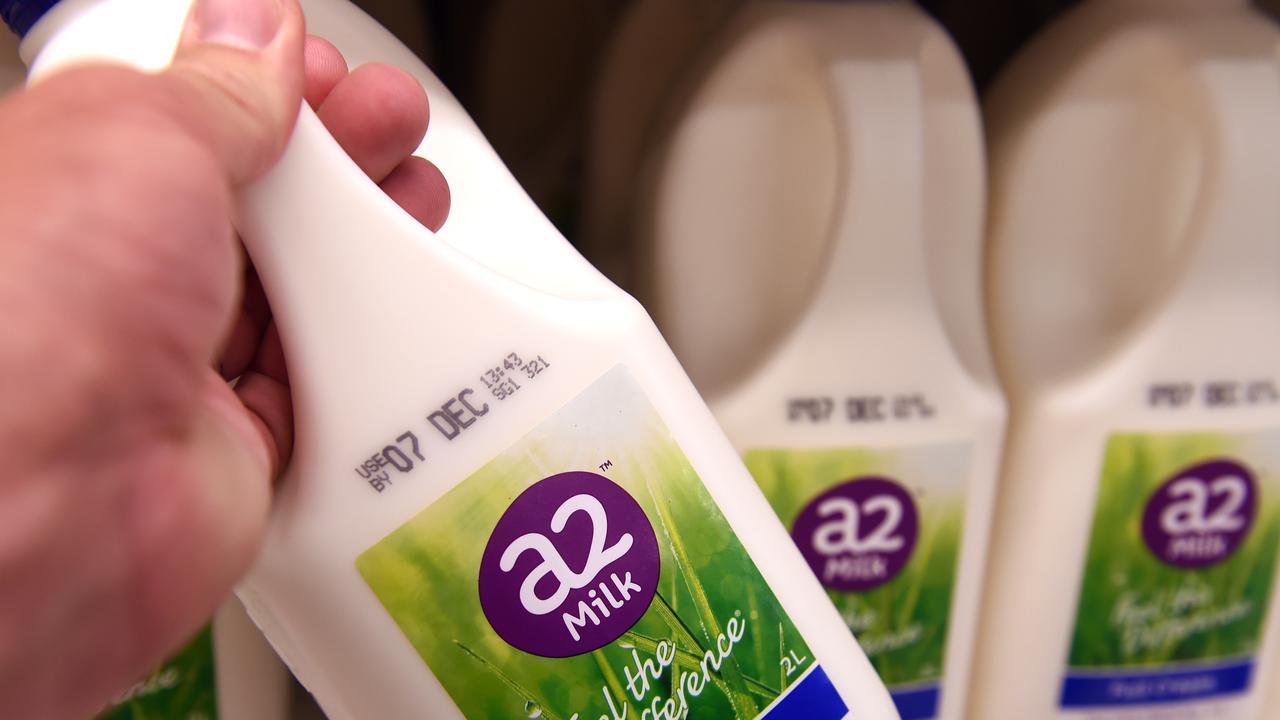
In consumer staples, A2 Milk sank 13.0 per cent to an eight-month low of $8.04 after the Kiwi milk company trimmed its guidance, saying issues including the Middle East conflict were hampering its ability to supply infant milk formula to the Chinese market.
In the heavyweight mining sector, the iron ore giants all finished in the green.
BHP rose 0.7 per cent to $54.35, Rio Tinto added 0.5 per cent to $172.07 and Fortescue edged 0.1 per cent higher at $20.28.
Goldminers struggled, however, as the precious metal changed hands at $US4,742 an ounce, down $44 from Friday.
Northern Star dropped 2.0 per cent, Evolution slipped 2.4 per cent and Westgold Resources subtracted 2.9 per cent.
In the financial sector, the big four banks were mostly lower.
NAB dropped 0.9 per cent to $44.95, Westpac retreated 0.4 per cent to $42.59 and CBA dipped 0.1 per cent to $183.20.
ANZ was the outlier, flat at $38.84.
Elsewhere in the sector, EML Payments plunged 35.7 per cent to a more than decade-low of 37 cents after the prepaid card company trimmed its full-year earnings guidance, citing in part weaker-than-expected trading in the northern hemisphere.
In health care, Telix Pharmaceuticals rose 7.7 per cent to a six-month high of $15.77 after the radiopharmaceutical company announced a partnership with a US company that will deliver an up-front payment of US$40 million ($56 million).
The Australian dollar was trading for 70.44 US cents, from 70.62 US cents at 5pm on Friday.
ON THE ASX:
* The S&P/ASX200 dropped 34.6 points, or 0.39 per cent, to 8,926.0.
* The broader All Ordinaries slipped 42.3 points, or 0.46 per cent, to 9,113.5.
One Australian dollar trades for:
* 70.44 US cents, from 70.62 US cents at 5pm AEDT on Friday.
* 112.47 Japanese yen, from 112.46 Japanese yen.
* 60.29 euro cents, from 60.43 euro cents.
* 52.53 British pence, from 52.63 British pence.
* 120.85 NZ cents, from 120.89 NZ cents.