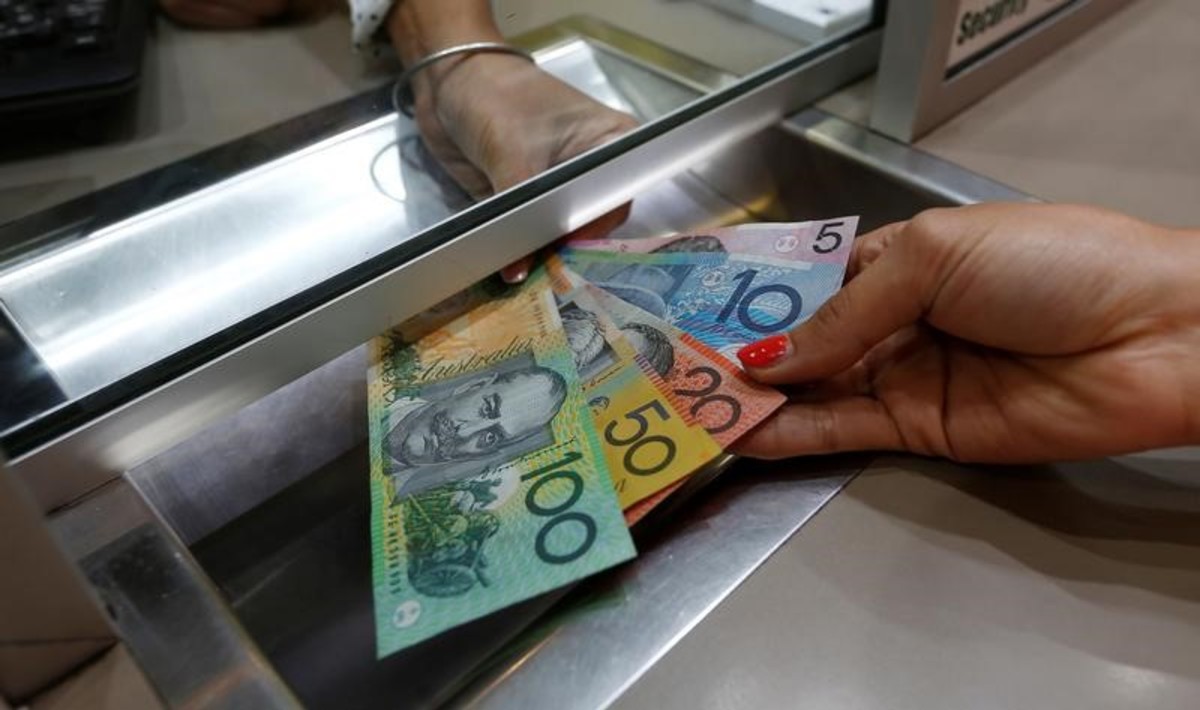
SYDNEY (Reuters) - The Australian dollar is seen stuck at current levels over the next year, while its New Zealand cousin will likely inch higher, according to a Reuters poll that predicted a remarkably flat future for the two currencies.
The survey of 50 analysts predicted the Australian dollar <AUD=D4> would be at $0.7800 in three-, six- and 12-months ahead, barely changed from present levels.
Still, forecasts have erred before. At the start of 2017, the Aussie had been seen at $0.7300 in six months and $0.7200 in a year.
Instead, it climbed to a more than two-year peak of $0.8125 in September and has since dropped to $0.7743 - the lowest since mid-July.
Despite the steady median, the range of forecasts is quite wide. The highest for three months ahead is $0.8400, a level not seen since late 2014, and the lowest is $0.7400.
The New Zealand dollar <NZD=D4> was forecast at $0.7200 in a month, not far from current levels of $0.7110 and unchanged from the previous poll.
It climbed to $0.7435 last month, the highest since early August, but has since tumbled on political uncertainty after no single party won a majority at a recent general election.
The kiwi was seen at $0.7200 over a three-, six- and 12-month horizon.
The near-term fate of the kiwi will be determined by the composition of the ruling coalition which is expected to be known next week.
The New Zealand First Party, which emerged as a kingmaker after the election, was expected to hold preliminary talks with both the ruling National Party and separately with the Labour Party this week.
TIDE HAS TURNED
The antipodean currencies have lost their shine since surging dramatically at the start of the year against the U.S. dollar <.DXY>.
The upsurge had come as a surprise to analysts who had predicted modest gains, if any, for the two currencies with global central banks tightening monetary policies and Australia and New Zealand keeping rates at record lows.
It is catching up now, with the yield advantage that Australia and New Zealand enjoy seen whittling away as some of their rich-world peers unwind stimulus.
Canada has already raised rates twice this year and the U.S. Federal Reserve still aims to hike once more in December.
In addition, the price of iron ore - Australia's biggest export earner - has come off a boil, adding pressure on the Aussie. The most-traded Dalian iron ore contract <DCIOcv1> has slid 25 percent from a five-month peak set in August.
There are also questions over whether China can keep fuelling growth in Australia's A$1.7 trillion economy. China is the biggest consumer of Australia's iron ore as well as a major foreign investor.
"The tide has turned on both fronts," said Morgan Stanley analyst Has Redeker, who sees the Aussie at $0.7100 in one year.
"First, China is in the middle of restructuring its economy, suggesting less terms of trade income for Australia. Second, China's capital flow into Australia may have eased as it has tightened its capital account rules. We stay AUD short."
(Polling by Shaloo Shrivastava and Khushboo Mittal; Editing by Kim Coghill)