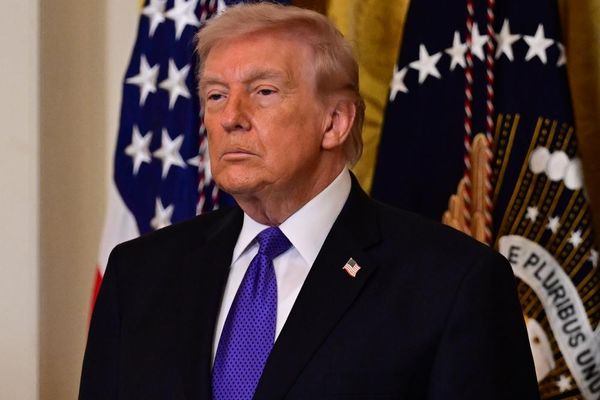

President Donald Trump will have to rely heavily on his personal deal-making skills to get through his second summit with North Korean leader Kim Jong Un, set for Feb. 27 and 28 in Hanoi. That’s exactly what Kim is hoping for.
The format will be similar to the summit held in Singapore last June, with plenty of one-on-one time for the president and supreme leader. That suits Kim just fine. All indications are that the North Koreans are denying the U.S. negotiators any specific written commitments going into Hanoi because they know that capable U.S. State Department officials will insist on concrete and verifiable measures. Because Trump wants the summit with Kim regardless of the actual status of the negotiations over denuclearization, the State Department negotiators are probably going into the summit knowing only slightly more about the likely outcome than the rest of us.
It is a fair guess, though, that the most probable outcome is some variation on the status quo. The Trump administration has dropped demands for a declaration of North Korean nuclear and missile capabilities that would be the necessary precursor for an actual denuclearization process. Kim might agree to allow inspectors into the satellite and nuclear test facilities the North has already decommissioned or let inspectors back into the facilities in Yongbyon (for the third time), but these steps would be more symbolic than substantive. Somewhat more significant would be the North giving broader access to its newer uranium enrichment facilities in Yongbyon, but even that would add only limited insights to what Washington already knows. In exchange, Pyongyang would demand significant sanctions rollbacks and a formal declaration ending the Korean War. (Trump is clearly attracted to the latter proposition.) In other words, the core agreement would remain unchanged from the one going into the Singapore summit: a freeze-for-freeze in which North Korea refrains from nuclear and missile tests and the United States continues its halt on military exercises with South Korea—which Trump announced unilaterally in Singapore without consulting South Korea, Japan, or his own Defense Department.
Trump and members of his administration continue to trumpet this as a major accomplishment. This week, Trump told reporters, “There’s no testing. As long as there is no testing, I’m in no rush.” But a freeze-for-freeze is exactly what the Trump administration once swore it would not accept. In September 2017, Nikki Haley, then the U.S. ambassador to the United Nations, called the Sino-Russian freeze-for-freeze proposal “insulting,” and the previous month State Department spokesperson Heather Nauert said there was “no equivalency” between U.S. exercises and North Korean testing. Former Secretary of State Henry Kissinger put it best in testimony to the Senate Armed Services Committee on Jan. 25, 2018, when he said:
The widely discussed “freeze for freeze” scheme—halting North Korean missile tests in return for abandoning defined Allied military exercises—will not … fulfill this purpose or even advance it. That would equate legitimate security operations with activities which have been condemned by the UN Security Council for decades. And it would encourage demands for additional restraints on, and perhaps the dismantling of, America’s alliances in the region. In its ultimate sense, a freeze would legitimize North Korea’s nuclear establishment as well as the results of its previous tests.
The self-imposed military exercise freeze will almost certainly continue after the Hanoi summit, and that could be compounded by a declaration officially ending the Korean War—which would not mean much. The United States should give diplomacy a chance, but Congress and the media should hold Trump to the standards his administration already set.