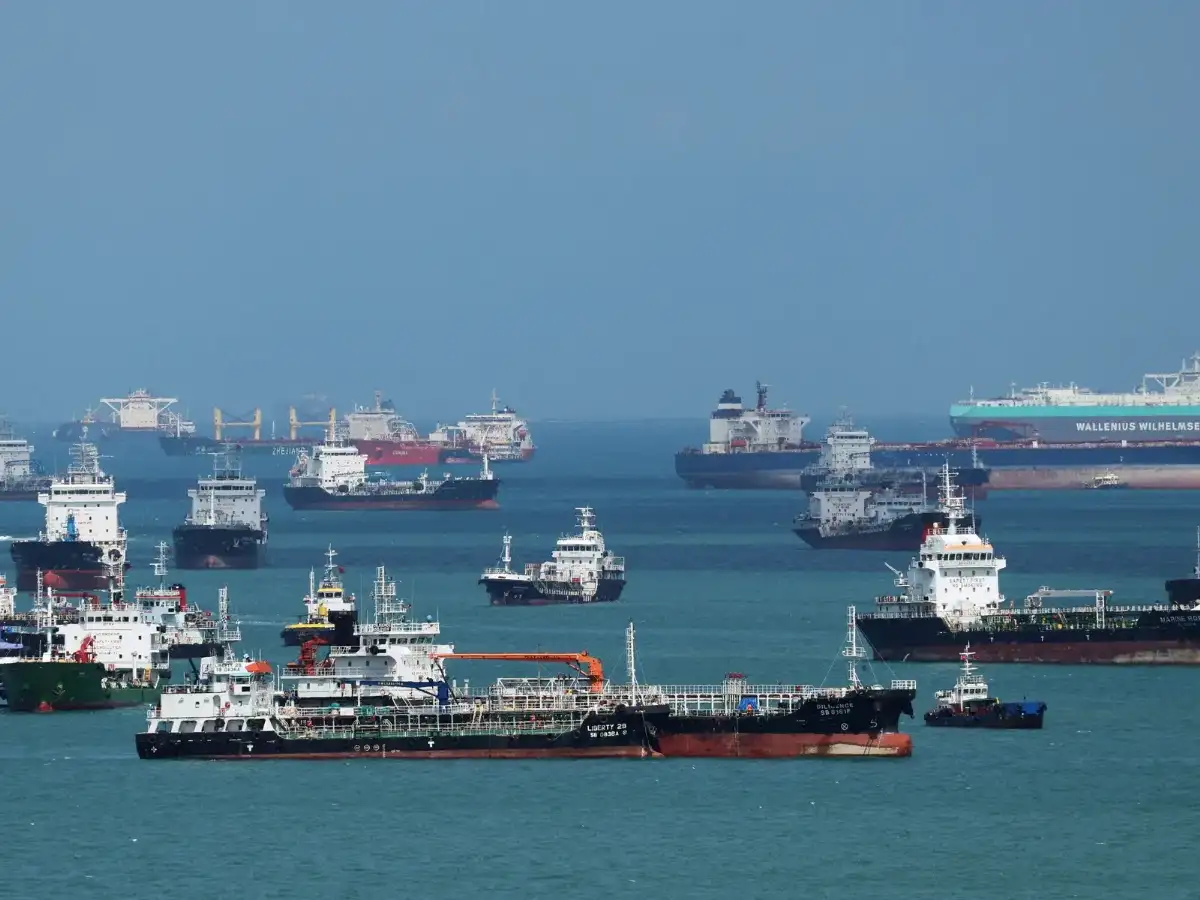
Supertankers laden with almost 80 million barrels of oil are sitting in the Persian Gulf and ready to cross the Strait of Hormuz at a moment’s notice, if traders and shipowners give the go-ahead, reported Bloomberg on Friday.
This non-sanctioned crude from Persian Gulf producers excluding Iran is on 40 very large crude carriers in the gulf, data from Vortexa compiled by Bloomberg show. The volume of crude in the gulf is likely to be higher if smaller tankers are added to the tally. Last year, about 15 million barrels a day of oil from the region was delivered to Asia.
ALSO READ | Iran's Revolutionary Guards set up covert Iraqi cells to attack Gulf neighbors, sources say
A close watch
Oil and shipping markets are tracking any increase in vessel movement through the Strait following an interim agreement between the US and Iran to restore traffic in the route. Oil tankers carrying crude are expected to be among the earliest ships to test the passage due to the high value of their cargo.
“Around 21 very large crude carriers are currently showing routes toward Asia, with five pointing to China. Another five are headed to ship-to-ship transfer hubs near Malaysia and Singapore. At least three vessels were observed moving east toward the strait at normal cruising speed on Friday morning.”
Confusion persists
There is still confusion over the exact status of the strait. Three Saudi supertankers reappeared in the Gulf of Oman on Thursday, an indication that vessels were starting to move, but maritime trade group BIMCO warned that significant safety and security risks to shipping remained, despite the US-Iran agreement to permit transits.
As per another Bloomberg report, Abu Dhabi National Oil Co. has told its customers to resume loading its crude oil from ports within the Persian Gulf.
The United Arab Emirates state-owned producer said oil from its ports at Das and Zirku islands, which are located inside the Persian Gulf, has been available for loading since April 27. Failure to pick up the crude would constitute a breach of buyers’ lifting obligations, it added.
In light of the recent US-Iran deal and “the envisaged uninterrupted flow of traffic through the Strait of Hormuz, we expect that all cargoes will be lifted in accordance with the published loading programs,” it said in its notice to the company’s long-term buyers.
If buyers can’t secure their own tankers, Adnoc would be able to assist with its own or affiliated vessels. The company also cited its general terms and conditions for the sale of crude oil, which states that a buyer shall pay compensation to the seller in the event of a failure to take delivery.
(With inputs from Bloomberg)