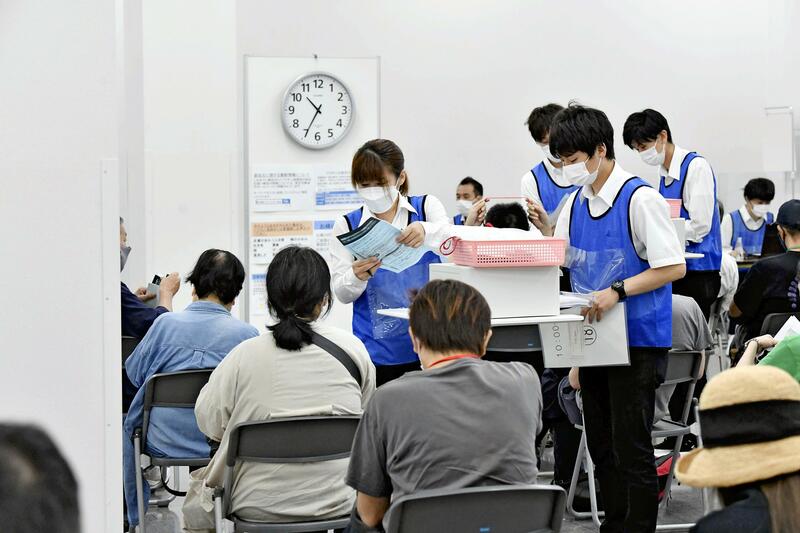
Inoculations using a COVID-19 vaccine developed by British drugmaker AstraZeneca PLC have started in Osaka City and Saitama Prefecture. It is the third type of COVID-19 vaccine to be administered in Japan and will also be used in places such as Tokyo and Kanagawa.
At Kawaguchi Municipal Medical Center in Kawaguchi, Saitama Prefecture, inoculations using AstraZeneca vaccine started from 5 p.m. on Monday. As AstraZeneca vaccine is administered to people aged 40 and older in principle, the inoculation venue will operate until 9 p.m. for the convenience of people in their 40s and 50s to stop by after work. The plan is to inoculate 500 people daily, and appointment slots for a total of 4,300 shots for this week and the following week were already mostly full.
"I couldn't get an appointment until this one, so I just wanted to get vaccinated regardless of the kind of vaccine," a 54-year-old company employee said after receiving a shot.
"I am a little worried about the adverse reactions, but I was more afraid of remaining unvaccinated," said another office worker, 45.
AstraZeneca's vaccine is a viral vector vaccine, which uses harmless cold virus modified with genetic material from the novel coronavirus. The vaccine needs to be administered twice, and the interval between the shots is four to 12 weeks, longer than that for the two other vaccines used in Japan. It is also easier to handle as it can be stored for six months at a temperature between 2 C and 8 C.
It has been used widely overseas, with 48 million doses administered in Britain and 12 million doses in Germany.
In clinical trials, the effectiveness in preventing the onset of symptoms was about 70% for the AstraZeneca vaccine, while vaccines produced by U.S. pharmaceutical companies Pfizer Inc. and Moderna, Inc. were about 95%.
According to a study by the British public health authority, its rate of preventing the onset of symptoms caused by the delta variant was about 67%, and its rate of preventing hospitalization was about the same as the Pfizer vaccine at 92%.
The main adverse reactions include soreness of the vaccinated arm and headache, which tend to occur more often after the first shot than the second.
In Japan, the vaccine was approved for manufacture and sale in May and was approved this month for use in emergency vaccinations carried out at public expense. According to the health ministry, there have been reports of rare cases of thrombosis after inoculation overseas, at a rate of about once in 100,000 to 250,000 shots, and young women tended to be at higher risk. Therefore, the vaccine was made available for people over 40 years old, but younger people can also use the vaccine if they are at risk of allergic reactions to the other two vaccines produced by the U.S. companies.
The Health, Labor and Welfare Ministry's research team will conduct a health survey to determine the frequency of adverse reactions. The team is targeting several thousand people who will be vaccinated at eight hospitals across the country, including Juntendo University Hospital in Bunkyo Ward, Tokyo, to examine their post-vaccination condition, such as body temperature and arm pain.
Read more from The Japan News at https://japannews.yomiuri.co.jp/