
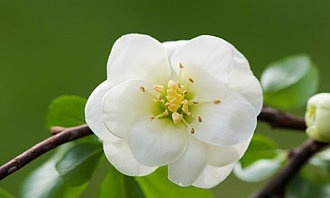
Honey fungus killed my climbing rose. I want to plant a small tree or large shrub in its place. Can anything survive where honey fungus has been?
Honey fungus is a damaging fungal disease. The name applies to several species of Armillaria that spread up to 30 metres underground, attacking and killing the roots of many perennial plants. If your rose went down, many others can go that way, too. No plant is completely immune, but black walnuts, bamboos, arundinaria, Japanese flowering quince, jasmines, nyssa, holm oaks and gingko are known to be less susceptible. The box elder (Acer negundo) has very good resistance and offers lovely autumn colour, though it grows large – 12 metres tall after 20 years. Perhaps a better solution is the silk tassel bush (Garrya elliptica), a lovely evergreen shrub. The cultivar ‘James Roof’ has particularly long, grey-green catkins and a wonderful Victorian air.
It is possible to make a barrier around plants to prevent honey fungus spreading by burying pond liner at least 45cm deep. If honey fungus appears elsewhere, this may be the best solution. The RHS has a very good webpage on how to do this: visit is.gd/honeyfungus.
• Got a question for Alys? Email askalys@theguardian.com



