Asian stock markets jumped sharply Wednesday after Donald Trump said the U.S. would exit the war with Iran within two to three weeks, with or without a deal, raising hopes that the month-long conflict that has roiled global energy markets may be nearing its end.
South Korea's Kospi surged 6.4 percent in early trading, while Japan's Nikkei 225 rose 4 percent, Hong Kong's Hang Seng gained 1.9 percent, and Taiwan's Taiex was up 4.3 percent. Australia's S&P/ASX 200 rose 1.7 percent. India's BSE Sensex jumped more than 1,800 points in early trade, with broad-based buying across banking, financials and technology stocks.
Both the Nikkei and Kospi, however, remain below the levels at which they were trading before the war began on February 28. A survey by Japan's central bank released Wednesday showed business sentiment among major manufacturers had improved despite war-related concerns.
The gains followed a strong session on Wall Street Tuesday. The S&P 500 jumped 2.9 percent for its largest single-day gain since May, while the Nasdaq leaped 3.8 percent and the Dow Jones Industrial Average surged 2.5 percent.
Speaking from the Oval Office Tuesday, Trump said Iran was "begging to make a deal" but that whether an agreement was reached was "irrelevant" to America's timetable. He also told U.S. allies to "go get your own oil" and called on other nations to take control of the Strait of Hormuz, saying the U.S. "will not have anything to do with" what happens there next.
Analysts said the remarks had done little to resolve the underlying uncertainty hanging over markets.
Lukman Otunuga, head of market research at FXTM, said: "Markets are being pulled in multiple directions by geopolitics and macro fundamentals."
"The ongoing uncertainty around the Iran conflict and the Strait of Hormuz is keeping oil prices elevated and volatility high. While energy markets remain fundamentally supported, any signs of de-escalation could trigger sharp reversals."
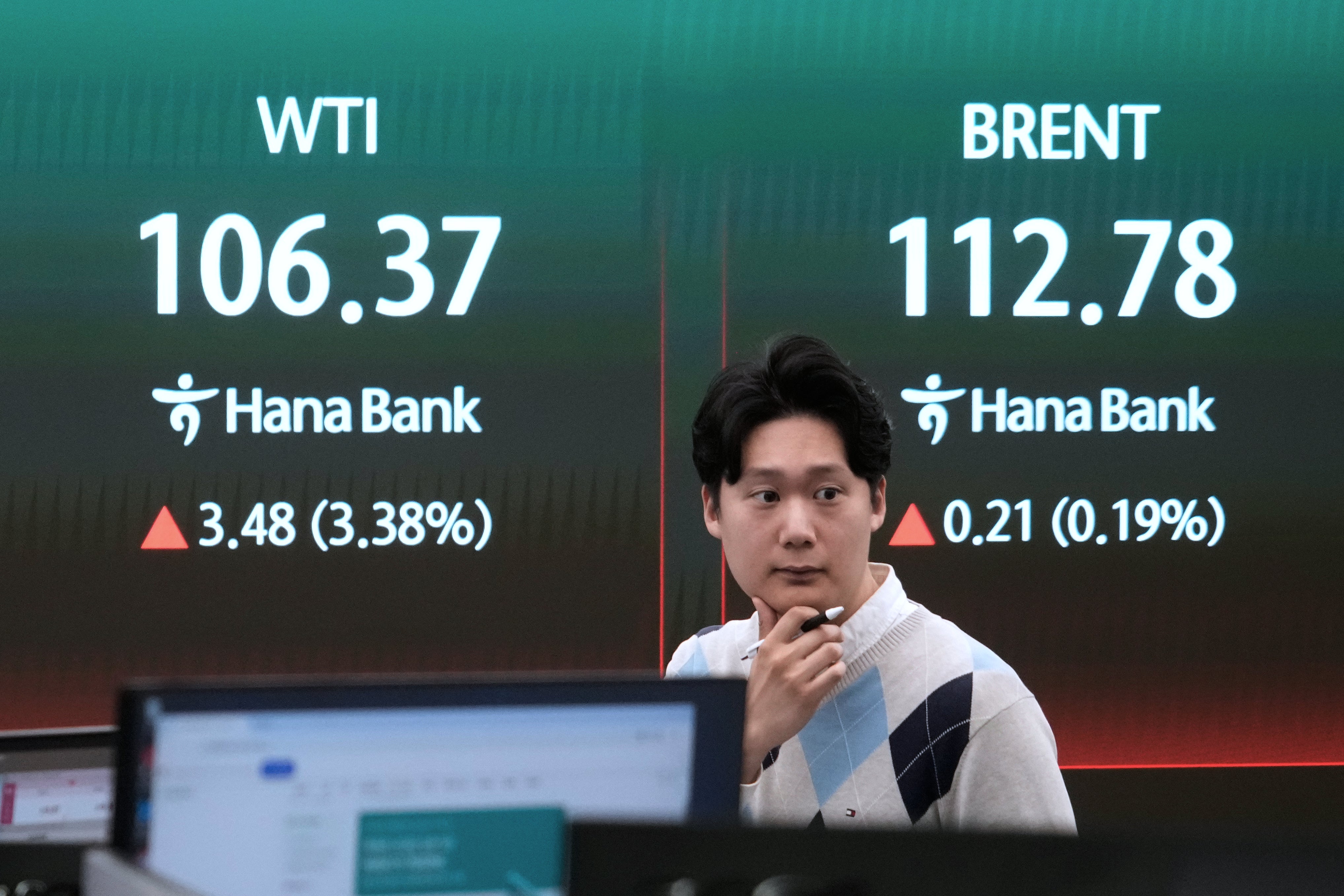
Oil also steadied Wednesday but remained elevated. Brent crude was up 1.5 percent at $105.48 a barrel, while U.S. benchmark crude rose 1.3 percent to $102.73. The price of brent for May delivery rose by a record 64 percent in March – the biggest monthly gain since Iraq's invasion of Kuwait in 1990 – as Iran threatened to attack vessels using the Strait of Hormuz, effectively closing the key shipping route through which roughly a fifth of the world's oil normally passes. U.S. petrol prices surged past an average of $4 a gallon Tuesday for the first time since 2022.
Gold has fallen around 14 percent this month despite broader risk-off sentiment, pressured by a stronger dollar and shifting rate expectations. The dollar's strength has also pushed USD/JPY above 160, a level previously defended by Japanese authorities and one that raises the prospect of intervention. Japan and South Korea have been among the hardest hit economies in the conflict, both heavily reliant on Middle Eastern energy.
Iran reiterated Wednesday that five demands must be met before it ends the war. Earlier, Iranian president Masoud Pezeshkian said his country had the "necessary will" to end the fighting but demanded guarantees against future aggression.
"It's difficult to see Iran stepping back without extracting concessions," Fawad Razaqzada at Forex.com told Bloomberg. "While Trump may be considering an end to hostilities, the key issue – the status of the Strait – remaining unresolved will be what's more important from the market's point of view."
A third U.S. aircraft carrier strike group is heading to the region as military operations continue after the Navy's flagship carrier left for repairs. Trump is expected to address the nation Wednesday evening with what the White House described as an "important update" on Iran.
Friday's U.S. jobs report will also be closely watched, with payrolls forecast to rebound to 65,000 after a loss of 92,000 in the prior reading.
"With expectations for a modest rebound in payrolls, the outcome could significantly influence Fed rate expectations, especially as rising energy prices complicate the inflation outlook," Otunuga said. "We may see heightened volatility across currencies, commodities, and equities as investors digest these developments."
Starmer to update on cost of living as Iran conflict pushes diesel tank to £100
Iran-US war: Trump says conflict will end in ‘two to three weeks’
Amsterdam celebrates 25 years since the world's first same-sex weddings
Chang Ung, North Korean ex-IOC member who brokered Olympic joint marches with South, dies
Businesses start to add fuel surcharges as oil prices increase amid Iran war
This ‘US Invasion’ video in the Middle East is fake | Debunked