Southeast Asia is often celebrated as a region on the rise: expanding middle classes, booming digital economies, and deepening regional integration. In 2024, the region's 11 economies reached a combined GDP of nearly US$4 trillion (133.9 trillion baht), with growth projected to climb further in 2025. Foreign investment surged even as global flows contracted, and unemployment across much of the region remains comparatively low.
But this picture of prosperity hides a growing crisis, and one that feeds on the increasing vulnerabilities of marginalised communities. While regional wealth has increased, economic inequality, unsafe migration pathways and labour shortages continue to create conditions that organised criminal networks exploit.
The International Labour Organization (ILO) identifies Asia and the Pacific as the region with the highest number of people in forced labour globally. More than 50 million people worldwide are estimated to be living in conditions of modern slavery, including forced labour and forced marriage. Human trafficking remains one of the principal mechanisms through which many people are exploited into these conditions. In fact, forced labour generates "an estimated US$236 billion annually", according to the ILO and is now deeply woven into Southeast Asia's economic landscape.
A Rapidly Expanding Threat
The theme for this UN Day Against Trafficking in Persons is "Trapped Behind the Scam" and it draws attention to one of the fastest‑growing forms of exploitation in Southeast Asia -- the trafficking of people into online scam compounds for forced criminality. This is a form of forced labour that devastates victims on both ends of the crime and destabilises communities.
Recent findings show the scale of the crisis:
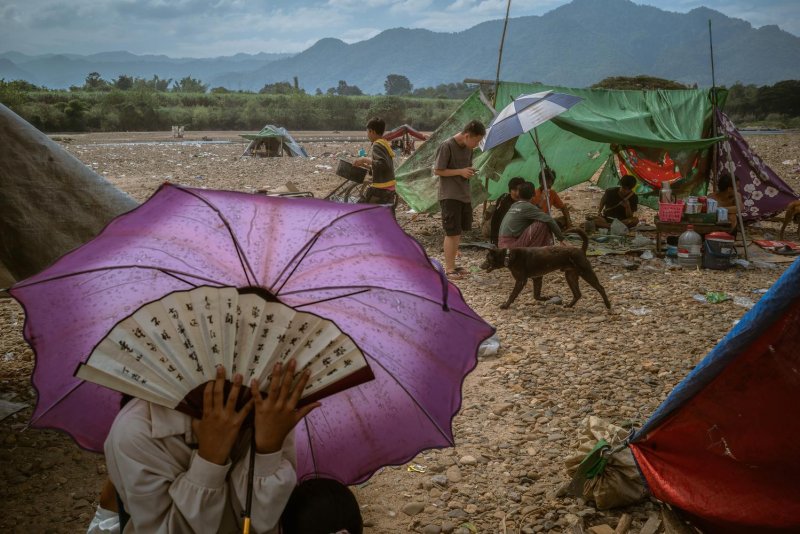
Tens of thousands of people are currently held in scam compounds along the Myanmar-Thailand border, controlled by transnational criminal networks. Thailand has been used as a transit route for victims trafficked into these centres.
Asean governments are increasingly aware of the threat, and cooperation has intensified, but current efforts fall far short of the scale and sophistication of the criminal networks involved.
Victims from at least 66 countries have been trafficked into online scam centres, with 74% brought to compounds in Southeast Asia.
Scam‑compound trafficking has become a multibillion‑dollar industry, with coercive infrastructures documented across Myanmar, Laos, Cambodia, and border zones.
These centres thrive on familiar vulnerabilities: unemployment, debt, displacement, and unsafe migration pathways. Criminal networks understand desperation, and they are weaponising it.
Asean's Response Falls Short
Across the region, anti‑trafficking responses still rely heavily on raids, rescues, prosecutions, and awareness campaigns. These efforts matter, and Asean's growing recognition of forced criminality is a positive step.
But they are not enough.
The rapid evolution of transnational organised crime requires a broader systems approach. It requires more effective intelligence sharing and mutual legal assistance across borders, and long-term investment in victim identification, protection and survivor reintegration.
Without addressing these interconnected systems, criminal networks will continue to adapt faster than the responses designed to stop them.
Thailand is not immune
The scamming industry is not a peripheral problem. It is a regional exploitation economy that now reaches into every Thai household, business, and digital device.
Thailand is experiencing one of the fastest‑growing scam epidemics in Southeast Asia. In 2024 alone, 168 million scam calls and SMS messages were reported, more than double the previous year and the highest level in five years.
Scam calls and text messages involve increasingly sophisticated tactics including impersonation of government agencies, financial phishing, and AI‑driven fraud.
Financial losses are equally staggering. A Global Anti‑Scam Alliance report found that Thais lost 110 billion baht in a single year, with six in ten Thai citizens falling victim to scams.
The Thai government estimates that citizens lose 60–70 million baht per day to scam operations, with total losses reaching 42 billion baht between October 2023 and November 2024.
These operations are deeply intertwined with regional trafficking networks, including scam compounds in Myanmar, Cambodia, and Laos, which are the same criminal infrastructures driving forced labour and forced criminality across Asean.
Thailand's crackdown is intensifying, but without deeper regional cooperation and frontline‑informed policy, exploitation will continue to spread, and Thailand will remain a primary target.
A region of growth for all
Southeast Asia has the ambition and resources to build an economy where growth does not come at the cost of human freedom. But doing so requires a fundamental shift: policy must be shaped with, not just for, those who confront exploitation every day.
Survivors, migrant worker advocates, and frontline anti‑trafficking networks hold insights that governments cannot access from conference halls or boardrooms. They know where protections fail, where recruitment becomes coercion, and where economic pressure turns into exploitation.
A serious regional strategy must embed labour and migration policies that are co-created with frontline experts and incorporate survivor-led recommendations. Association of Southeast Asian Nations (Asean) must also acknowledge that partnerships with frontline stakeholders will be critical to protecting our people, and allocation of resource and critical funding needs to reflect this relationship.
The region must strive to build a model of growth that includes the least amongst us, and this can only be done through collaboration: governments, civil society, labour unions, survivor leaders, and regional networks working together to dismantle the structural vulnerabilities that make exploitation profitable. Without addressing these structural drivers, organised criminal networks will continue to exploit the gaps between jurisdictions faster than governments can close them.
On this UN Day Against Trafficking in Persons, Southeast Asia must confront a simple truth: the problem of human trafficking and forced criminality is growing, it affects all of us, and current responses -- while encouraging -- are not yet equal to the scale of the crisis. Freedom will not be secured through growth alone. It will be secured when those who have survived exploitation help shape the economic future of the region.
Helen Avadiar-Nimbalker is Director, Asia Freedom Network. This article marks The United Nations World Day Against Trafficking in Persons that is observed every July 30.