The science academies of G7 member countries have identified international space governance as a pressing issue for the G7 Leaders’ Summit, to be held from June 15-17 in Evian, France.
The explosive growth of large satellite constellations over the last decade offers great promise for near-universal access to broadband internet. But this growth comes with risks that are not yet fully understood.
These include contamination of the night sky, disruption of astronomy research, increasing risk of satellite collisions and hazards from large numbers of satellites falling back to Earth.
Read more: A million new SpaceX satellites will destroy the night sky — for everyone on Earth
Our understanding of the human impact on the near-Earth space environment is at a similar stage to our understanding of climate change back in the 1990s. We know that increased human activity is causing large disruptions to the space environment, but whether a tipping point is soon to be reached is not yet clear.
In this context, one of the most significant recommendations for G7 member states is to establish an intergovernmental panel on space sustainability (IPSS).
Impacts on atmospheric chemistry
Research and understanding of human impacts in space is still at a very early stage. For example, we don’t really know when some orbital altitudes will become so overpopulated with space debris that they reach operational capacity.
Scientists have also recently recognized that the increased global rocket-launch rate — with more than one rocket now being launched every day — may lead to a reversal in the recovery of the ozone layer.
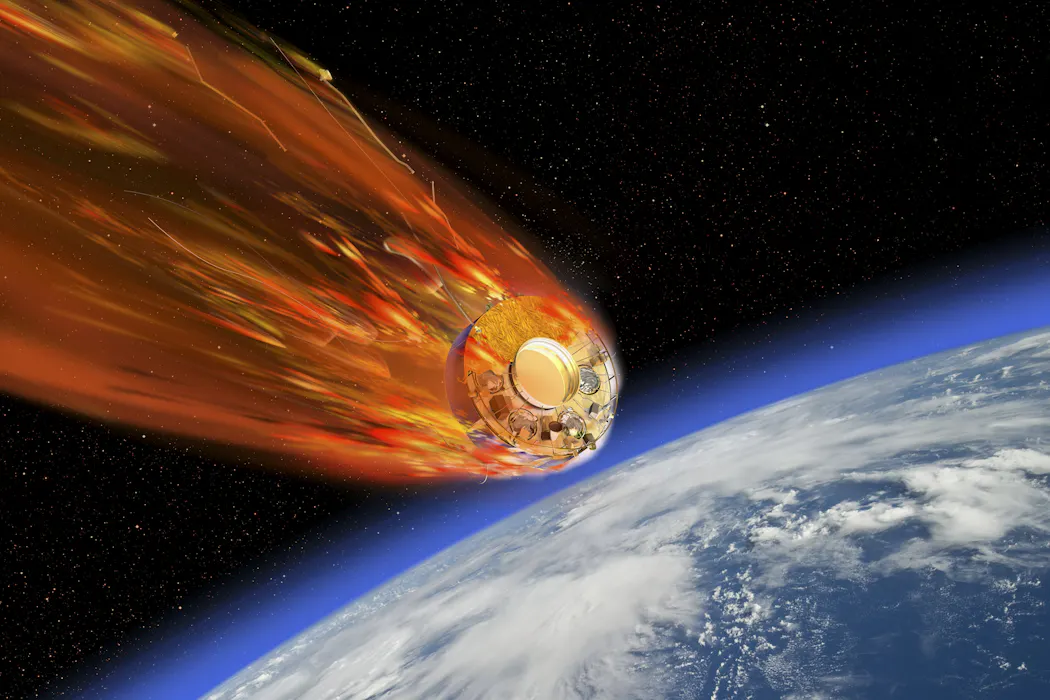
Similarly, we are aware that satellites burning up as they fall back to the Earth’s atmosphere will have significant effects on the chemistry in the upper atmosphere. We know there are now several of these large satellite re-entries occurring every day, but the full effects of this are not clear.
Messy space governance
Several scientific bodies now advise on policy in different areas of space sustainability. One is the Inter-Agency Space Debris Coordination Committee, which focuses on space debris degradation of the environment.
Another is the International Astronomical Union Centre for the Protection of the Dark and Quiet Sky, which co-ordinates efforts to reduce the impact of satellites on optical and radio astronomy.
But no single body exists to provide comprehensive policy input to governments for policy and regulatory decisions. The situation is similar to that in climate change research, when the early Advisory Group on Greenhouse Gases (AGGG), formed in the 1980s, transitioned to the Intergovernmental Panel on Climate Change (IPCC).
We urgently need an intergovernmental panel on space sustainability (IPSS).
Ten years ago, the number of active satellites in low-Earth orbit numbered almost 2,000; today, it’s close to 20,000. In recent years, governments and corporations have announced plans for up to a million more.
Defining global thresholds
How could this IPSS be structured, to approach space governance in a similar way to how the IPCC approached the climate change problem?
A primary goal should be to define global thresholds for sustainability. Much like the 1.5 C limit in climate science, the panel should identify thresholds beyond which specific orbital altitudes have reached carrying capacity.
Like the IPCC, an IPSS should include several working groups to provide transparent and accessible summaries of scientific results for policy makers.
One should focus on the physical science of the orbital environment. This means the state of low-Earth orbit as a finite resource — including estimates of space debris and collision growth, effects of space weather and models of sustainable future launch traffic.
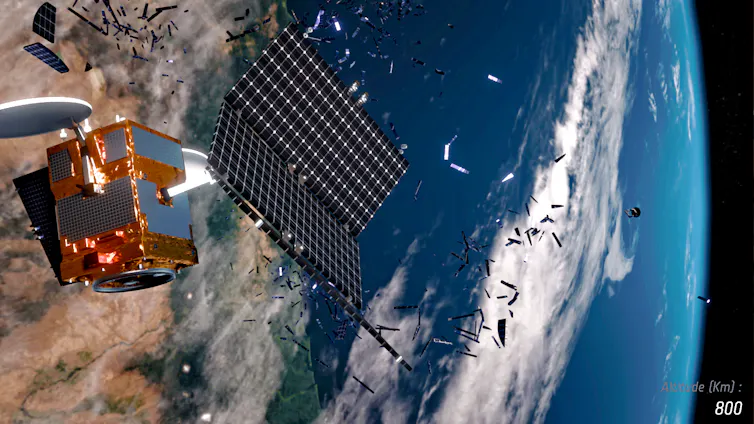
Another working group should centre on the environmental and societal impacts of large satellite constellations. This would assess stratospheric ozone depletion caused by rocket launch emissions, the effects of higher satellite re-entry rates, changes to atmospheric chemistry and increased casualty risks. It would also quantify their impact on ground-based astronomy.
Finally a working group on mitigation and policy could set the stage for clear international standards for post-mission satellite disposal, active debris removal and new licensing requirements that account for a constellation’s “system-wide” rather than “per-satellite” risk.
Space traffic footprints
A useful addition to the IPSS would be a Task Force on Space Traffic Footprints. Modelled after the IPCC’s Task Force on National Greenhouse Gas Inventories, this body would develop standardized methodologies for states to report their “space traffic footprint” — the burden their space objects pose to the safety and sustainability of the low-Earth orbit environment.
Similar to the IPCC’s role in vetting climate models, the IPSS needs to provide independent assessment of claims regarding satellite demisability — the way satellites are safely decommissioned and de-orbited. This should evaluate how successful de-orbiting technologies are and how well we can track satellites and estimate their location uncertainties.
By creating a co-ordinated international approach now, the IPSS will help balance the enormous promise of commercial activity in space with the environmental risks — just as the IPCC has done with Earth’s changing climate from human activities.
This article was originally published on The Conversation. Read the original article.