The flags of the European Union countries. Photograph: Ian Waldie/Getty Images
It would be all too easy to joke about the Masterpieces from Europe exhibition which is to be opened by the Italian president today.
You could begin by saying that it is just the sort of thing you would expect of a bunch of Eurocrats who felt they had to do something "cultural" to mark the 50th anniversary of the signing in Rome of the treaty that set up what we now know as the European Union. You could go on to say that, by getting each of the 27 member states to contribute a work of art, they have created a show with all the internal cohesion of one of those ministerial councils in Brussels at which they argue till dawn.
I shall do nothing of the sort.
This is a fascinating exhibition. Not because of the art, but because of the semiotics. Each of the member countries was asked, in effect, to make a statement about itself or the EU. So, like a character in The Da Vinci Code, you move from one exhibit to the next, trying to work out what they were attempting to say.
The French sent Rodin's The Thinker. As you might have guessed.
Austria, whose politicians are always grumbling it gets a raw deal from the EU submitted a work by Egon Schiele showing a woman with her legs apart. I don't think that message is too difficult to work out either.
The Portuguese, who have probably had more hand-outs from Brussels than anyone, contributed two works by the Cubist Amadeo de Souza-Cardoso. One is called Untitled - Cash Register.
Luxembourg seems to have opted to represent the voice of Euroscepticism. The tiny principality's offering is by the Expressionist Joseph Kutter and shows a hobby horse.
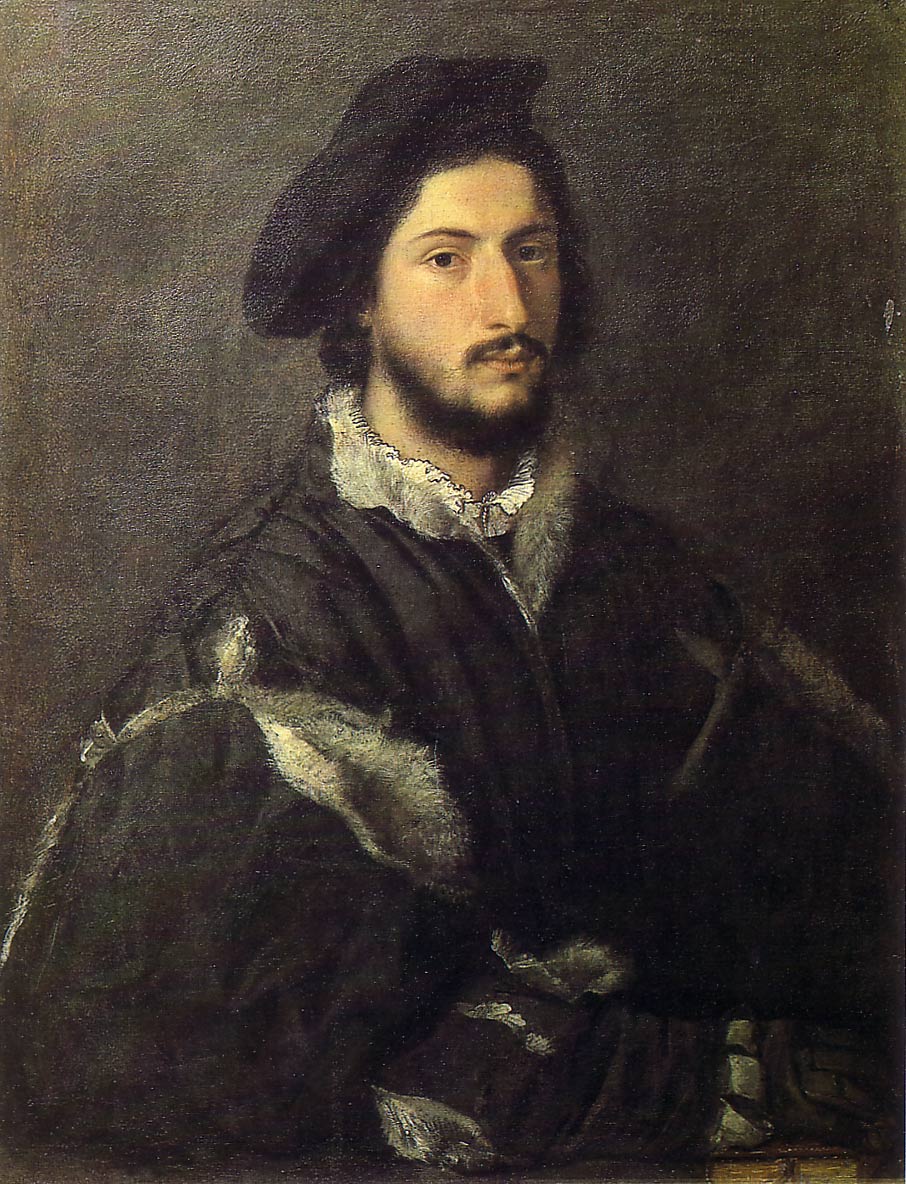
However, for sheer cheek, it would be hard to best the show's Italian hosts. The official entry is bland - Titian's Portrait of a Gentleman from 1520. But they also slipped in a 28th exhibit, a glazed, red clay crater that stands at the centre of the show and depicts the Rape of Europe.
I originally assumed this was a tribute to the Common Agricultural Policy. But it seems it is about how you can't trust the Yanks. At the press conference a Carabinieri officer was invited to stand up and explain how he had got it back from the Getty Museum in California.
It is perhaps surprising that, at this point, our government representatives did not unhook their canvas from the wall and walk out in protest at an implied slight to their allies. But the painting stayed put, and is by far the most enigmatic work on display.
London sent Turner's The Arrival of Louis-Philippe at Portsmouth, 8 October 1844. This is a seascape so misty, so pallid, so indescribably diffuse, that it is almost impossible to make out what it depicts. It is hyper-impressionism before the movement even got started.
Right now, I suspect, cultural attaches of the other 26 nations are sitting at their desks in embassies across Rome struggling to frame the telegrams they have to send back to their respective capitals.
What the hell does it mean? What is the message the perfidious British are trying to convey? That, even in the 19th century, they were 15 years ahead of the rest of us?
Or could it just be: "Fog in the Channel. Europe Cut Off"?