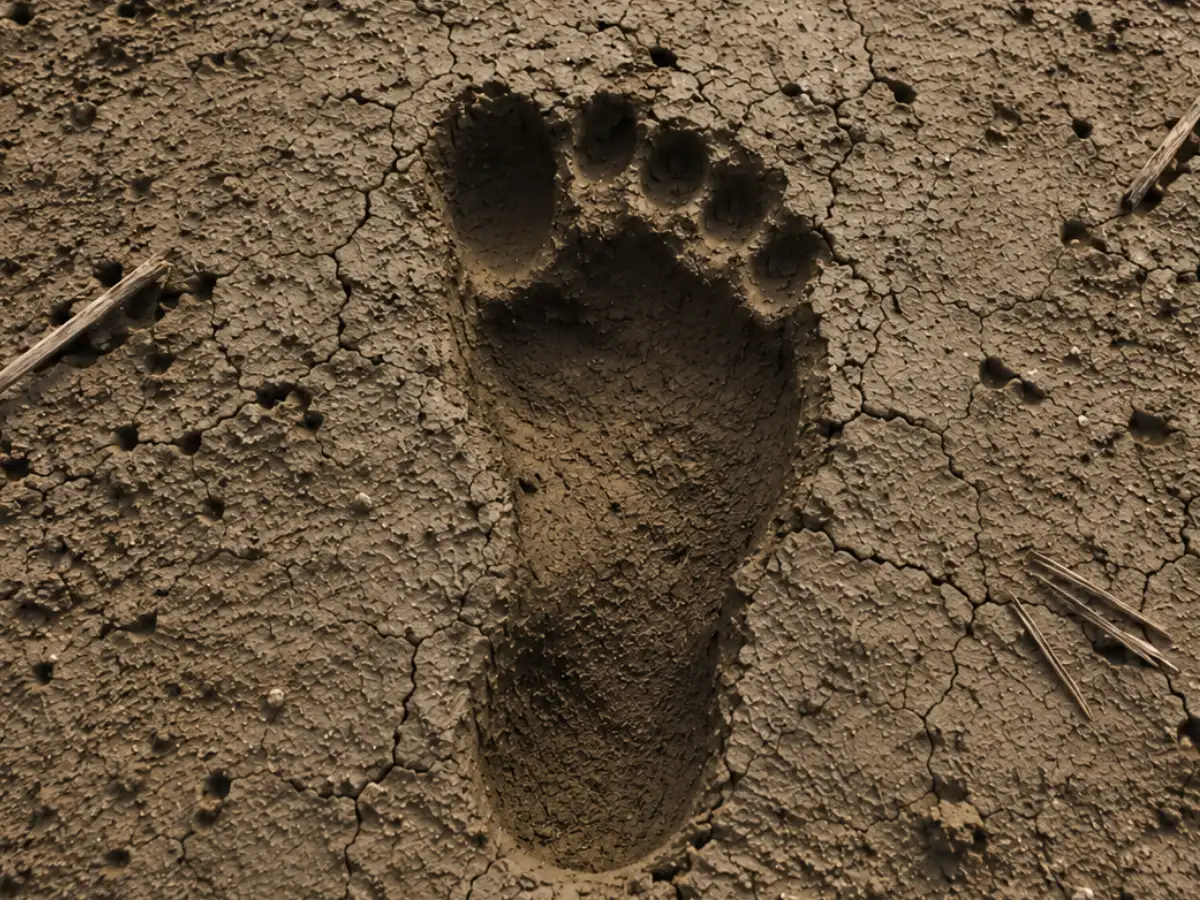
Most of us think of history as being locked away behind glass in museums. However, along a stretch of sand near Formby, England, about 11 miles north of Liverpool, you can watch history literally wash up at your feet.
Layers of ancient mud along Formby Beach have been slowly peeled back by coastal erosion, revealing thousands of footprints left by humans and animals almost 9,000 years ago. They are not faint impressions that you have to squint to read. In some cases, the mud has preserved the arch, the heel, and the space between each toe with startling clarity.
Researchers at the University of Manchester spent years documenting what they found, and what they found is remarkable. The research, published in Nature Ecology and Evolution, suggests that the Formby footprint beds comprise one of the largest concentrations of prehistoric vertebrate tracks known in the world, dating from the Mesolithic through to the Medieval period (about 9,000 to 1,000 years ago) and spanning at least 8,000 years.
It's like a living time capsule, pressed into mud, then sand, then mud again, layer upon layer, waiting for the ocean to set it free.
Wolves, deer, and barefoot humans, all sharing the same trial
It’s not just the age of the tracks that makes Formby really mind-blowing. It's the company.
Alongside the footprints of humans can be found the footprints of aurochs (huge ancient cattle), red deer, roe deer, wild boar, beavers, wolves, lynx, and cranes. Lead researcher Dr. Alison Burns described one scene that stopped her in her tracks: a barefoot person taking a few steps, pausing, with crane footprints right beside them, close by a trail of adult red deer. All of it in two square meters of mud, frozen at one moment in time thousands of years ago.