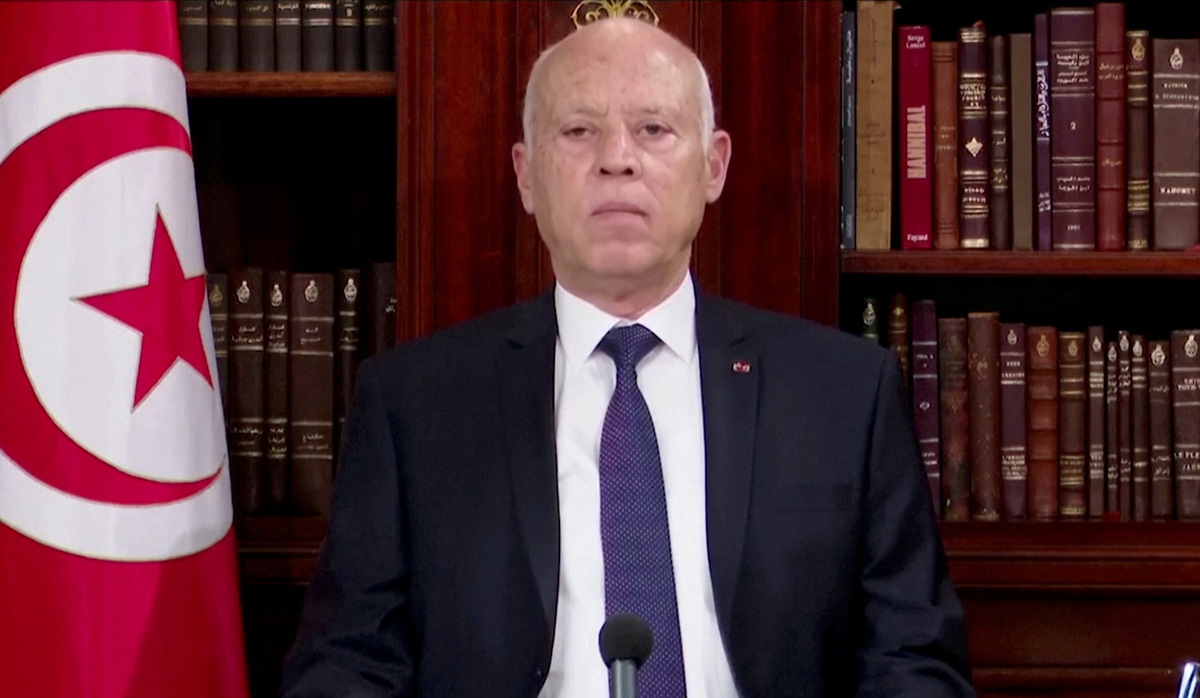
President Kais Saied's delay in announcing a way forward 10 days after he seized executive power is jangling nerves among Tunisians, with friend and foe alike increasingly impatient to see steps towards ending political and economic paralysis.
Saied on July 25 dismissed Prime Minister Hichem Mechichi, froze parliament and said he would govern alongside a new premier. The move prompted critics to accuse him of a coup and raising fears for the future of Tunisia's democratic system.
At stake are the rights and freedoms that Tunisians won during a 2011 revolution that ousted the previous autocracy, and its response to pressing economic problems that have soured many citizens on democratic politics.
Though allies of Saied still expect him to announce a new premier soon, there is no sign of a roadmap to handle either the long term or the immediate emergency period, which he initially set at one month but has since said could be renewed.
"The situation is delicate and there is a real fear there will be no participatory discussion in decisions," said Sami Tahri, a senior official at the powerful UGTT labour union.
Whether his sudden intervention will ultimately be seen as a coup - as the parliament speaker has called it - or as a moment of renewal for a democratic process that went awry, will depend on what he does next.
Sources close to the presidential palace in Carthage, an upscale Tunis suburb built on the coast around the ruins of an ancient city, say Saied has been seeking a premier among economic policy makers.
Political insiders in Tunisia now expect Saied to push a new electoral law and constitution focusing power in the presidency, ditching an arrangement that shared it with parliament and that is widely seen as having fostered paralysis and corruption.
However, it is not clear what a new constitution would look like, how democratic it would be, what role it might have for a parliament, whether it would have support from other major players and what means he would use to pass it.
NO CRACKDOWN
Saied says his moves were constitutional, though many Tunisian legal experts and the biggest party in parliament, the moderate Islamist Ennahda, have rejected that argument.
Though a few members were arrested on old charges after he lifted parliamentary immunity, there has been no significant crackdown on his opponents or critics.
He appears to have widespread popularity in a country where years of economic stagnation and political sclerosis were aggravated by the pandemic and his moves were met by street rallies in support.
"We are satisfied with the president... but I tell him, do not delay. Mr President, time is passing quickly and we want to do real work now," said Maher Ben Ali, a man selling fruit from a barrow in the capital's Bab Khadra district.
Meanwhile, he has replaced several ministers directly - adding to the impression that he will play the main role in government.
In Attayar party, which initially called Saied's moves a violation before softening its rhetoric as it became clear he enjoyed widespread support, officials said they needed to see a roadmap.
"Every day that passes, the hopes of Tunisians to purify the political climate are dwindling," said Nabil Hajji, an Attayar official.
Within Ennahda, some senior figures have pushed to reverse the party's stance that his actions constituted a coup, a position that may be discussed at a likely difficult meeting of its senior council expected late on Wednesday.
"There is ambiguity and we want clarity and a calm discussion to end the constitution violation and return Tunisia to the democratic path as soon as possible," said party official Maher Madhioub.
(Reporting by Tarek Amara and Angus McDowall, Editing by William Maclean)