
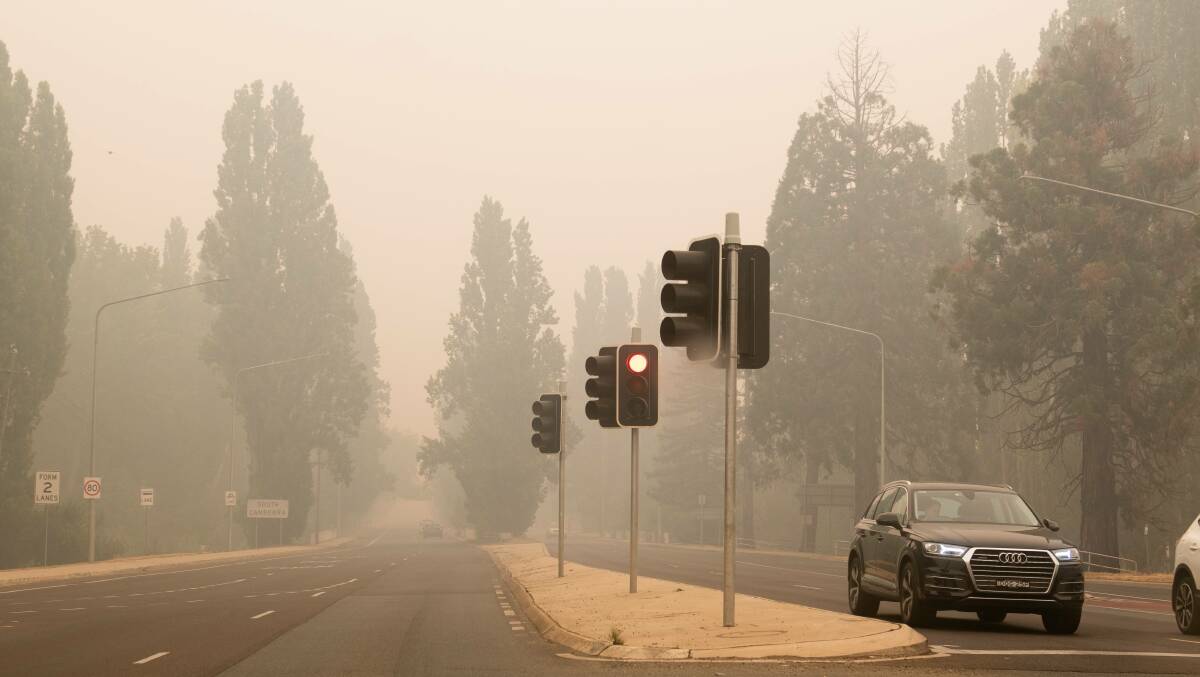
While the health impacts of the prolonged smokey blanket which covered Canberra last year are being examined, researchers have uncovered how some of the community's most vulnerable coped.
Sparked by the question of how the climate crisis impacted women's choices around having children, Professor Celia Roberts and colleagues at the Australian National University launched the research to understand how pregnant women handled the smoke haze of the Black Summer bushfires.
Interviews with expectant parents found a "huge amount of anxiety" in what was a very difficult time to be pregnant.
"They were told they were vulnerable," Professor Roberts said.
"The public health information depicted pregnant women as vulnerable but did not explain why.
"We've been speaking to specialists ... no one can explain why because the science isn't there."
The research is part of a broader project at the ANU looking at how women and their babies were impacted by the smoke, called Mother and Child 2020.
Professor Roberts said women were unsure how to look after themselves, and were desperate for local, relevant air quality data which couldn't be provided by the government at the time.
"The other thing we found, and this goes into COVID-19, was that people's pre-natal visits were cancelled," she said.
"Health services need to get more prepared ... how do they keep giving care to people in a huge smoke event? I think they just weren't ready."
Professor Roberts said alongside medical visits, mothers' groups and other social activities had to be cancelled, which left parents feeling isolated.
Read more:
- The monster from the south: How the ACT's Orroral Valley fire grew
- ACT Coroner launches inquiry into origins of Orroral Valley fire in Namadgi
- Canberrans in the dark on smoke effects
"I think it was underestimated how important that was to people," she said.
Women in south coast towns interviewed as part of the project reported a better ability to keep those community groups going throughout the bushfires and smoke, Professor Roberts said.
A separate study into the impacts of the smoke delved into the impacts for vulnerable parts of society.
Dr Rebecca Williamson from the ANU School of Sociology said there was a need for support systems to help people exposed to isolation as a result of the smoke haze.
Interviews with people with chronic illness found a desire for a vulnerable persons register, so there would be a clear understanding of health needs in the event of evacuation.



