

In the world of design, it's often easy to categorise a figure as a minimalist or maximalist, but Anne Hathaway proves that, against all odds, it's possible to be both.
While these aesthetics are contrasting, the Devil Wears Prada actress has experimented with two polar-opposite styles in her homes: her California residence is a maximalist fairy-tale chalet, and her New York apartment is a modern, minimalist retreat.
I've written about celebrity homes for four years now, but I will always stand by how Anne Hathaway's property portfolio is the most eclectic of them all. At a glance, you wouldn't expect them to be owned by the same person, but at the heart of them both is Anne's quietly luxurious charm. Let's explore them both – and what makes them so unmistakably chic, in all their differences.
The Californian Chalet
The most famous of Anne's homes, her Californian chalet is a 1906 historic country house in Ojai, originally designed by architects Myron Hunt and Elmer Grey in a hybrid of California Arts and Crafts–style and Swiss chalet architecture. It's more like a storybook lodge rather than a suburban villa, and its maximalist interiors, courtesy Pamela Shamshiri of Studio Shamshiri, are the key to its aesthetic.
Before Anne and her husband, Adam Shulman, made it their primary residence, the property accumulated a whimsical backstory in design circles (including fanciful associations with names like Yves Saint Laurent and Wes Anderson), which now informs much of its character and narrative-driven design.
The maximalist home is a trove of rich pastels and earthy tones that counter the original dark woodwork, while the vintage furniture nods to the home's film and design culture. It comes to play in her living room (below), but every room feels curated but deeply lived in.
At the heart of the chalet is its kitchen, a space completely re-imagined by Shamshiri to be both inviting and narrative-rich rather than merely functional.
In maximalist style, it boasts a wallpapered breakfast nook and an Alpine-style cooking space with soft green cabinetry, pine cladding, and open shelving – a maximalist staple that shows off possessions with pride. To get her look, I've rounded up some furnishings (including a beautiful brass pendant from Anthropologie, just like Anne's), and accessories that won't feel out of place on any shelf.
Shop the Edit
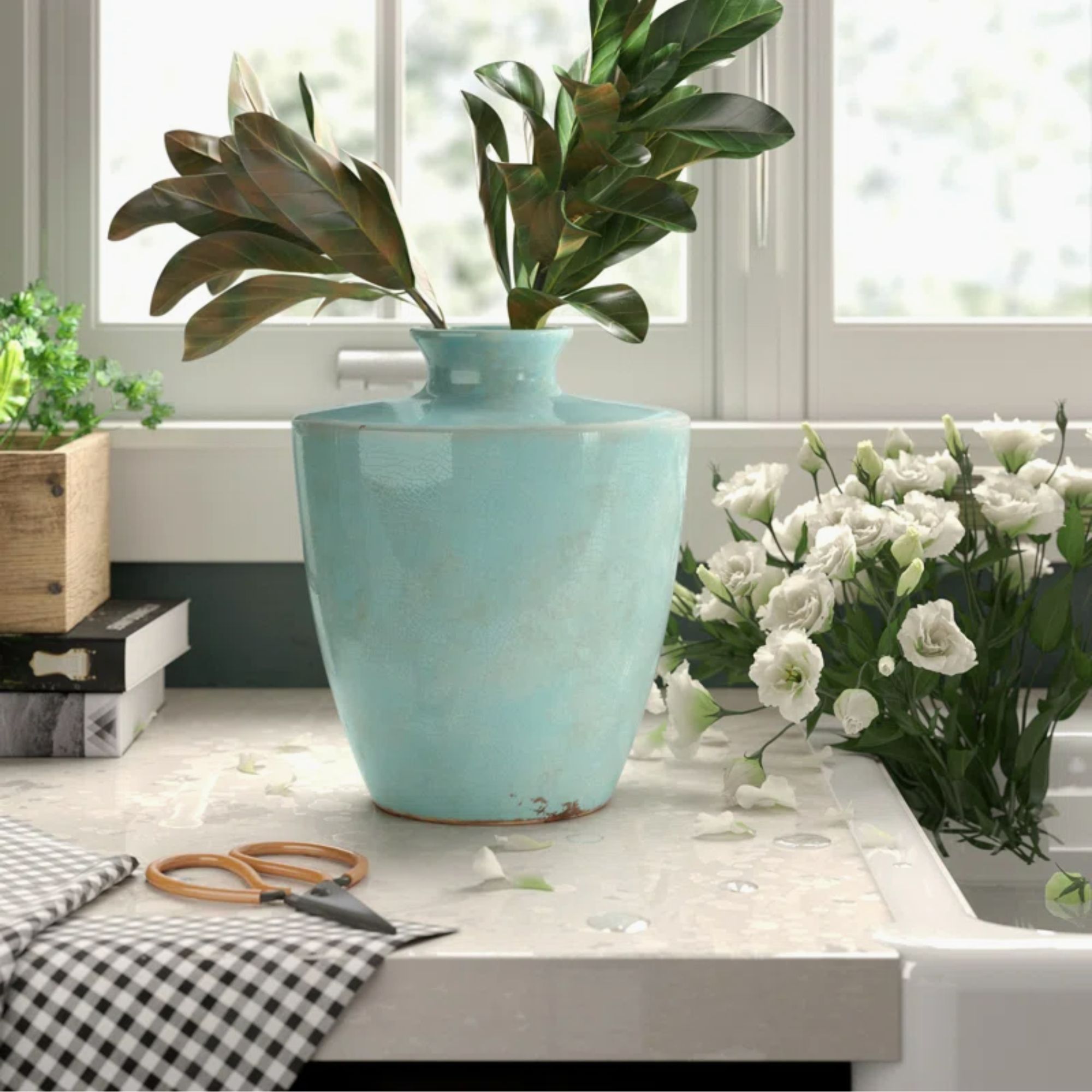
One piece that immediately draws the eye on Hathaway’s shelves is her striking blue vase. This rustic option from Wayfair is one of the closest lookalikes, and it feels just as at home beyond the kitchen.
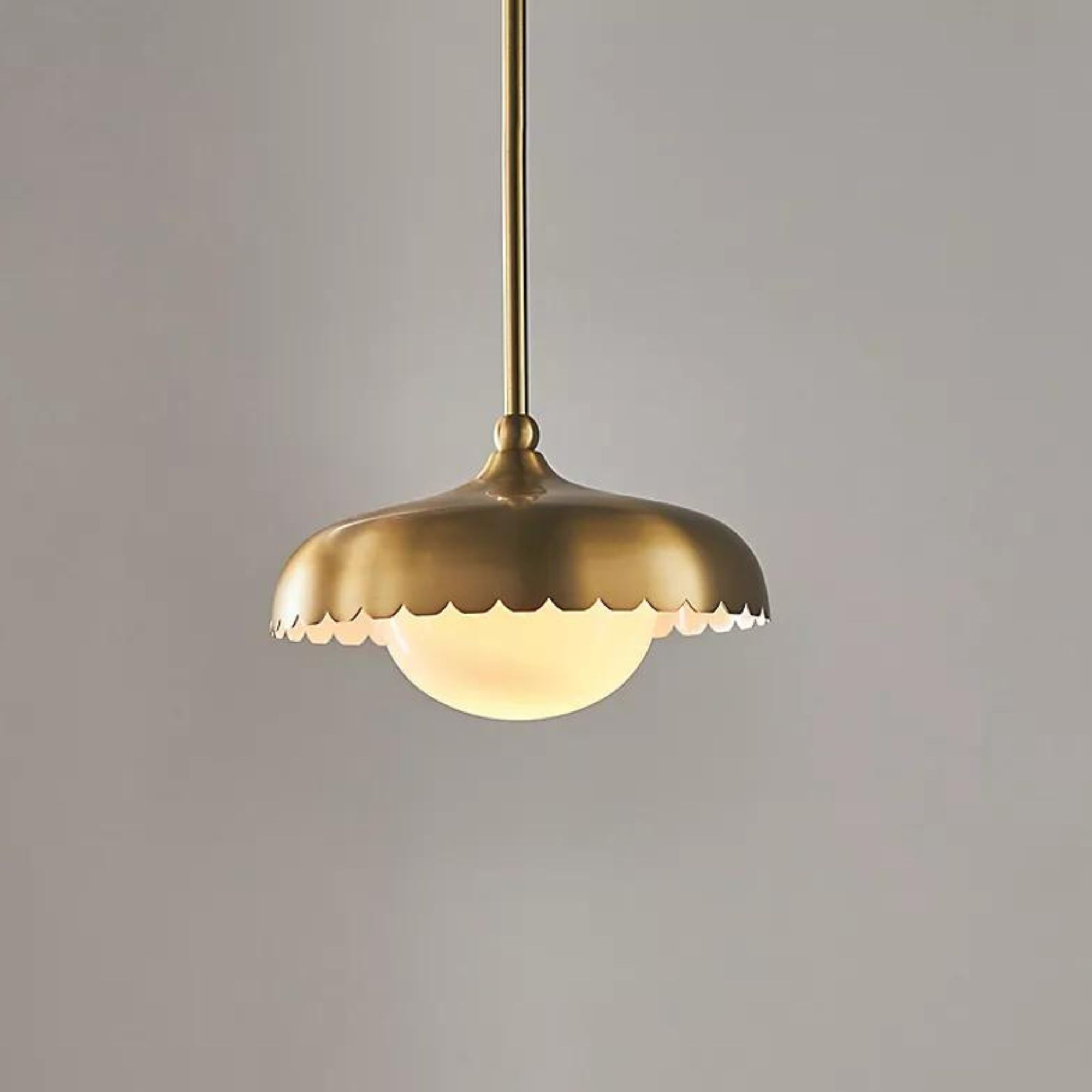
This pendant light features a sculptural scalloped edge that lends subtle vintage charm, while the warm brass finish echoes the elegant metallic accents seen throughout the kitchen. It’s a refined statement piece that works beautifully in a range of spaces.
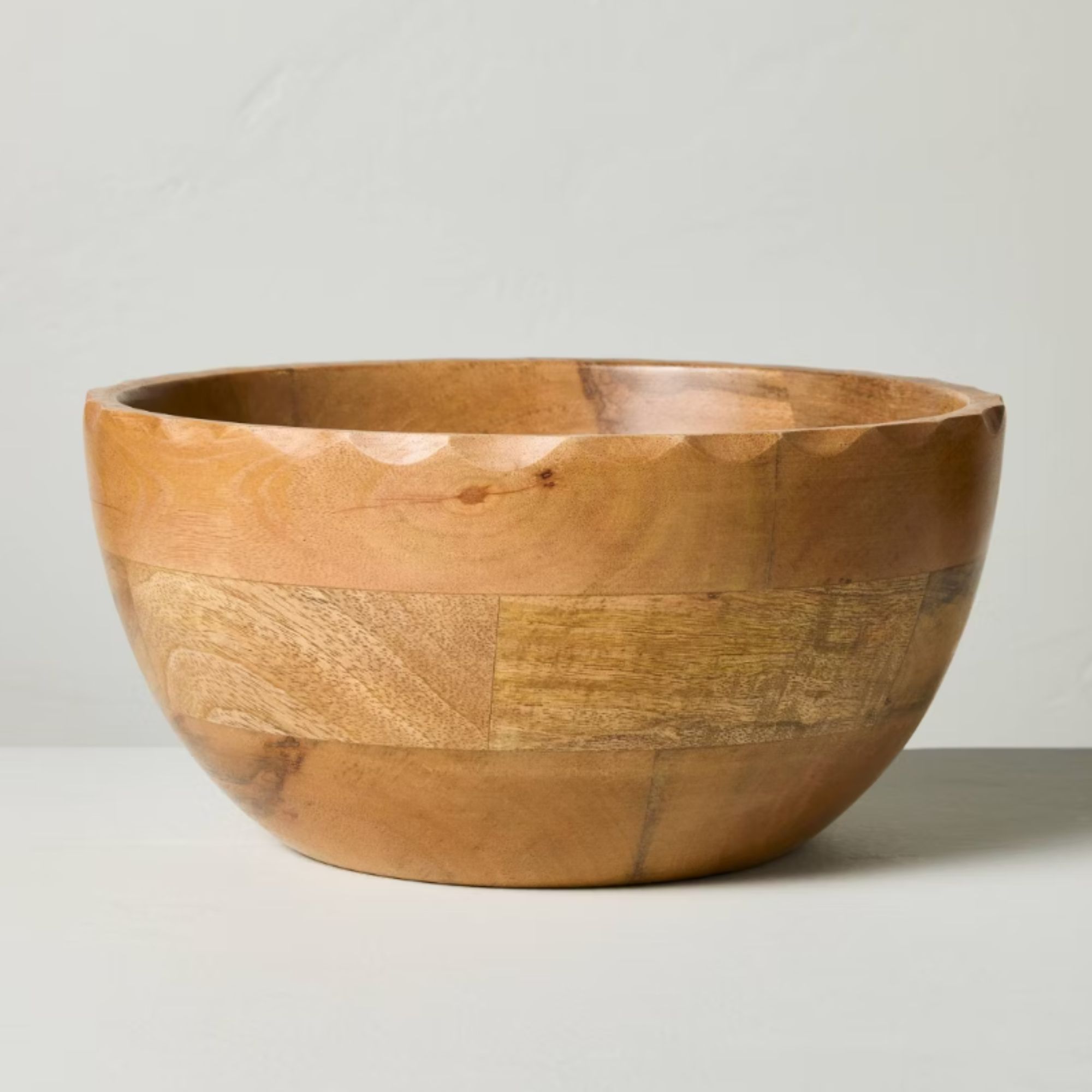
Delicately carved from acacia wood, this fruit bowl recalls the one styled on Anne Hathaway’s kitchen island. Equally suited to a dining table or countertop, it becomes an effortless centerpiece when filled with vibrant lemons or oranges.
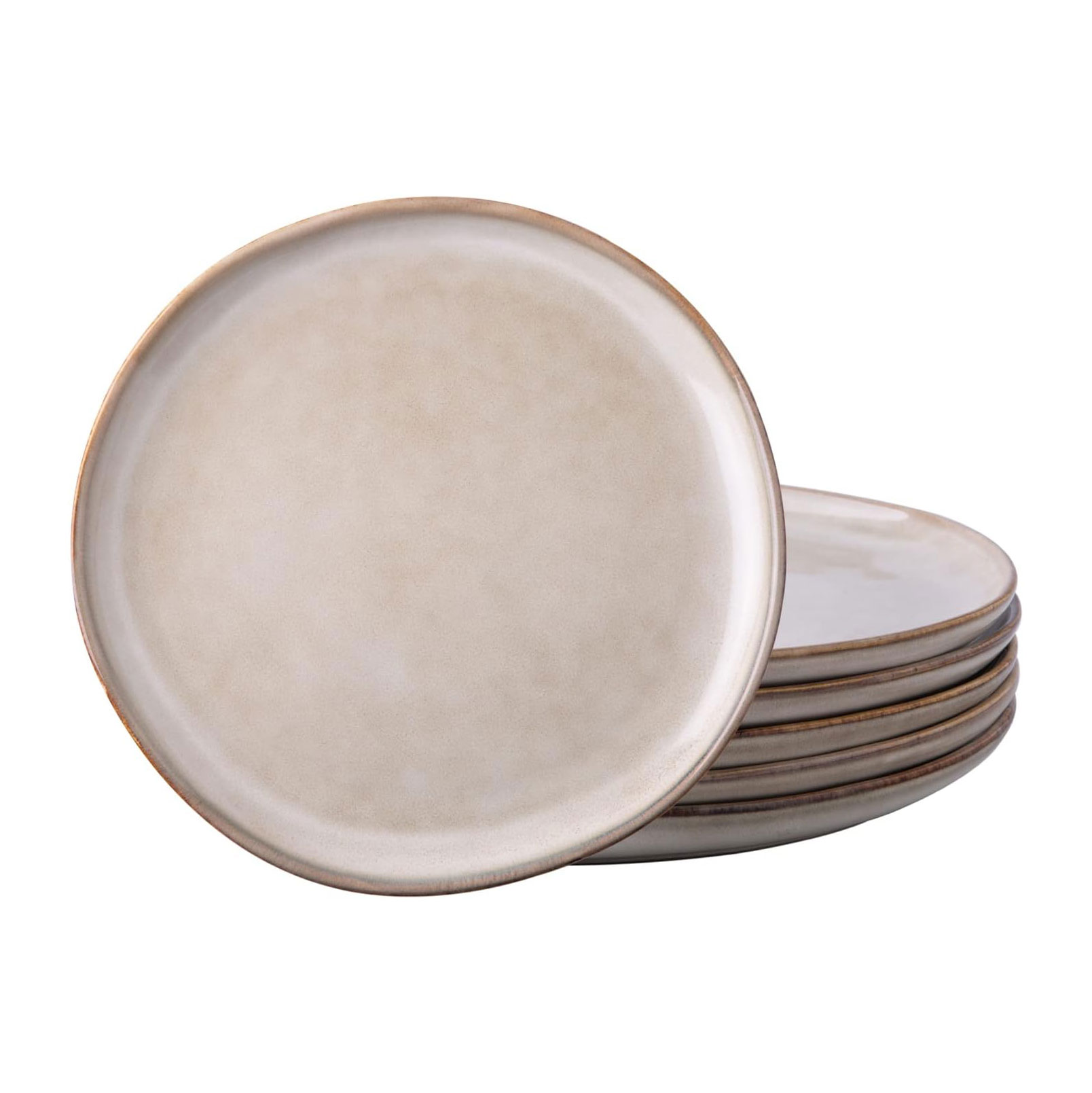
If your kitchen has open display shelves, your plates and crockery should be as beautiful as they are functional. This on-trend set is a guaranteed crowd-pleaser, with a timeless colorway that pairs effortlessly with any style. You’ll get maximum use from them, and trust me – this shade truly complements everything.
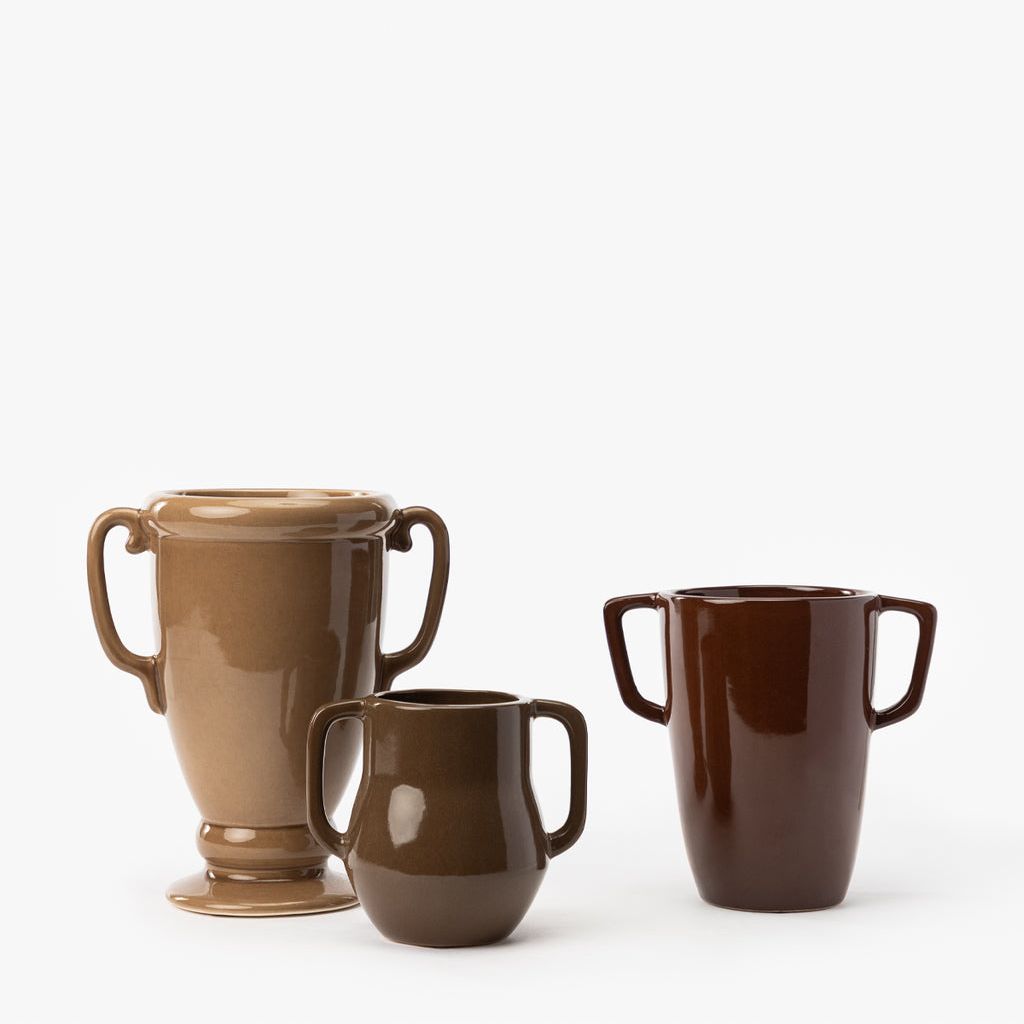
Crafted from glazed earthenware, this vase adds a grounded, sculptural touch to any vignette. Available in three shapes, each piece features rich tones and thoughtfully considered design details. To get a maximalist look, arrange them on your shelves alongside plates and other vases.
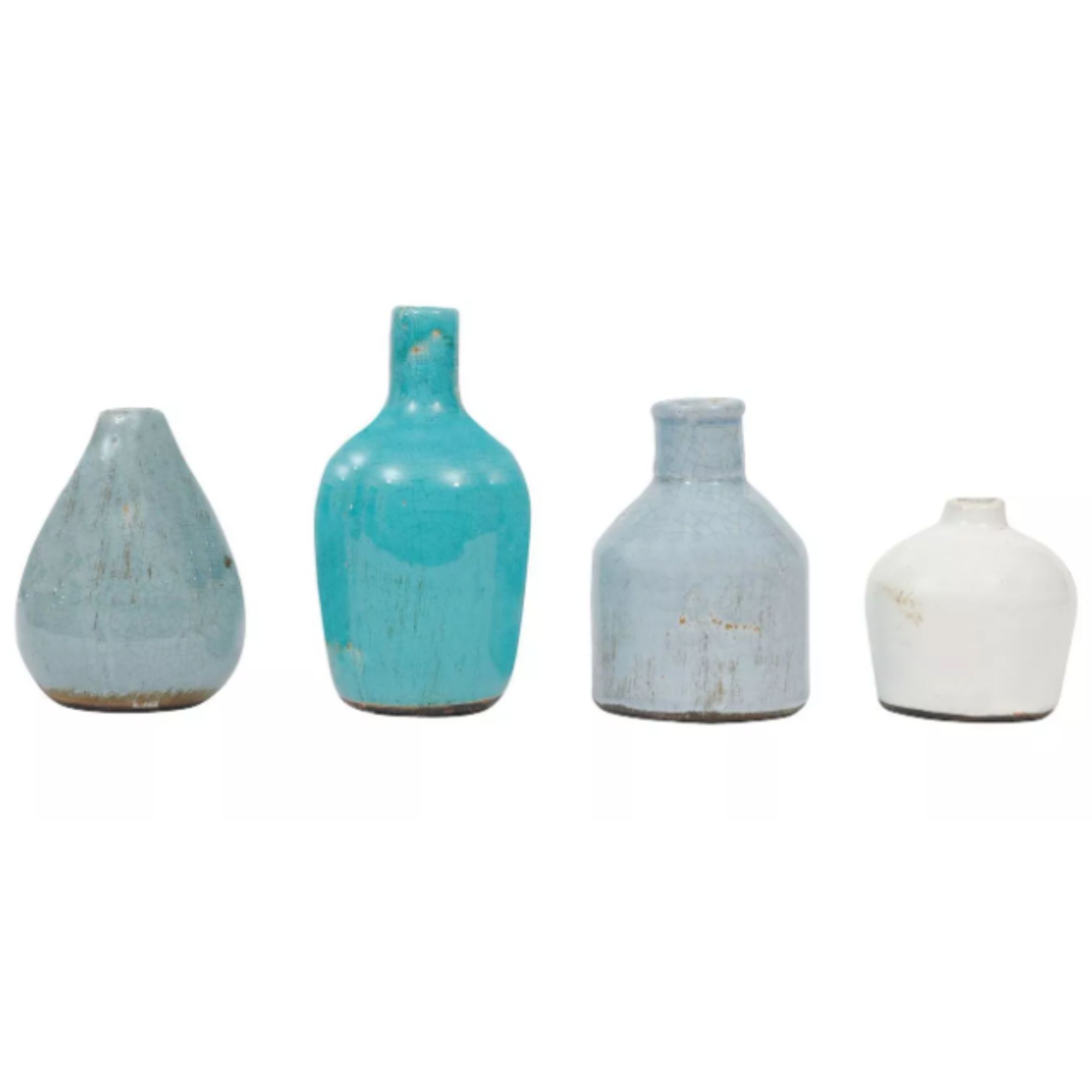
Introduce a touch of farmhouse charm to your kitchen with this set of vases. Made from high-quality natural clay and finished with a distressed crackle glaze, each piece has its own unique variation in color, adding a certain warmth that Anne would surely love.
The New York Pied-à-terre
In contrast, Anne's Upper West Side apartment is a minimalist haven, sitting atop a Georgian mansion, originally built in the early 1900s.
The actress purchased the two-bedroom home and partnered with boutique New York studio Gramercy Design to design the space, marrying historic architectural details with a refined contemporary sensibility. The s
The result was an open-plan layout that allowed light to pour in from skylights and French casement windows, blurring the line between classic city living and modern minimal luxury before they eventually listed the penthouse for sale.
'This apartment’s aesthetic was understated and streamlined rather than maximalist, a studied counterpoint to her California chalet,' comments Hebe Hatton, the Head of Interiors at Homes & Gardens.
'The kitchen in particular became a design talking point: crafted as an 'invisible kitchen' that blends seamlessly into the living space, it features handleless, integrated cabinetry and sleek finishes that recede into the background when not in use, creating a calm, gallery-like effect within the open plan. It's hard to believe both spaces carry Anne Hathaway's name.'
While her Californian chalet and New York apartment sit at opposite ends of the design spectrum, they’re united by a clear point of view. Each space reflects a deliberate approach to interiors, proving that minimalism and maximalism can coexist when executed with confidence. Take it from Anne Hathaway, you really can do both.