
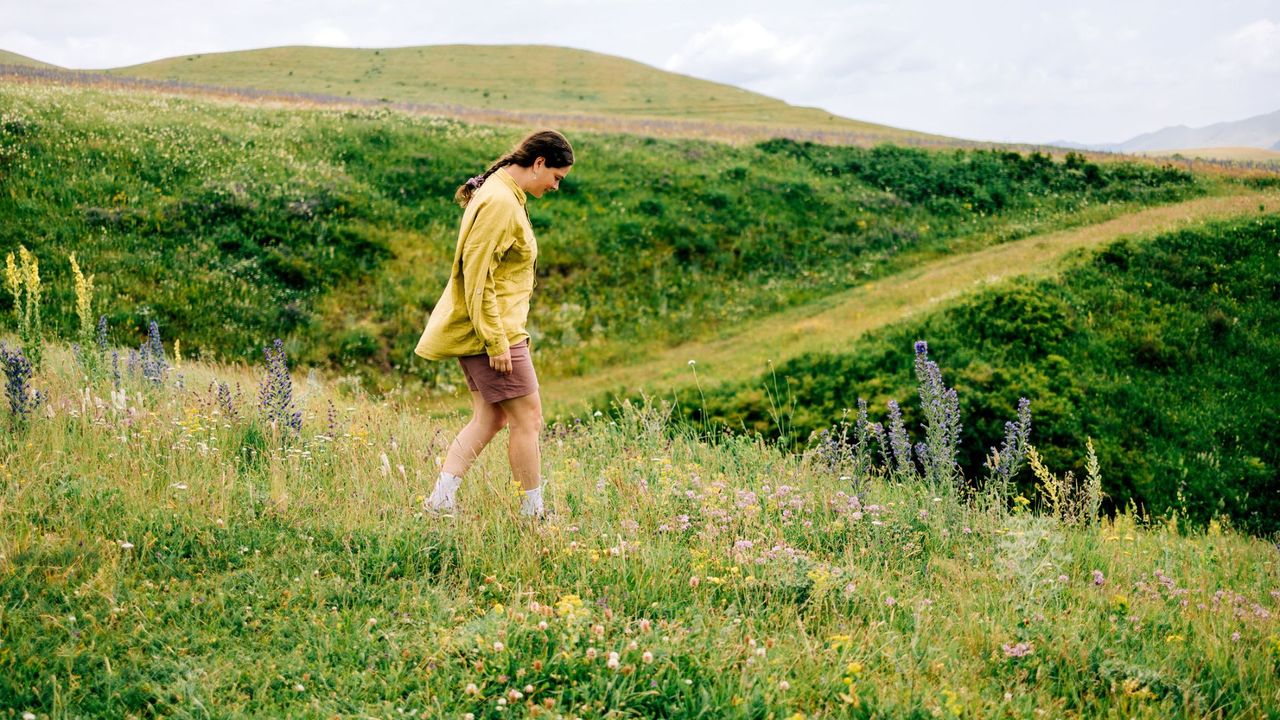
Walking uphill is tough. Whether you enjoy hiking and seek out inclines or just live in a hilly area, you probably find yourself reaching the summit sweaty and out of breath—no matter your fitness level.
But according to Milica McDowell, a doctor of physical therapy, it’s actually going downhill that could be the trickiest part of your walk, because this is where most walking-related injuries occur.
Downhill walks may be less challenging on the cardiovascular system, but they require us to employ our muscles in a different way than when we’re moving uphill.
“Going downhill requires that you're managing your bodyweight, and the additional effects of gravity on your bodyweight,” says McDowell, who also works as an exercise physiologist. “This is more demanding than going uphill.
“When we are going downhill, our muscles are in what we call an eccentric contraction, which means the muscle is actually lengthening while we’re doing the activity.”
“Most exercises that individuals commonly participate in focus on concentric contractions, which are where the muscle is shortening,” she says.
For instance, if we look at a biceps curl, the eccentric contraction happens when we lower the weight. The focus of the exercise is generally on the lifting part, which is concentric contraction.
To build eccentric strength, you need to ensure that you slowly lower the weight with control back to the starting position.
“Eccentric exercises can make you very sore, even more sore than concentric exercises,” says McDowell, as anyone who has spent a day walking down a mountain will agree.
But you can develop eccentric strength in your legs. Here’s how.
How to get better at walking downhill
“If you want to train eccentrics, think about slow lowering when you're doing activities like step-downs, squats or lunges,” says McDowell.
“Walking downhill on a declined treadmill can be very helpful if you have access to a treadmill that can go downhill.
“This is a great place to start, alternating from flat to downhill in order to build up your eccentric and downhill tolerance.”
How to improve your downhill walking technique
In addition to eccentric moves to prepare, there are tips that can help during the actual walk.
“Once you are out and walking in a decline or downhill environment, it's important to think about your heel contact with the ground,” says McDowell.
“Your heel is the brake of your walking pattern, and if you feel like walking downhill is getting too demanding, the stronger your heel contact is, the more you're putting on the brakes.”
She also recommends zigzag walking on the way down.
“Rather than walking straight down the hill, you can minimize the angle that you are absorbing with each step by walking in a zigzag fashion,” she explains, before making one final suggestion.
“Walking poles can be helpful to use as a set of brakes. It's important to make sure that the poles are the correct height for your vertical height.”