When British-Egyptian actor Khalid Abdalla farewelled the hit series The Crown and his character, Dodi Fayed, he knew he was saying goodbye to a role with a depth and significance well beyond merely a love interest for Princess Diana.
“Dodi is one of the first Arab characters I can think of in the history of [western] film that you get to know and love, not fear,” says Abdalla, seated in his London home two years after the series ended. “And so, when he dies, you mourn him.”
Glasgow-born Abdalla, 45, whose father and grandfather were leftist political dissidents in Egypt, well understood the cultural significance of fleshing out the character of Alexandria-born Fayed beyond the playboy of legend.
He was also acutely aware of the political moment in which his portrayal was being presented. Walking the red carpet in London when the final episodes of The Crown premiered in December 2023, just two months after the 7 October attack by Hamas that triggered Israel’s war on Gaza, Abdalla held up his palms to reveal “return the hostages” written on the right and “end the occupation” on the left. On the backs of each hand were the words “permanent” and “ceasefire” respectively. Interlocking his thumbs, he made the shape and motion of a bird with his hands, referencing the peace dove.
This symbol became a motif in his one-man play Nowhere, an exploration of what it means to belong – or not – that premiered at Battersea Arts Centre in London in 2024 and is coming to the Sydney festival in January.
Nowhere blends the personal and political in a multimedia show that includes photography and footage, song and dance, performed by Abdalla. It interweaves his own life and family history with commentary on western colonialism in the Arab world, 9/11, the 2011 Arab spring protests in Egypt (which Abdalla and his father took part in) and Israel’s “genocide livestreamed into our phones”. Abdalla often rewrites the play’s ending to adapt to the latest developments in the Israel-Palestine situation.
Nowhere is a vehicle for Abdalla’s freedom of expression against the backdrop of what he has described as an “alarming rise in attempts to censor voices that stand up for Palestine”. In March, Abdalla was ordered to attend a British police interview over his participation in a Palestine Solidarity Campaign protest in January. “The right to protest is under attack in this country and it requires us all to defend it,” he wrote in a statement posted to Instagram in response to the summons.
Police questioned him for a few hours, he says. “But the process from receiving the letter until having confirmation that there would be no further action was six months, and so you live under its shadow and the intimidation for quite some time.
“I’ve got two young kids, I have a family and you worry at some level about reputational harm.
“And yet it’s also an honour, because you know you’re doing it for the right reasons … On some deep level, it also linked me to my family history.”
Weeks after our interview took place, on 14 December, two gunmen killed 15 innocent people during Hanukah celebrations at Bondi beach; 10 days later, New South Wales premier Chris Minns’ Labor government passed controversial new powers for police to ban street protests for up to three months.
In an email after we spoke, Abdalla tells the Guardian he is continuing to adjust the show based on when and where it is being performed. “It’s too early for me to know what this will mean in practice [in Sydney] but the experience of Nowhere is also about what audiences bring to the show and what they are carrying. So, even if I wasn’t to change a word, I’m sure it will feel different.”
Beyond its politics, Nowhere is also a showcase for Abdalla’s considerable talents as an Ecole Philippe Gaulier-trained performer with roles spanning from London’s National and Almeida theatres to films including The Kite Runner and United 93. “There’s this gorgeous moment where he goes, ‘OK, I’m also an actor, and I’ve lived in a lot of places’,” the Sydney festival director, Kris Nelson, told Guardian Australia. “He just flips through all his accents, turning on a dime, and you’re like, ‘Oh my God, this guy’s very talented’.”
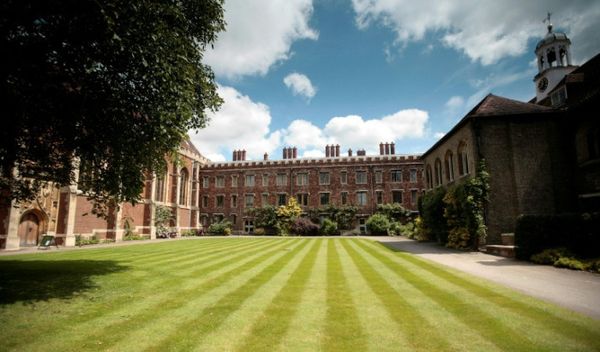
Abdalla lost his broad Glaswegian accent around the age of five, after his family left Scotland. He grew up in London and studied English literature at Cambridge University and speaks with the cut-glass received pronunciation of the British establishment.
He calls Nowhere “an anti-biography” in recognition of the fact that “the world shapes who I’m able to be … I’m put under the gaze of ‘an Arab in a post-9/11 world’”. The play asks “where is my agency?”, Abdalla says.
The play’s title was inspired by former British prime minister Theresa May’s infamous 2016 statement on citizenship: “If you believe you are a citizen of the world, you are a citizen of nowhere.”
That word continued to resonate with Abdalla as he contemplated “the genocide [and] this idea that nowhere is safe”.
“And part of my political experience is in that sense of a lack of safe belonging,” he says.
Nine months after being questioned by police, Abdalla is heartened there are more high-profile artists willing to “stick their head above the parapet”, including the actors and directors who have joined a boycott pledging not to work with Israeli film groups “implicated in genocide”.
Abdalla has been keeping a keen eye on freedom of speech in Australia and has been briefed by Nasser Mashni, the president of the Australia Palestine Advocacy Network. When I bring up the controversy over three actors wearing keffiyehs in support of Palestine during a curtain call at Roslyn Packer theatre, where Abdalla will be performing Nowhere, he says: “Look, we’ve moved significantly from that time, right? There is a massive shifting global consciousness in relation to Palestine and solidarity with Palestine.”
Abdalla says he was heartened to see the pro-Palestine march across Sydney Harbour Bridge in August. “Those are the images that come to my mind in terms of who I imagine I’m coming to encounter [in Sydney],” he says.
At the same time, he says, “in every country, there’s this tension between what seems to me the majority global consciousness versus political power and the various corporate interests that act as gatekeepers to what you are and are not allowed to say, whether it’s in the media or in cultural spaces.
“As we’re in a so-called ceasefire, here is where we set the ground for the journey of the next 10 years, so that it is truly the anti-apartheid civil rights movement of our time.”
Theatre and the arts have an important role to play, he says. “It’s so important to have these gathering spaces where we can explore these things safely together, in a way that is meaningful and touches people’s hearts.”
Nowhere by Khalid Abdalla is at the Roslyn Packer theatre from 13-17 January as part of Sydney festival