Looking at Crissy Field now, it is hard to imagine that this tranquil stretch of the San Francisco waterfront was once filled with concrete, landfill and military facilities. Families picnic on the lawns, cyclists ride the waterfront trail, birdwatchers scan the marsh and children play near the bridge. But the park’s history runs much deeper than its present-day scenery.
Get breaking news anytime, anywhere. Download the TOI app now!
For many years, the land was a thriving 130-acre tidal marsh associated with San Francisco Bay. It was gradually developed until much of the original marsh disappeared. According to the National Park Service , the land was altered so extensively that it became a military airfield and later a neglected concrete expanse. Restoration began in the late 20th century to improve the landscape and reconnect the land to natural water flow.
From an estuary to a military airfield
Before the arrival of Europeans, the estuary was home to the Ramaytush Ohlone people, who fished, collected shellfish and camped in the area. The estuary was part of a larger coastal environment where freshwater mixed with seawater.
That landscape gradually changed after Spanish settlement in the late 18th century. The marsh drew little attention at first, but later development changed it substantially. After the United States Army assumed control of the Presidio in the nineteenth century, the wetland was treated as land to be filled and repurposed rather than protected.
Over several decades, rubbish, soil and construction debris were dumped into the marsh until much of the original habitat was buried under fill. The reclaimed land was later used to build Crissy Field, a military airfield that became part of American aviation history. Historic flights, including the first flight from the mainland United States to Hawaii and the first transcontinental flight from the Presidio, took place from this location. While the airfield became part of American aviation history, the marsh that had once covered the site had almost entirely disappeared beneath the reclaimed land.
When the National Park Service assumed management of the Presidio in 1994, the area known as Crissy Field had become a neglected concrete expanse, far removed from the tidal marsh that had once occupied the site.
Removing the past for restoration of the tides
The first step was a massive clean-up effort. Contaminated material left behind by years of military activity had to be removed before the land could be reshaped. According to the National Park Service, almost 90,000 tons of contaminated material were removed during the environmental cleanup process.
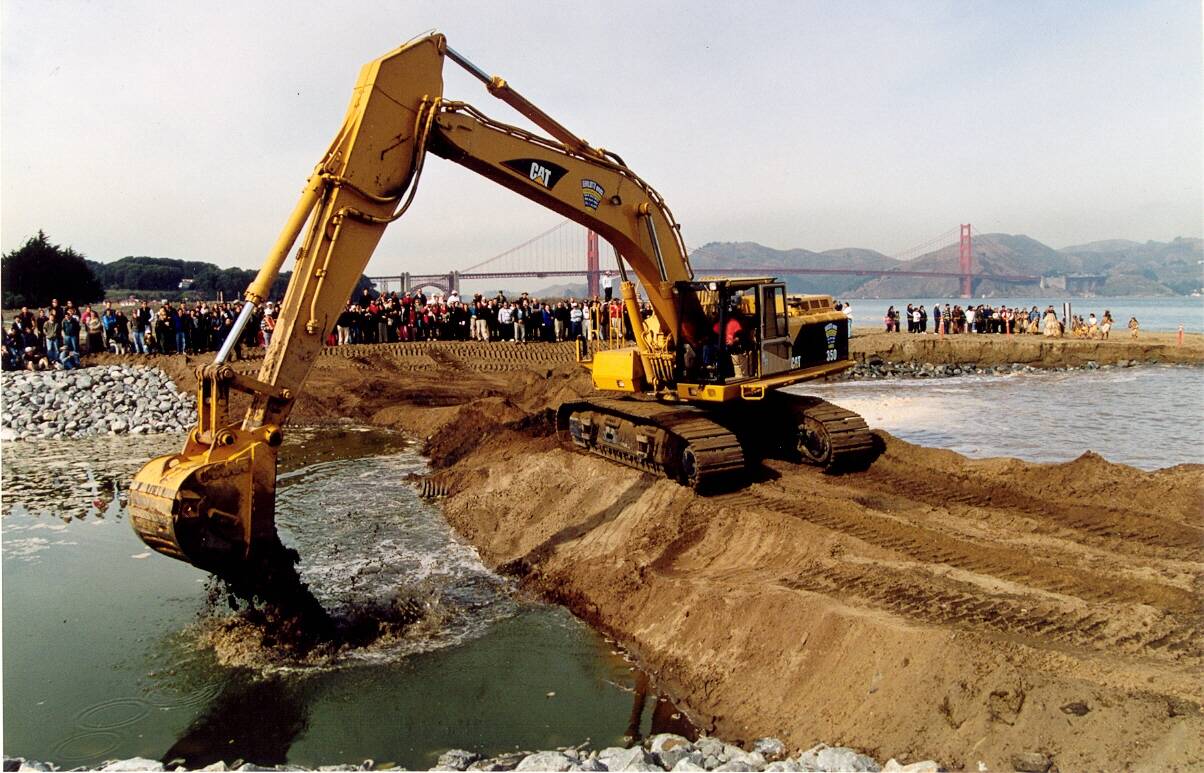
Restoration involved more than removing pollution. Engineers and ecologists carefully excavated more than 230,000 cubic yards of soil, sand and fill that had buried the original marsh. This work reopened a tidal channel that linked the restored wetland directly to San Francisco Bay. In November 1999, tidal waters flowed into Crissy Field for the first time in roughly a century, allowing fresh and salt water to mix naturally again.
Between 1998 and 2000, the 100-acre restoration project recreated an 18-acre tidal marsh and restored another 16 acres of coastal dune habitat, according to the U.S. National Park Service. According to the National Park Service, the restoration re-established habitat for 105 species of shrubs, wildflowers and marsh plants and helped native coastal vegetation return.
Over time, the restored habitats became functioning coastal ecosystems. The National Park Service says the restored marsh now provides feeding and nursery habitat for at least 25 fish taxa and supports more than 100 invertebrate taxa, creating an important ecological area that had been absent for generations.
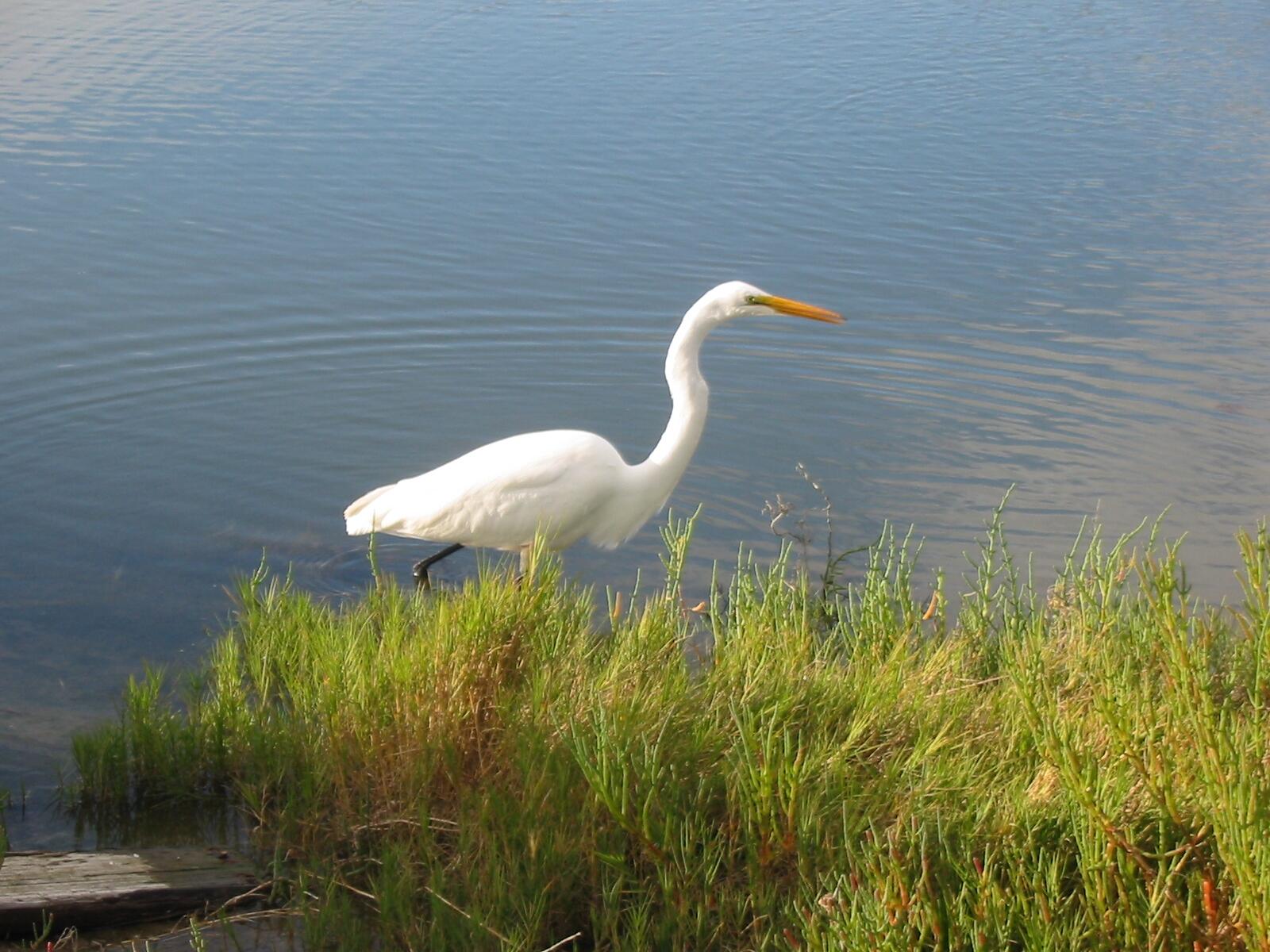
Birds have provided one of the clearest signs of success. Crissy Field, along the Pacific Flyway, has become an important stopover for migrating birds. Ducks, shorebirds and seabirds now use the marsh throughout the year, while birdwatchers regularly visit in the hope of spotting species that had not been recorded in the Presidio for more than a century. According to the National Park Service, nearly 100 bird species have been documented using the restored marsh, underscoring its importance as a stopover along the Pacific Flyway.
To track how the restored ecosystem continued to evolve, scientists studied water quality, sediment transport, vegetation, fish, birds and other ecological indicators over many years. The data collected will help guide future decisions and inform other wetland restoration projects in the San Francisco Bay Area.
Community effort for restoration
Crissy Field’s restoration depended on more than engineering alone. According to the Golden Gate National Parks Conservancy , thousands of people took part in restoring the land. More than 3,000 volunteers helped transform the neglected military site into a public park in San Francisco.
Public support also helped finance the work. Through the "Help Grow Crissy Field" campaign, the Parks Conservancy raised $34.4 million. Of roughly 2,300 donations, about 2,200 were worth $100 or less, showing broad community support alongside major contributions from the Evelyn and Walter Haas, Jr. Fund.