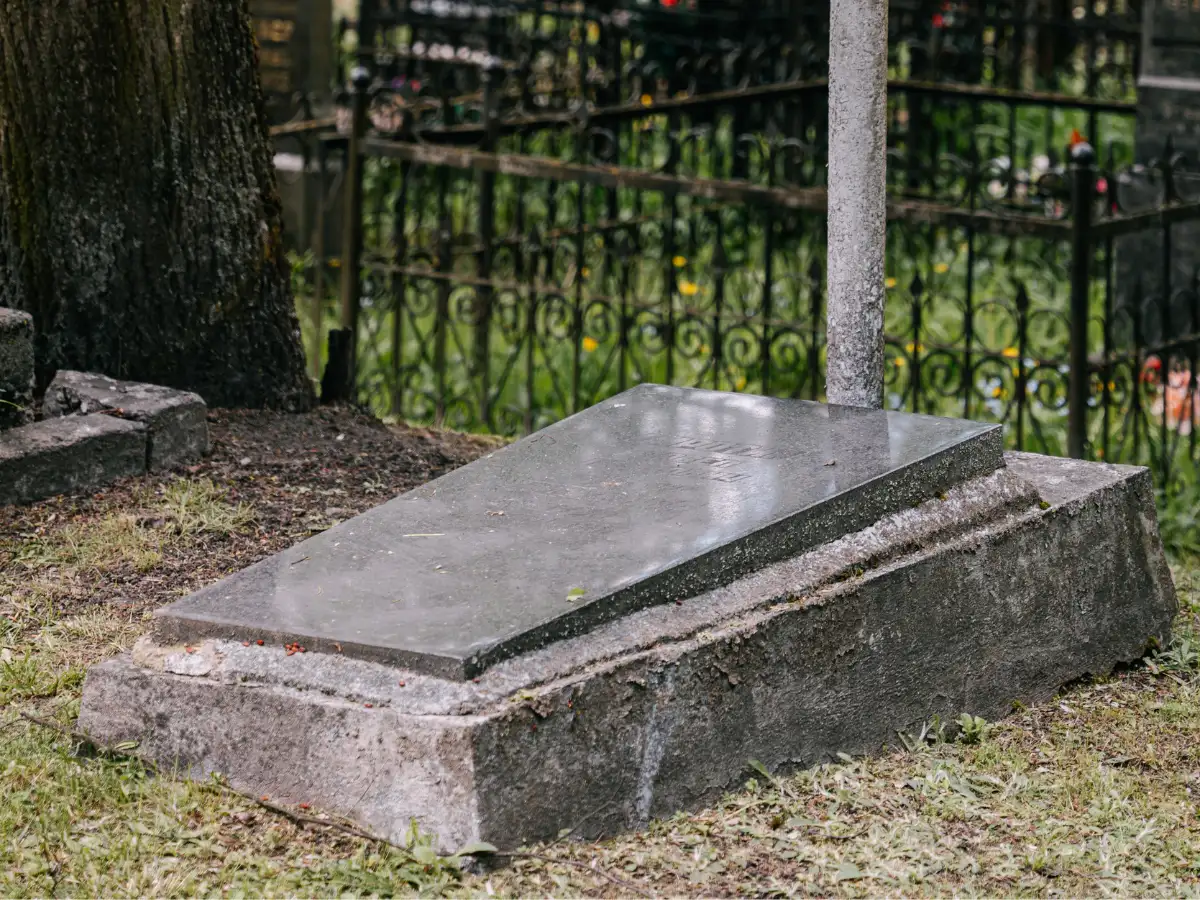
Among the thousands of white headstones at Arlington National Cemetery lies one grave unlike any other in the United States. It belongs to Army Specialist Fourth Class Richard Leroy McKinley, one of three servicemen killed in the SL-1 nuclear reactor accident in 1961, the deadliest nuclear accident in US history at the time.
As per a TOI report, unlike every other burial at Arlington, McKinley's coffin was sealed inside a double lead-lined casket and surrounded by concrete because his body was contaminated with long-lived radioactive isotopes. More than six decades later, the grave remains undisturbed and cannot be exhumed without special federal authorisation.
America's only fatal military nuclear reactor accident
The events that led to McKinley's unusual burial began on 3 January 1961 at the Stationary Low-Power Reactor Number One (SL-1), an experimental nuclear reactor located in the Idaho desert, around 64 kilometres west of Idaho Falls.
The reactor was built as part of the US Army's effort during the Cold War to develop compact nuclear power plants capable of supplying electricity to remote military radar stations and Arctic installations, reducing dependence on diesel fuel.
After returning from a holiday break, three operators: John Arthur Byrnes, Richard Carlton Legg and Richard Leroy McKinley, began routine maintenance work inside the facility.
What caused the SL-1 nuclear accident?
According to the US Atomic Energy Commission's official investigation, the accident occurred when the reactor's central control rod was withdrawn too far during maintenance.
The reactor became prompt critical within milliseconds, triggering a violent steam explosion that destroyed the reactor core.
The blast lifted the 26,000-pound (around 11,800 kg) reactor vessel several feet into the air, rupturing pipes and releasing radioactive steam and debris throughout the reactor building.
Byrnes and Legg died instantly. McKinley survived briefly but succumbed to his injuries after rescuers reached the scene.
The Atomic Energy Commission concluded that the rapid withdrawal of the central control rod caused an uncontrolled nuclear power surge, making it the first fatal nuclear reactor accident in the United States.
Why Richard McKinley's grave was sealed in lead and concrete
Following the accident, radioactive contamination posed a unique challenge.
While two of the victims were buried in their hometowns, McKinley's widow requested that he be buried at Arlington National Cemetery.
Because his body contained long-lived radioactive isotopes, authorities placed him inside a double lead-lined coffin before lowering it into a grave approximately 10 feet deep.
The burial site was then encased in concrete to provide an additional protective barrier.
Historical records indicate that McKinley's burial remains subject to federal restrictions because of the radioactive contamination.
Is the grave dangerous today?
Despite its reputation as America's "most dangerous grave", experts stress that the burial site poses no danger to visitors.
The lead-lined coffin and concrete enclosure were specifically designed to contain any remaining radioactive material safely underground.
Radiation levels at the gravesite are considered safe, and there is no risk to members of the public visiting Arlington National Cemetery.
The restrictions relate to disturbing or exhuming the remains rather than any ongoing hazard at the site.
How the SL-1 accident changed nuclear safety
The SL-1 disaster became a major turning point in the development of US nuclear safety procedures.
The investigation prompted significant improvements in:
- Reactor design
- Control rod safety mechanisms
- Maintenance procedures
- Emergency response planning
- Radiation protection standards
Many of the operational safeguards introduced after the accident influenced later military and civilian nuclear reactor programmes.
What official investigations found
The US Atomic Energy Commission's final report concluded that the reactor accident resulted from the excessive withdrawal of the central control rod during maintenance.
Subsequent historical analyses by the US Department of Energy, the Idaho National Laboratory and other nuclear safety organisations continue to study the incident as one of the defining moments in American nuclear engineering.
The accident remains one of the most extensively documented early nuclear reactor failures and is still referenced in nuclear safety training today.
A lasting reminder of the risks of early nuclear technology
More than 65 years after the accident, Richard McKinley's grave remains one of the most unusual burial sites in the United States.
Hidden among Arlington's uniform rows of headstones, it quietly reflects the risks faced by those working on pioneering nuclear technology during the Cold War.
While the grave itself is completely safe to visit, it stands as a permanent reminder of a tragedy that reshaped nuclear safety standards and left behind a burial unlike any other in America.
Inputs from TOI