Kei cars are awesome. The tiny, Japanese-market runabouts have diminutive proportions and puny engines, often delivering no more than 80 horsepower. Having driven one in its home country, it’s easy to see why people are so obsessed with them; they’re cute, charming, and in a jam-packed city like Tokyo, ideal for shuttling around the tight city streets.
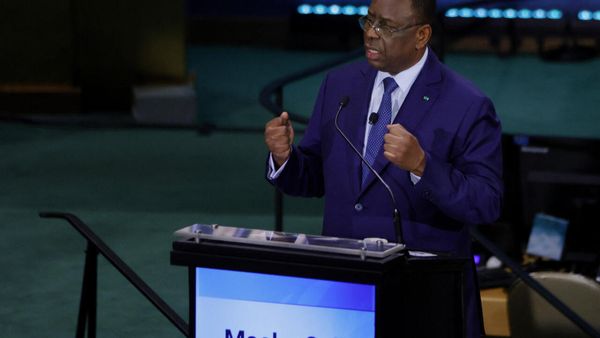
President Trump, after a recent trip to Japan, said he, too, was charmed by the "cute" kei cars he saw during his trip. As with most of his impulsive decisions, Trump immediately implored his Secretary of Transportation, Sean Duffy, to lift all restrictions on kei cars for the US, to which Duffy responded, "Yes."
On the surface, that sounds like great news—cheaper, smaller, more-efficient cars on the road in America. Unfortunately—as with many of Trump’s "promises"—the specifics of what a Kei-car market would actually look like in the US are murky. And unless these vehicles are insanely cheap upon arrival, they’d make almost no sense for the majority of American car shoppers.
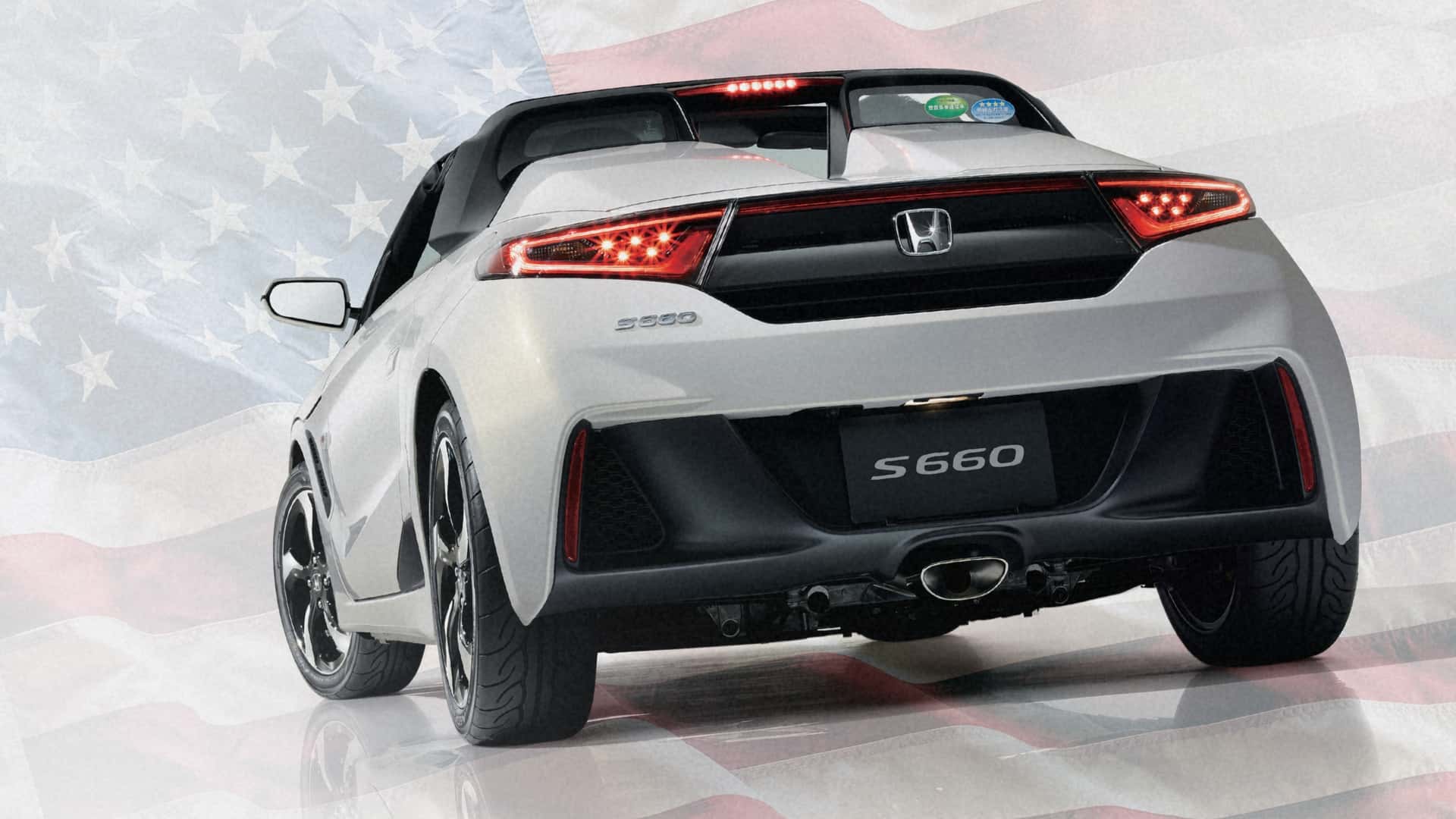
I’m not trying to be a Debbie Downer here—I’d love to see a Honda S660 in my driveway as much as the next guy. But the idea of automakers bringing kei cars to America is a deeply flawed premise, one that probably won’t go any further than the president’s lips.

One of the biggest hurdles for Kei cars is that Americans simply don't want small cars. The same people applauding the idea of American Kei cars tend to forget that vehicles like the Fiat 500 and Mitsubishi Mirage still exist in America (at least, for right now), and they don’t sell well.
Through October, Fiat has only sold 1,076 examples of the new 500e. Sure, you can point to its near-$30,000 starting price and its lackluster 200-mile range as two big reasons for its failure—but even if it started at $20,000 and had a gas engine, the lack of sales of the previous generation (which offered both of those things) suggests that price and range aren’t the only issues at play here.
Mitsubishi has sold more than 13,000 examples of the Mirage so far this year, which isn’t terrible. But it’s still not anywhere near what some of the best small cars are doing in foreign markets. We also know that Mitsubishi’s affordable compact is already on the way out after 2025, which means there weren’t enough people buying the Mirage to justify another generation.
The idea of automakers bringing kei cars to America is a deeply flawed premise, one that probably won’t go any further than the president’s lips.
And there are other examples of small cars failing in America. Remember Smart? After a brief honeymoon period, the Mercedes-owned company pulled out of America entirely due to lagging sales—even though Smart still exists in Europe with a bevvy of adorable, affordable products. It’s relatively successful there, even if Americans never got on board.
Smart said in a statement in 2019: "A number of factors, including a declining micro-car market in the US and Canada, combined with high homologation costs for a low volume model, are central to this decision."
Then there’s the issue of performance—or lack thereof. Most Kei cars average anywhere from 50 to 80 horsepower. Even the Mirage is on the higher end of that, with a scant 78 hp. Trying to merge onto a busy highway or make a pass with such little power is downright dangerous with the number of massive SUVs making 500 horsepower or more. Most kei cars can’t comfortably cruise past 60 or 70 miles per hour, either, and their bare-bones construction makes them unreasonably noisy.
Unlike the quaint, crowded streets of Tokyo, America’s sprawling highways aren’t made to support small cars with less than 100 hp and 60-mph top speeds. Imagine trying to peddle a Nissan Sakura down Texas State Highway 130 with lifted trucks and three-row SUVs passing you at 85 mph on either side. Terrifying.
And then there’s what will undoubtedly become the biggest issue: Price.
Kei cars cost anywhere from ¥1.2 million to ¥2.0 million in Japan (about $8,000 to $15,000 at current exchange rates). That’s an excellent price for a tiny vehicle with very few features. In fact, it’s about as much as you’d pay for a nice golf cart in America these days.
Will those prices be the same if/when Kei cars come to America? Given our history of inflated prices, specifically in the automotive segment, I’d venture to say—absolutely not.
Unlike the quaint, crowded streets of Tokyo, America’s sprawling highways aren’t made to support small cars with less than 100 hp and 60-mph top speeds.
Not only would importing Kei cars from Japan add a pretty significant hike to their current base prices—even before Trump’s self-imposed 15-percent tariff with Japan—but you’d also have to factor in things like safety and performance upgrades required to make them viable for American roads.
In a statement to Motor1, the US Department of Transportation confirmed that Kei cars imported into America would have to meet current crash requirement standards. A spokesperson said:
"Under President Trump’s strong leadership, Secretary Duffy is working to ensure Americans can afford the car that fits their family’s needs, whether gas-powered or electric. As with all vehicles, manufacturers must certify that they meet US Federal Motor Vehicle Safety Standards, including for crashworthiness and passenger protection."
With Kei cars required to meet American crash safety standards, that means automakers would have to retrofit models currently on the market (or build entirely new ones specifically for the US). If we follow the Mitsubishi Mirage model, then, that means the cheapest reasonable price tag for a Kei car in America would probably be somewhere in the $20,000 range, by our guess.
On top of that, unless the President also plans to fast-track direct-to-consumer sales, markups would decimate Kei cars in the first few years on sale as enthusiasts flock to dealers in hopes of taking home their favorite pint-sized minivans or sports cars.
With all of that said, there could be one specific category of Kei car that could potentially work: Trucks.
If Slate and the Ford Maverick are any indication, Americans do actually want small trucks. At least in the short term. And if you follow the Kei car community here in the US closely, you know that people do have a fondness for imported Japanese trucks. So much so, in fact, that a group of Kei truck enthusiasts aggressively lobbied the federal government earlier this year to keep their favorite little pickups legal in certain states amidst calls to ban them.
Of course, even Kei trucks suffer from the same faults as their van, SUV, and hatchback counterparts: they’re still too small and too underpowered for the majority of American shoppers. But, for a niche audience, they make the most sense of the entire group.
Truth be told, Trump’s latest hair-brain idea likely won’t get very far. Unless companies like Nissan or Toyota plan to entirely rework their manufacturing here in the US to cater to a niche audience of Kei car enthusiasts, or plan on spending big on imports, this idea is likely dead on arrival.
Sure, it would be fun to have new Honda Actys and Nissan Sakuras running around American roads. But if Americans really wanted Kei cars as badly as many people say they do, then companies like Fiat and Smart should be thriving in America. The numbers prove that that’s simply not the case.