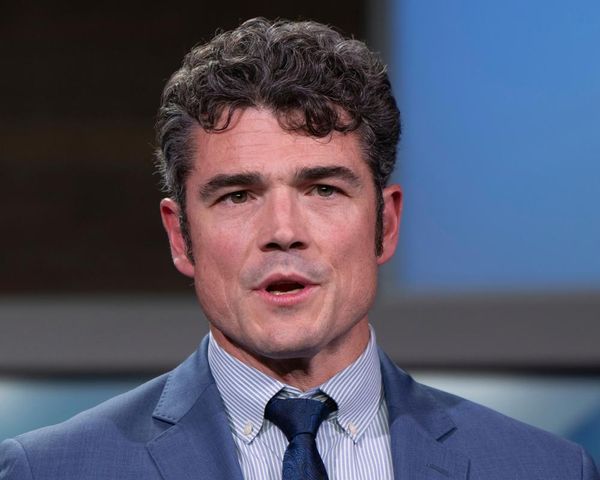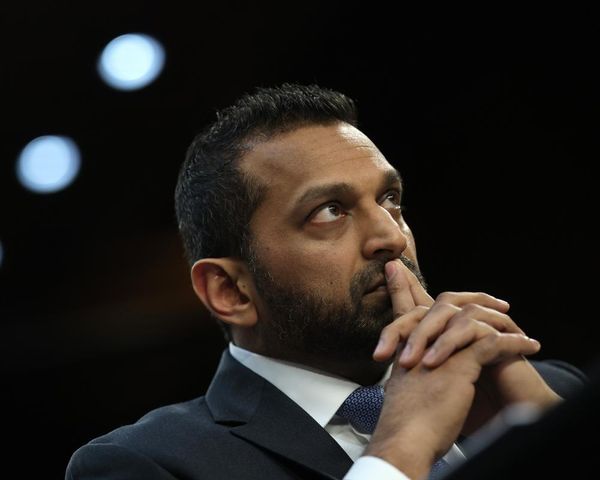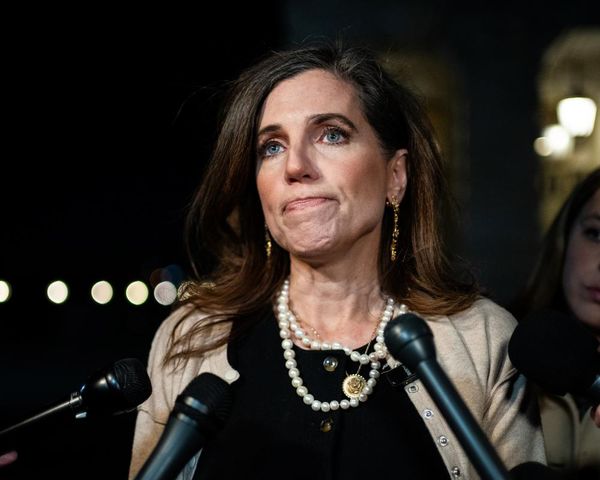
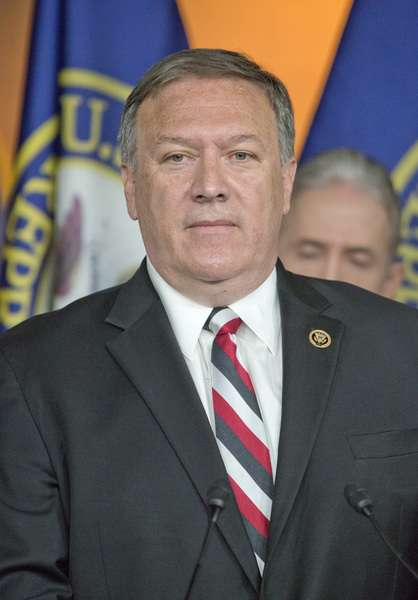
WASHINGTON _ In selecting Kansas Republican Rep. Mike Pompeo to lead the CIA, President-elect Donald Trump has chosen a strong supporter of aggressive interrogation and surveillance as a means of keeping Americans safe.
If the Senate confirms Pompeo to lead a sprawling agency with 21,500 employees and an annual budget of $15 billion, Trump will have someone who reflects his views on national security.
"I think it means these guys are going to get tougher on terrorists, which I think is a very good thing and I think was one of the key issues of the campaign that people didn't feel safe at home or abroad," said Kansas Republican Gov. Sam Brownback. "You're putting in a place a very strong, 'tough on terrorism' man to head the CIA."
Pompeo, a three-term congressman from Wichita, is a West Point and Harvard Law School graduate and a vocal member of the House Select Committee on Intelligence.
Elected to Congress in the tea party wave of 2010, he's been an unrelenting critic of the Obama administration's policies on Iran and Libya.
"That's one of the things that's most refreshing about Mike that what you see is what you get," said Rep. Lynn Jenkins, a Kansas Republican who represents Topeka. "He's authentic and real and he's going to tell you exactly what he thinks without mincing words every single time."
He sharply criticized a 2014 report by Senate Democrats on CIA interrogation practices, including waterboarding, and defended the men and women who carried them out.
"These men and women are not torturers," Pompeo said at the time, "they are patriots."
He's supported restoring the National Security Agency's access to the bulk data it collected under a controversial surveillance program revealed by exiled government contractor Edward Snowden.
"I believe that program has proven to be a very valuable asset for the intelligence community and for law enforcement, Pompeo told McClatchy in January.
As for Snowden, who's now in Russia? Pompeo called him a "traitor" who stole classified information.
"He should be brought back from Russia and given due process and I think the proper outcome would be that he would be given a death sentence for having put friends of mine, friends of yours who serve in the military today at enormous risk because of the information he stole and then released to foreign powers," Pompeo said of Snowden.
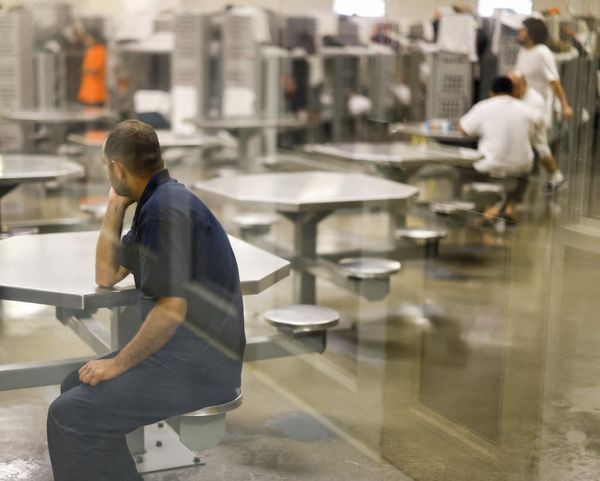
He's been a staunch opponent of Obama's plans to close the U.S. military detention facility in Guantanamo Bay, Cuba, and relocate some of its prisoners to U.S. sites, including Fort Leavenworth in Kansas.
Guantanamo, Pompeo said, "has been a goldmine of intelligence about radical Islamic terrorism."
He's an ardent foe of Obama administration's nuclear deal with Iran, in which the longtime U.S. adversary promised to dismantle its nuclear weapons program in exchange for eased economic sanctions. In the House, Pompeo has introduced numerous bills to maintain or increase sanctions on Iran.
"The Islamic Republic cannot even feed its own people without access to markets and our president rewards that nation, which has killed countless Americans, with sanctions relief," he said of Obama's approach to Iran.
Pompeo has also served on the special House committee that investigated the September 2012 attack on the U.S. consulate in Benghazi, Libya. Four Americans were killed, including Ambassador Chris Stevens.
The committee's report came down hard on former Secretary of State Hillary Clinton, on whose watch the attack occurred. Pompeo co-authored a separate report that accused Clinton of downplaying the attack because President Barack Obama was up for re-election that fall.
Pompeo has made some controversial statements about Muslims. Weeks after the Boston marathon bombing in 2013, in a speech on the House floor, he not only accused Islamic faith leaders of not doing enough to condemn terrorist attacks, but also suggested they might be encouraging them.
"When the most devastating terrorist attacks on America in the last 20 years come overwhelmingly from people of a single faith, and are performed in the name of that faith, a special obligation falls on those that are the leaders of that faith," Pompeo said. "Instead of responding, silence has made these Islamic leaders across America potentially complicit in these acts and more importantly still, in those that may well follow."
Last month, three militiamen were arrested in western Kansas in an alleged plot to blow up an apartment complex that's home to Somali Muslim refugees.
In Pompeo, Trump has found someone who hits all the right notes on national security.
"He has served our country with honor and spent his life fighting for the security of our citizens," Trump said of Pompeo in a statement Friday. "He will be a brilliant and unrelenting leader for our intelligence community to ensure the safety of Americans and our allies."
Pompeo said he's "honored to have been given this opportunity to serve and to work alongside President-elect Donald J. Trump to keep America safe."
"I also look forward to working with America's intelligence warriors, who do so much to protect Americans each and every day," Pompeo said. "We ought not to take that tool away from our intelligence community while the threats are as great as they are today."
The agency came under scrutiny in recent years for its controversial interrogation practices of terrorism suspects, but Trump has said that he approves the use of such methods.
Pompeo will have to answer questions about the issue when the Senate Select Committee on Intelligence holds hearings on his nomination.
In a statement after the 2014 release of the Senate's report on the CIA's interrogation practices, Pompeo said they were lawful, and sharply criticized the report's author, Sen. Dianne Feinstein of California, then chairman of the Senate Intellitgence Committee.
"The programs being used were within the law, within the constitution, and conducted with the full knowledge Senator Feinstein," he said then. "If any individual did operate outside of the program's legal framework, I would expect them to be prosecuted to the full extent of the law."
Feinstein, who's set to become ranking member of the Senate Judiciary Committee next year, could not be immediately reached to comment.
Republican Sen. Richard Burr of North Carolina, the current chairman of the committee, said Pompeo is "well-equipped" for the job.
"I respect him as a colleague, and he is more than capable of handling this challenging role," Burr said in a statement. "I look forward to working with him to ensure that the CIA is well positioned to reinforce our national security in the coming years."
Kansas Sen. Pat Roberts, himself a former chairman of the Senate Intelligence Committee, recommended Pompeo to Trump's transition team.
"Rep. Pompeo has had the kind of military and private sector experience commiserate with the demands of a CIA Director," Roberts said in a statement. "Since he began his service on the House Permanent Select Committee on Intelligence, intelligence issues have become his passion."