Perhaps unsurprisingly, AI-assisted development is expected to have the biggest impact on the games industry over the next three years. That's according to the 2026 Gamescom dev Speaker Survey, which is intended to provide an overview of developer sentiment in the industry.
Completed by 100 speakers ahead of the conference in Cologne later this month, the annual survey found that 83% expect AI to affect team structure or productivity in some way. In what way exactly is where things remain more divided (if you're starting out yourself, see our guides to the best game development software and the best laptops for game development).
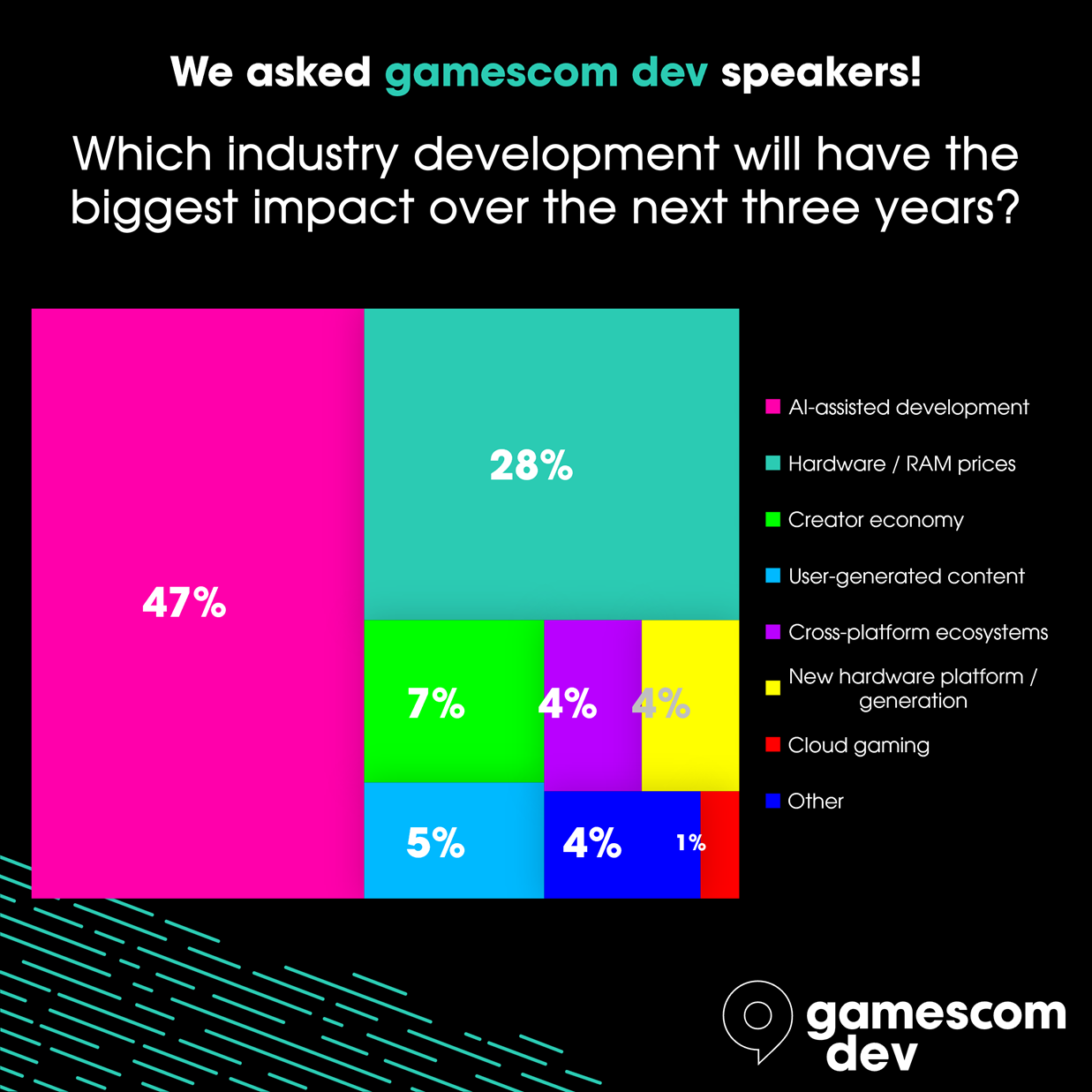
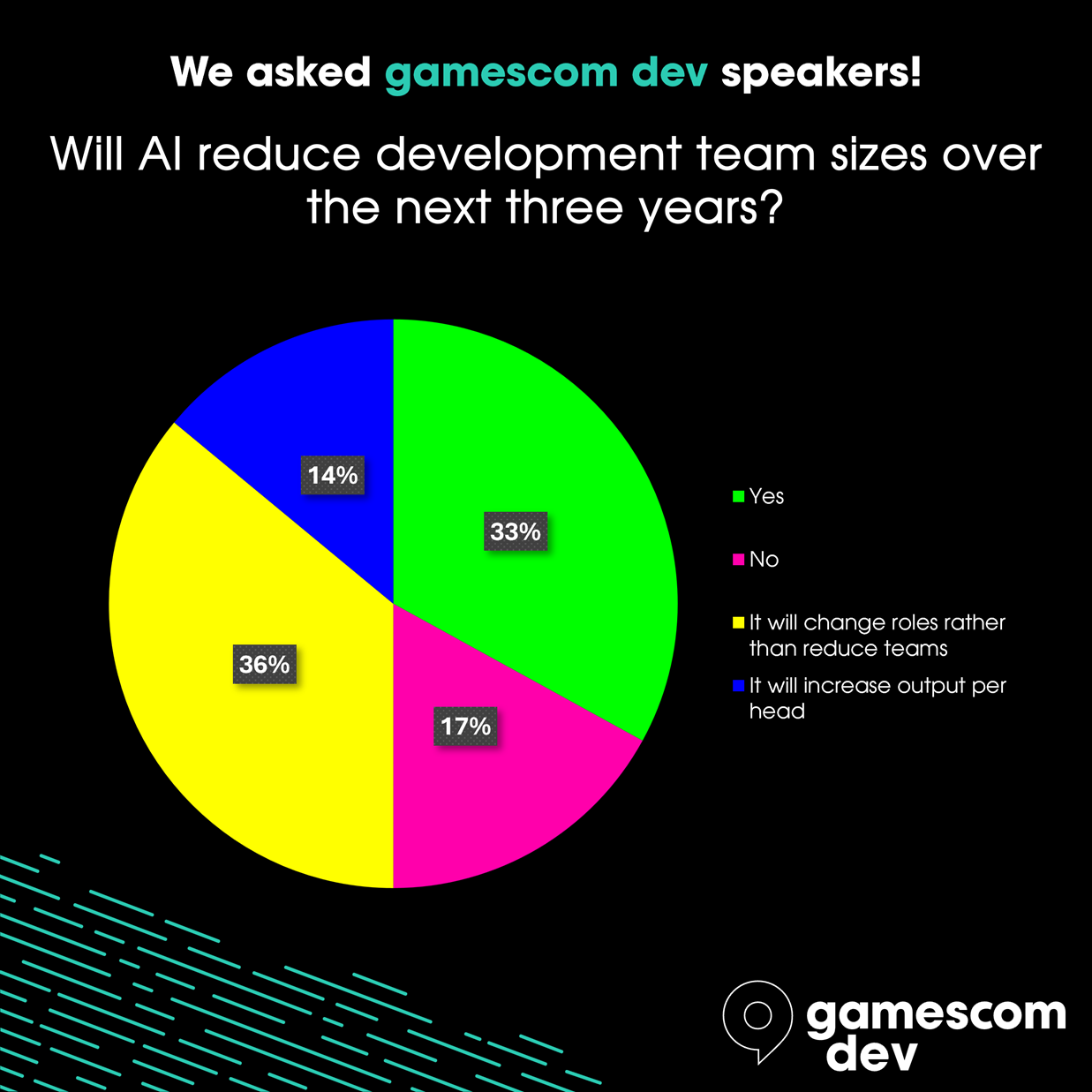
Respondents to the survey expect AI to influence how game development teams operate, but they differ on what they think that change will look like. Over a third (36%) believe AI will change roles rather than reduce teams while a similar proportion of developers (33%) expect AI to lead to smaller team sizes, and 14% expect per-person output to increase.
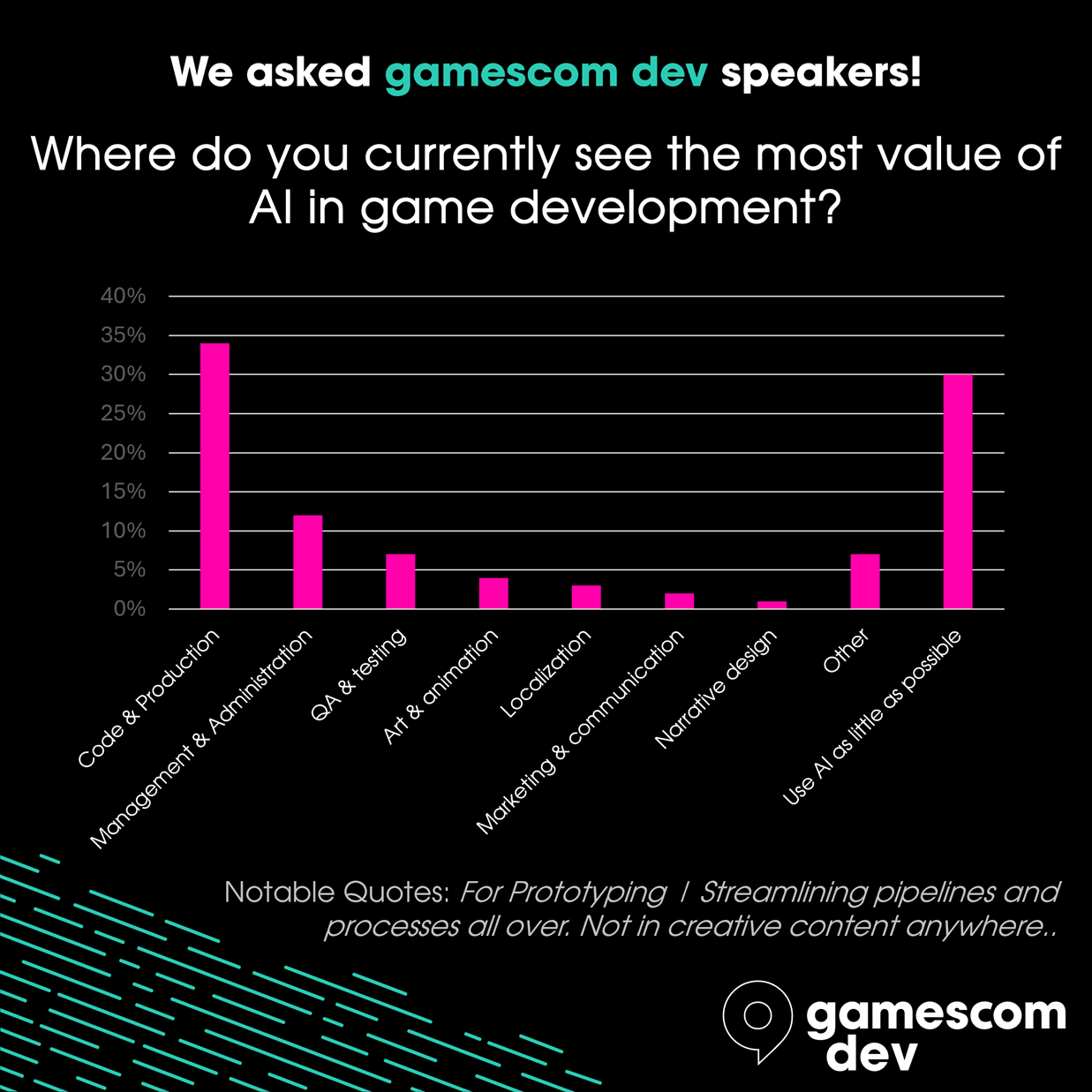
Opinions are also remain divided on how AI is best used in game development. While 34% see the greatest value of AI in code and production, 30% would prefer as little AI involvement in game development as possible.
As for the opportunities and challenges in game development, 37% see smaller development teams as the biggest opportunity. That's ahead of new publishing models and community building at 15% each.
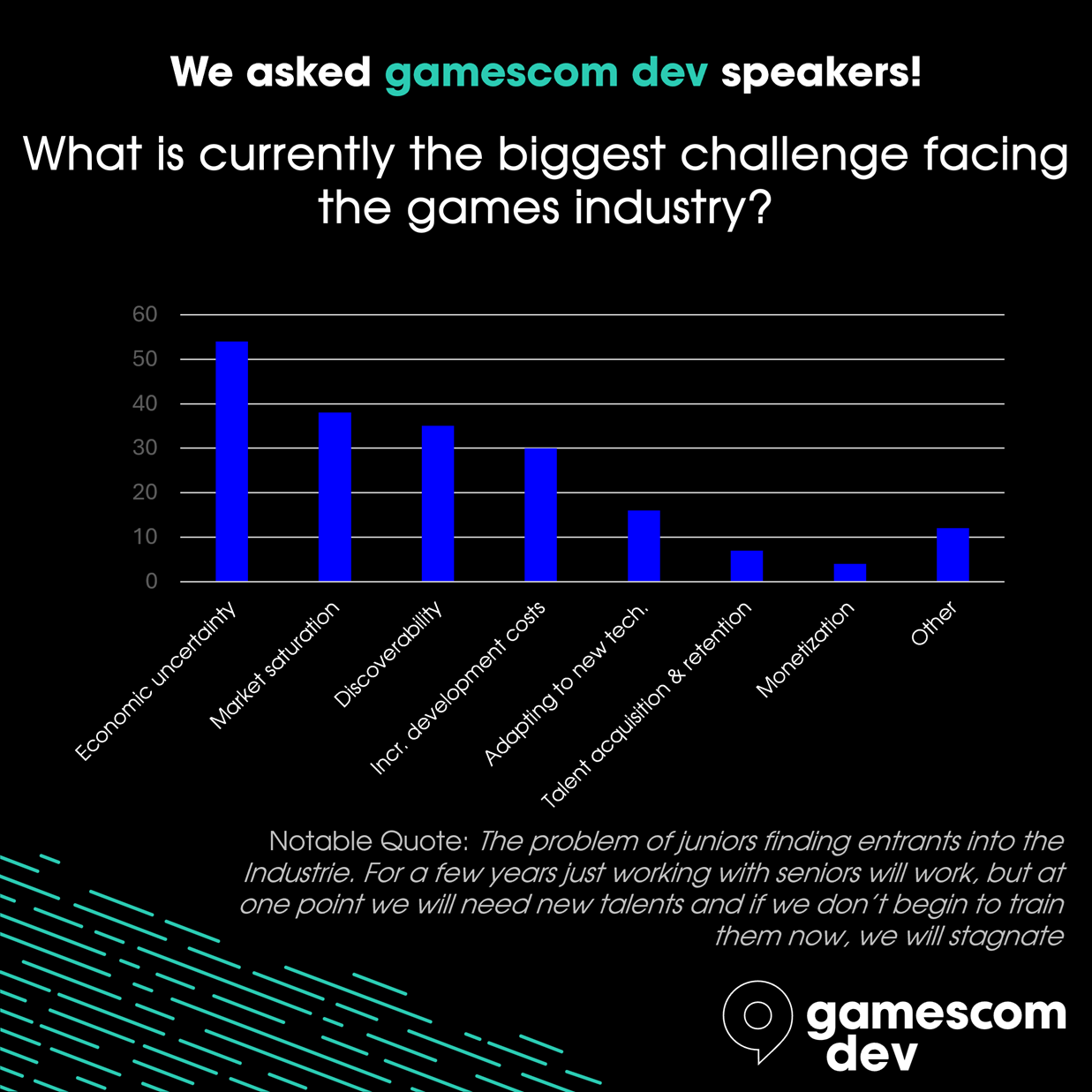
Economic uncertainty is seen as the biggest challenge (54%), followed by market saturation (38%), discoverability (35%) and increasing development costs (30%, multiple answers were possible).
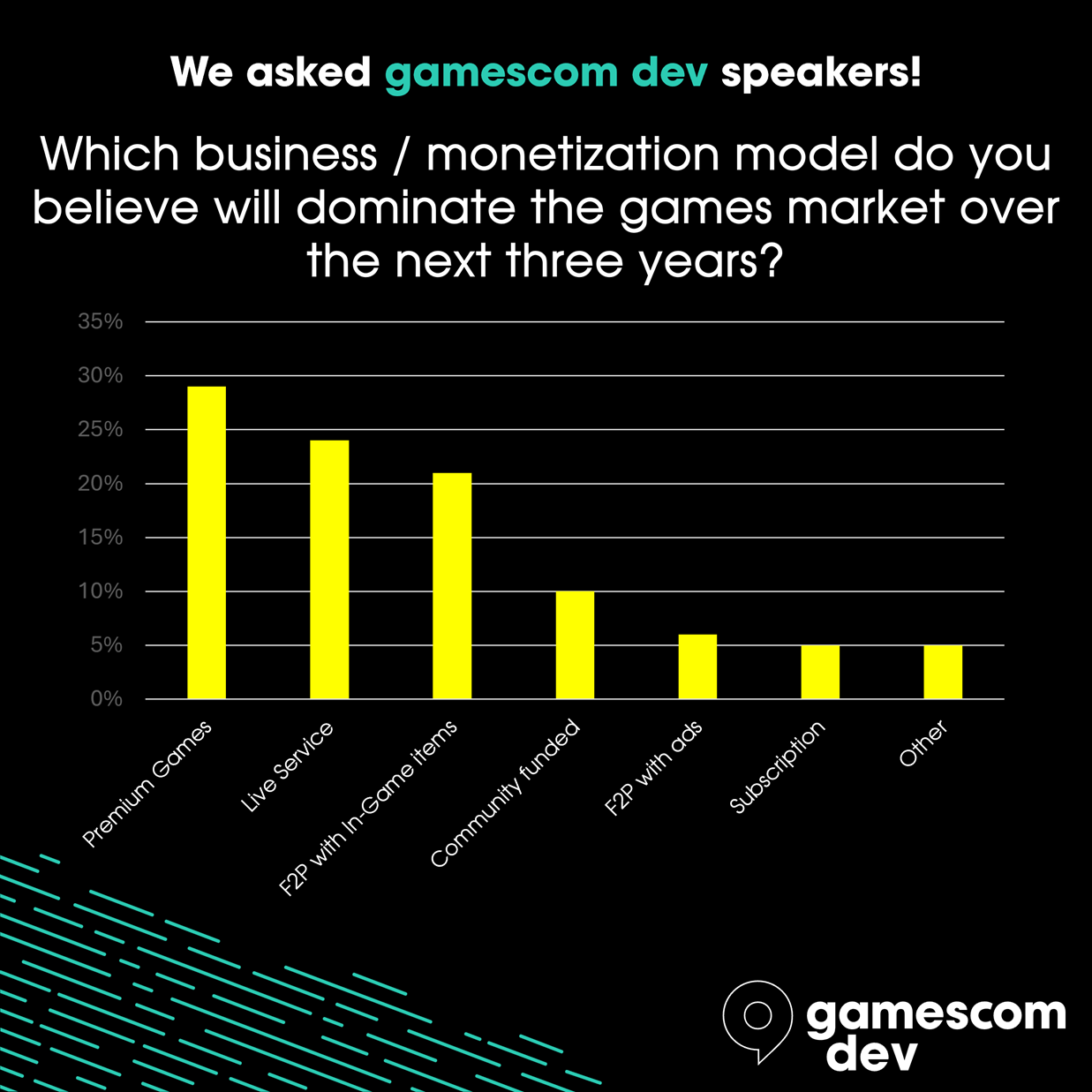
There is less agreement on which business model will dominate. Digital and physical premium games rank first at 29%, followed by live service at 24% and free-to-play with in-game items at 21%.
When asked how game discoverability could be improved, 32% said via more transparent platform algorithms, followed by better storefront recommendations at 22% and more curated editorial features at 21%.
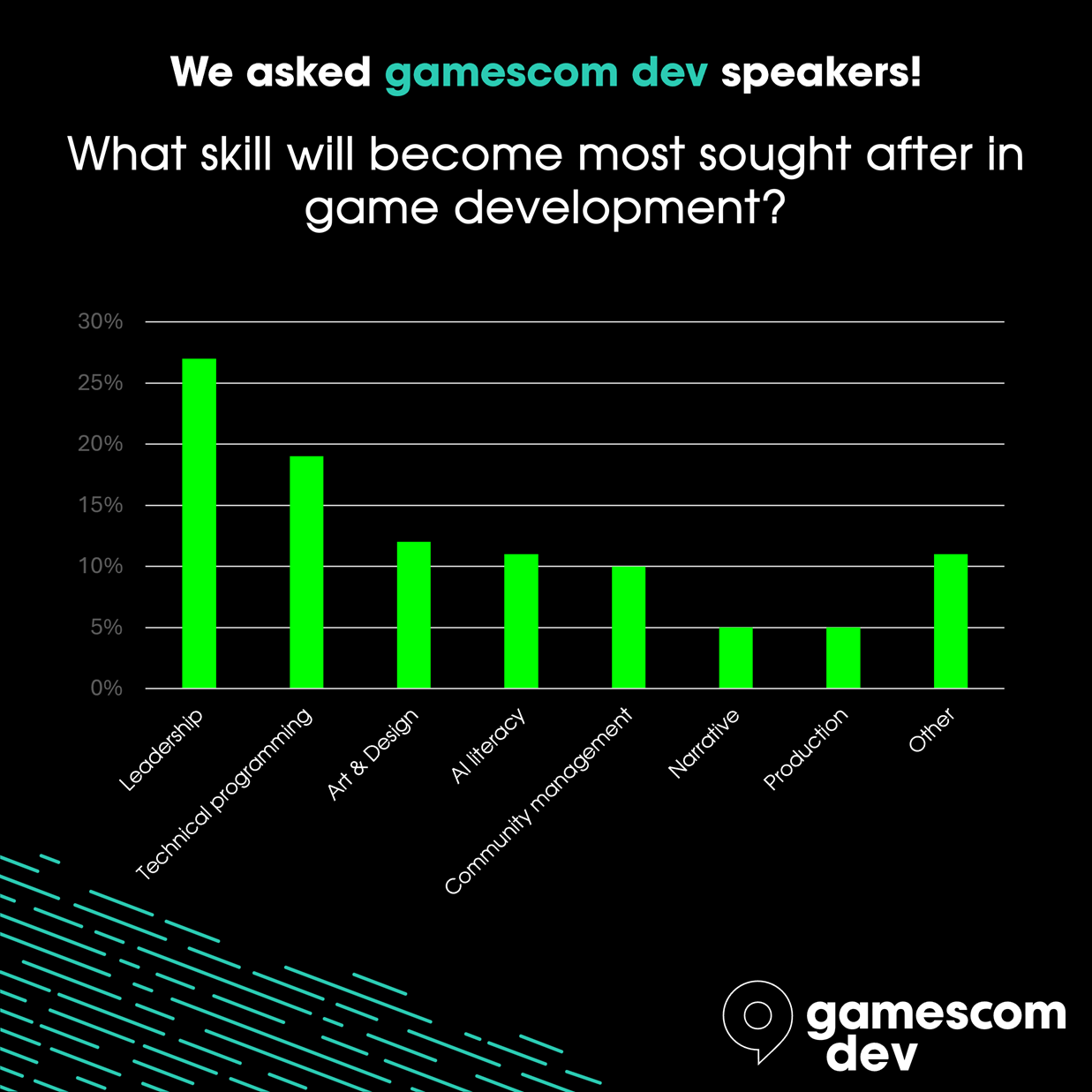
In terms of the skills sought after in game development, leadership ranked first at 27%, followed by technical programming at 19%, art and design at 12%, and AI literacy and other at 11% each. Community management received 10%, while Production and Narrative received 5% each.