System Will Alert Nearest Ambulance & Help Callers Track It; Software Will Pass On Critical Patient Data From Emergency Technicians To Hospital Emergency Rooms, Even Triage Patient.
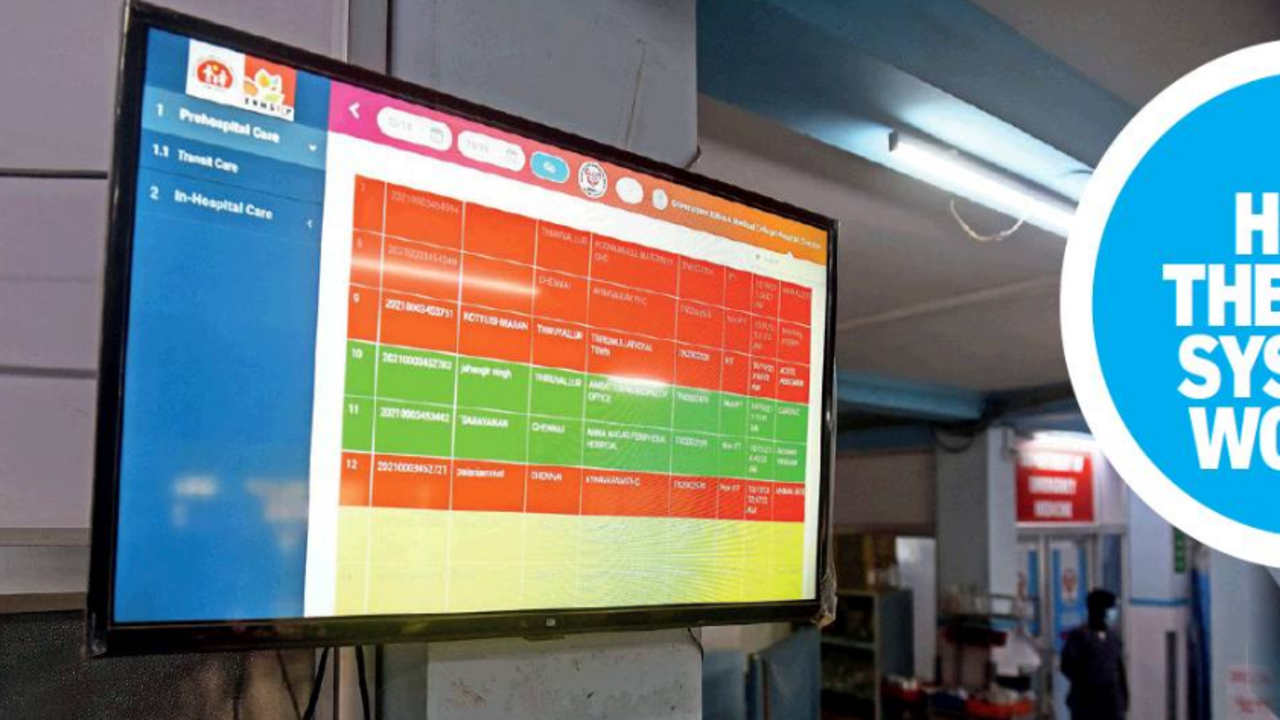
Duty doctors and nurses in emergency rooms at government medical college hospitals no longer scribble down details of critically ill patients including trauma victims being brought by 108-service ambulances of the state-run 108 service. Red lights flickering on large monitors in wards give vital information that helps doctors and nurses alert specialists, keep lifesaving drugs and equipment, keep blood ready and clear out schedules for tests.
Information sourced by the paramedic at the place of the event including pulse, blood pressure, oxygen saturation, state of patient, blood group and basic medical history is fed into a special pre-hospitalisation application which calculates the emergency risk score and triages patients as red, yellow or green.

This is relayed to emergency rooms. “We have moved from manual operations to machine operations to minimise errors and improve treatment outcomes,” said state trauma care lead Dr Srikanth T L. The red light stops flickering once information for admission and treatment is fed. “ERs in government hospitals are usually busy and it is important to keep schedules organised and pre-plan events with adequate pre-hospitalisation information. Machines powered with artificial intelligence (AI) are better at that. They minimise wastage of time, inadvertent human errors in communication and improve timings,” he said.
Trauma care experts agree. “Emergency technicians often say no one answer their calls, nurses say measures dictated aren’t accurate, and others find the writing illegible. All these problems are wiped out in one go,” said Kilpauk Medical College dean Dr R Shanthimalar, where TAEI has been holding pilot studies since August 16. “More than anything else, we are able to stamp time and record every event at the hospital. We know what we are good at and where we need improvement.”
The TN health department-initiated project with World Bank funds will become full-fledged in all trauma centres in the next couple of years. “We are looking at a 360-degree solution to prevent disabilities and deaths due to trauma or other emergencies,” said health secretary J Radhakrishnan.
For more than two years, EMRI control rooms have been using AI to allot the nearest ambulance once the request is accepted. “This has been working very well. We analyse the base data to make improvements. For instance, ambulances are placed at strategic locations. Since most accidents happen in 5pm-7pm period, we ask hospitals to avoid inter-facility transfers during that time,” he said.
This year, TN will seek National Medical Commission permission to start MD emergency medicine and hopes to have 120 seats. “We will have enough doctors in 3-4 years,” director of medical education Dr R Narayanbabu said. “Until then senior doctors from general medicine, general surgery, anaesthesia, chest medicine and orthopaedics will be posted in the ERs.”