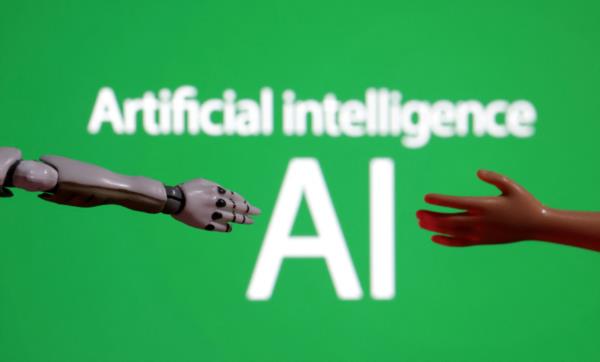
[Opening Statement] Greetings, fellow aficionados of the curious and captivating world of artificial intelligence! Today, we delve into an intriguing legal decision that has caused quite a stir in the land of tea, crumpets, and impeccable manners - none other than the esteemed United Kingdom. Brace yourselves, for we are about to embark on a journey into the realm where the cutting-edge clashes with the conventional: the courtrooms of Britain!
[Setting the Scene] Picture this: a room adorned with dark wood paneling, adorned with miniature gavels, where stern-looking judges don their majestic robes of justice. In this courtroom, a groundbreaking debate unfolded, revolving around an intriguing question - can a creation of wires, codes, and algorithms be considered an 'inventor' in the eyes of the law?
[Enter the Protagonist] Intriguingly enough, the leading role in this legal saga was not played by a human with a curly wig, but by an artificial intelligence (AI) named 'DABUS'. This AI, with a penchant for innovation, had crafted two revolutionary inventions, unraveling the mysteries hidden in the intricate labyrinth of neural networks and algorithms. Enter the 'AI inventor,' stage left.
[The Dilemma Unveiled] However, the stage was set for a contentious argument. Is genius confined solely to human intellect, or can it be awakened in the seemingly soul-less creations of AI? The question simmered and bubbled, like an enigmatic concoction in the lab of Dr. Frankenstein.
[The Court Takes the Stage] And so, the legal mavericks of the United Kingdom's Supreme Court took to the stage, robes fluttering as they summoned their formidable intellectual prowess. Their task? To decide whether AI can legally be handed the title of 'inventor.'
[The Verdict] After much deliberation, the Supreme Court rendered its verdict, echoing through the hallowed halls of legal history. Alas, they ruled that DABUS, our AI protagonist, could not be granted the coveted distinction of 'inventor' under UK patent law. Robots of the world, you still have a way to go before you can register your intellectual property in Britannia!
[Implications and Contemplations] As we absorb this intriguing legal ruling, questions abound. Are we witnessing a critical turning point in the relationship between humanity and technology? Will AI creations be forever relegated to the role of inventing under the guidance of their human counterparts? Only time will unveil the answers to these bewitching inquiries.
[Closing Thoughts] In the hallowed halls of justice, where tradition and progress engage in an elegant dance, the Supreme Court's ruling has left us pondering the remarkable feats of AI and its rightful place in the realm of invention. One might say it's a clash of the classical and the cutting-edge, a battle between the established order and the limitless potential of silicon minds.
So, dear readers, let us embrace this ruling as a stepping stone, a catalyst for further exploration and discussion. Let us revel in the sparks of imagination ignited by the interaction of technology and legality. For innovation knows no bounds, and the dance of AI and invention is far from over!