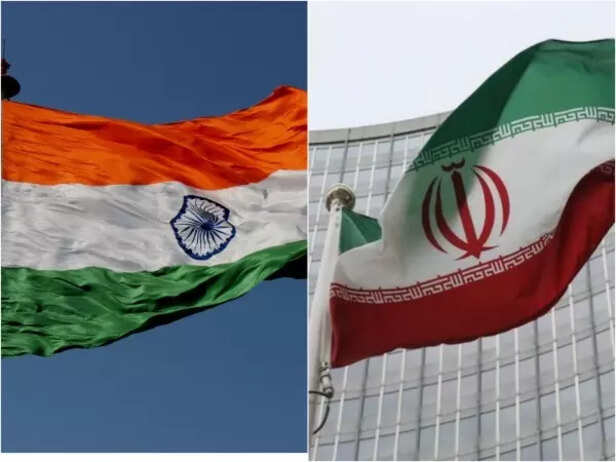
The story of Ahura and Asura is not just about religion. It is about language, migration, identity, and how human perception shapes good and evil. At one point in time, India and ancient Iran were not separate worlds. They were part of a shared Indo-Iranian cultural and linguistic space. But somewhere along the way, a powerful split occurred. A split so deep that it turned gods into demons and demons into gods.
1. A shared Indo-Iranian origin

Before India and Iran developed into distinct civilizations, their ancestors belonged to a common Indo-Iranian group. Linguistic and cultural studies show that the early speakers of Sanskrit and Avestan languages once shared similar beliefs, rituals, and deities.
Words like “Asura” in Vedic Sanskrit and “Ahura” in Avestan are not coincidences. They come from the same root and originally carried a similar meaning, referring to powerful divine beings or lords.
This tells us that the division was not original. It was a later development, shaped by historical and cultural divergence.
2. Asura were not always evil in the Vedas
In the earliest layers of the Rigveda, the word Asura was not negative. In fact, it was used as a title of respect for powerful deities like Varuna and Mitra. Asura meant a being with immense spiritual authority and control.
Over time, however, the meaning began to shift. Later Vedic texts started portraying Asuras as opponents of the Devas. This gradual transformation from revered beings to adversaries reflects a deeper change in belief systems and priorities within Vedic society.
The idea that Asuras were always demons is a later interpretation, not an original one.
3. Ahura remained divine in ancient Iran
While the Indian tradition began redefining Asuras negatively, ancient Iranian belief systems moved in the opposite direction. In Zoroastrianism, Ahura became the central term for divinity.
The supreme god of Zoroastrianism, Ahura Mazda, represents truth, order, and cosmic wisdom. The term Ahura retained its original positive meaning, symbolizing moral and spiritual authority.
This contrast is striking. The same root word led to two completely opposite identities across regions.
4. The Deva and Daeva reversal
One of the most fascinating aspects of this split is the reversal of the term Deva. In Vedic tradition, Devas are the gods, associated with light, order, and cosmic balance.
In Zoroastrian texts, however, the word Daeva refers to false gods or deceptive forces that lead people away from truth. What India worshipped, Iran rejected.
This inversion of values suggests that the split was not just linguistic. It was ideological. It reflected a conscious redefinition of what was considered right and wrong.
5. A possible conflict of beliefs
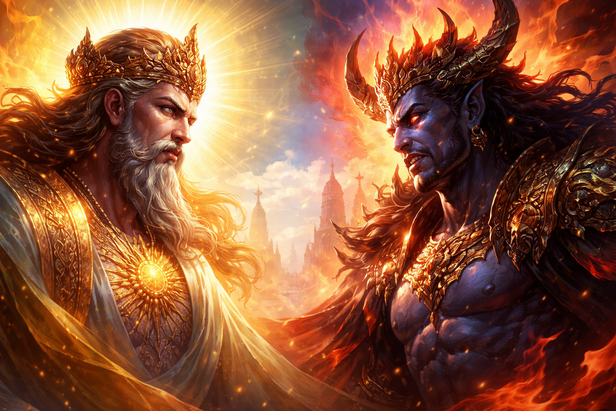
Scholars often suggest that this division may have emerged from disagreements among early Indo-Iranian groups. As communities migrated and settled in different regions, their rituals, priorities, and philosophies evolved differently.
It is possible that one group rejected certain practices or deities, leading to a reinterpretation of shared concepts. Over time, these differences hardened into distinct religious systems.
The transformation of Ahura and Asura into opposites may reflect this deep cultural divergence rather than a sudden change.
6. Language preserved the story of the split
Language acts as a time capsule. The similarity between Sanskrit and Avestan words provides strong evidence of a shared past. Terms like Asura and Ahura, Deva and Daeva, reveal how meanings evolved differently over time.
These linguistic parallels are not just academic observations. They are clues that help us reconstruct how ancient people understood the world and how those understandings changed.
The story of Ahura and Asura is written not only in scriptures but also in the structure of language itself.
7. Good and evil are shaped by perspective
Perhaps the most profound insight from this story is how fluid the concepts of good and evil can be. The same entity can be divine in one culture and demonic in another.
This does not necessarily mean one is right and the other is wrong. It shows that moral frameworks are often shaped by context, belief, and collective identity.
What one civilization chooses to preserve, another may choose to reject. Over time, these choices become traditions, and traditions become truths.
8. A forgotten connection between two civilizations
Today, India and Iran are seen as distinct cultural entities with their own histories and identities. Yet the story of Ahura and Asura reminds us that they were once deeply connected.
This shared past is not widely discussed in popular narratives, but it holds immense significance. It highlights how interconnected human civilizations have always been, even when they appear separate on the surface.
The division between Ahura and Asura is not just a story of separation. It is also a reminder of unity.