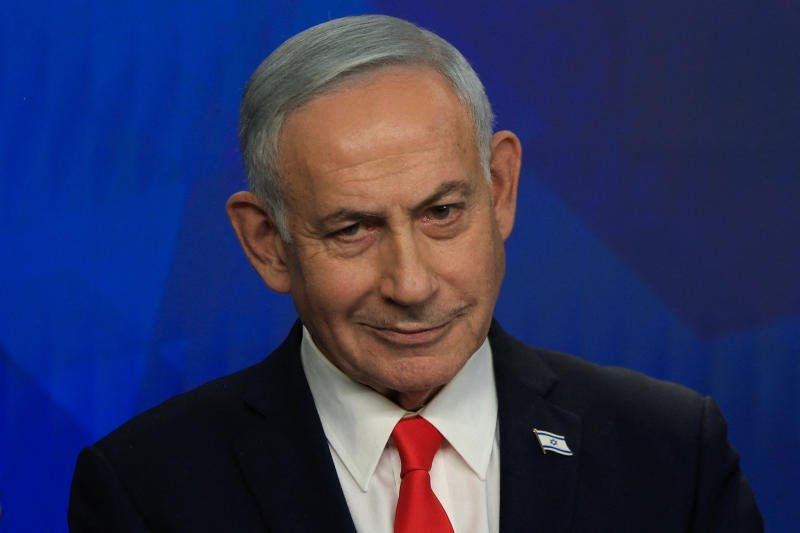
Israeli Prime Minister Benjamin Netanyahu said on Thursday that Israel's military will stay in southern Lebanon, where it has occupied up to 10 kilometres (6 miles) from the border.
The remarks were his first comment since the United States and Iran signed an agreement to end the Middle East war on all fronts, including in Lebanon, where Israel has been fighting the militant Hezbollah group.
It was unclear what that US-Iran deal means in practice. Israel and Hezbollah are not parties to the agreement.
Netanyahu said Israel must "maintain a security zone in southern Lebanon, and it requires that we must not leave there as long as Israel's security needs require it".
He has made similar comments in the past about Israel's refusal to withdraw from southern Lebanon.
For its part, Hezbollah has said that it was committed to resisting Israel. Continued fighting between the two sides could derail the deal.
Trump said he expects a complete ceasefire on all fronts. "The United States is committed to PEACE, and we encourage everyone in the Middle East Region to maintain their commitment to allowing our negotiations to beautifully unfold," he said on social media on Thursday.
Trump has become openly critical of Israel's operations in Lebanon, leading to one of the biggest rifts between the two countries in decades. US Vice-President JD Vance warned Israel to respect the peace process.
"If I was in the cabinet of the Israeli government, I might not be attacking the only powerful ally that I have anywhere left in the entire world," he said at the White House.
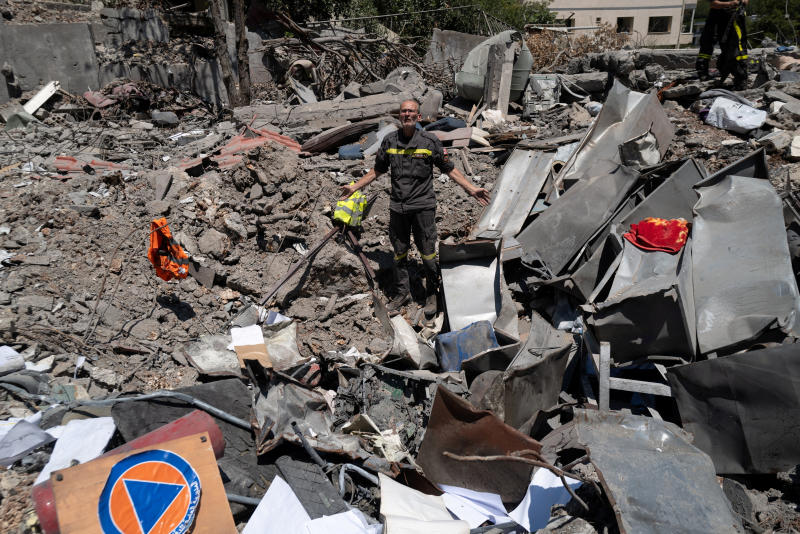
On Thursday, Hezbollah said its fighters were engaged in fresh clashes with the Israeli military, hours after Lebanese state media reported that Israeli strikes in the south killed three people.
Hezbollah, an Iran-backed militant group, said it was fighting "a force of the Israeli enemy army that attempted to advance from the town of Arnoun towards the outskirts of Kfar Tibnit", near the key town of Nabatieh.
"The clashes are still ongoing," it added in the statement released in the late afternoon.
Hezbollah drew Lebanon into the Middle East war in March by attacking Israel to avenge the killing of Iran's supreme leader at the start of the US-Israeli campaign.
Israel retaliated with broad strikes across Lebanon and by launching a ground invasion in the south, which borders Israel and has long been under Hezbollah's sway.
Lebanon's official National News Agency (NNA) reported on Thursday that "an enemy drone targeted a car" in the Kfar Tibnit area, killing two people.
In the neighbouring village of Zebdine, another drone killed one more person, NNA said.
Israel's military, meanwhile, announced the death of one of its soldiers the night before in an incident in south Lebanon that also left seven others wounded.
United Nations (UN) Secretary General Antonio Guterres' spokesman, Stephane Dujarric, said that peacekeepers in Lebanon had also reported exchanges of fire on Thursday.
"So far today, 143 trajectories of projectiles were observed. Of these, 119 were attributed to the Israel Defence Forces (IDF), with the remainder to Hezbollah," Dujarric said at a daily briefing.
"Yesterday, 364 projectile launches were observed, of which 330 were attributed to the IDF and 34 to Hezbollah."
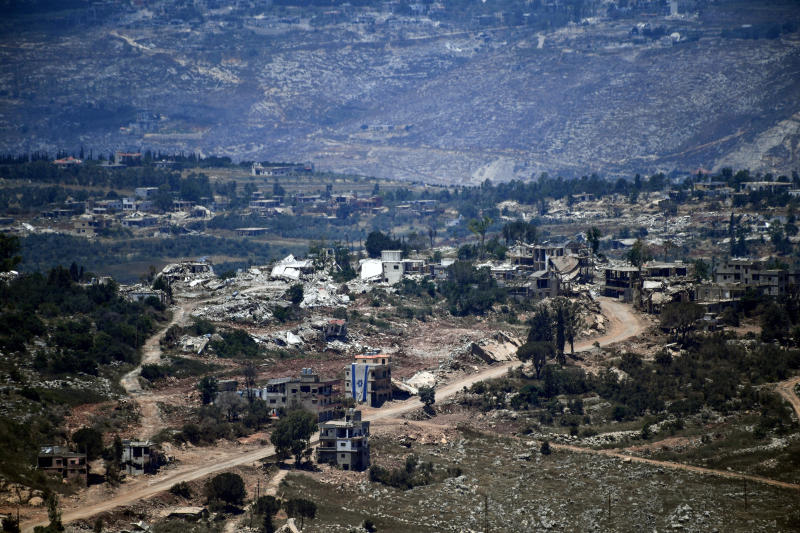
In an earlier statement, Hezbollah said on Thursday that its fighters had repelled a four-day Israeli offensive towards the Ali al-Taher hills and Kfar Tibnit.
The Ali al-Taher hills are a strategic height overlooking Nabatieh and are believed to hold important Hezbollah military infrastructure.
Hezbollah said it had attacked Israeli troops and tanks with drones, rockets and artillery, forcing them to retreat "under the cover of smoke screens and artillery fire during the night".
Also on Thursday, the head of Hezbollah's parliamentary bloc, Mohammad Raad, said that Israel's war in Lebanon had "failed" to eliminate the group.
He also called on Lebanese authorities to "adopt a framework for indirect negotiations with the enemy" to stop the fighting.
He said the Israeli military must "fully comply with the cessation of hostilities on land, at sea and in the air, and prepare for and begin withdrawal within 60 days, without any need whatsoever for direct negotiations".
The Israeli military, however, said on Thursday that it would continue to operate in southern Lebanon even after the US and Iran signed their agreement.
The military also published a map of its so-called security zone - which runs some 10km inside Lebanese territory and includes the area where Hezbollah said it had confronted the Israeli offensive.
It said troops would remain there "to remove threats and strengthen the defence of Israel's northern residents".
In a later statement, an Israeli military official said the army would also "continue to remove threats to IDF soldiers and the civilians of the State of Israel that are identified beyond the security zone".