African proverbs are renowned for their profound understanding of human relationships, community life, and social responsibility. Passed down through generations, these sayings often contain lessons that remain relevant regardless of time or culture. They speak not only about individuals but also about the responsibilities communities have toward one another.
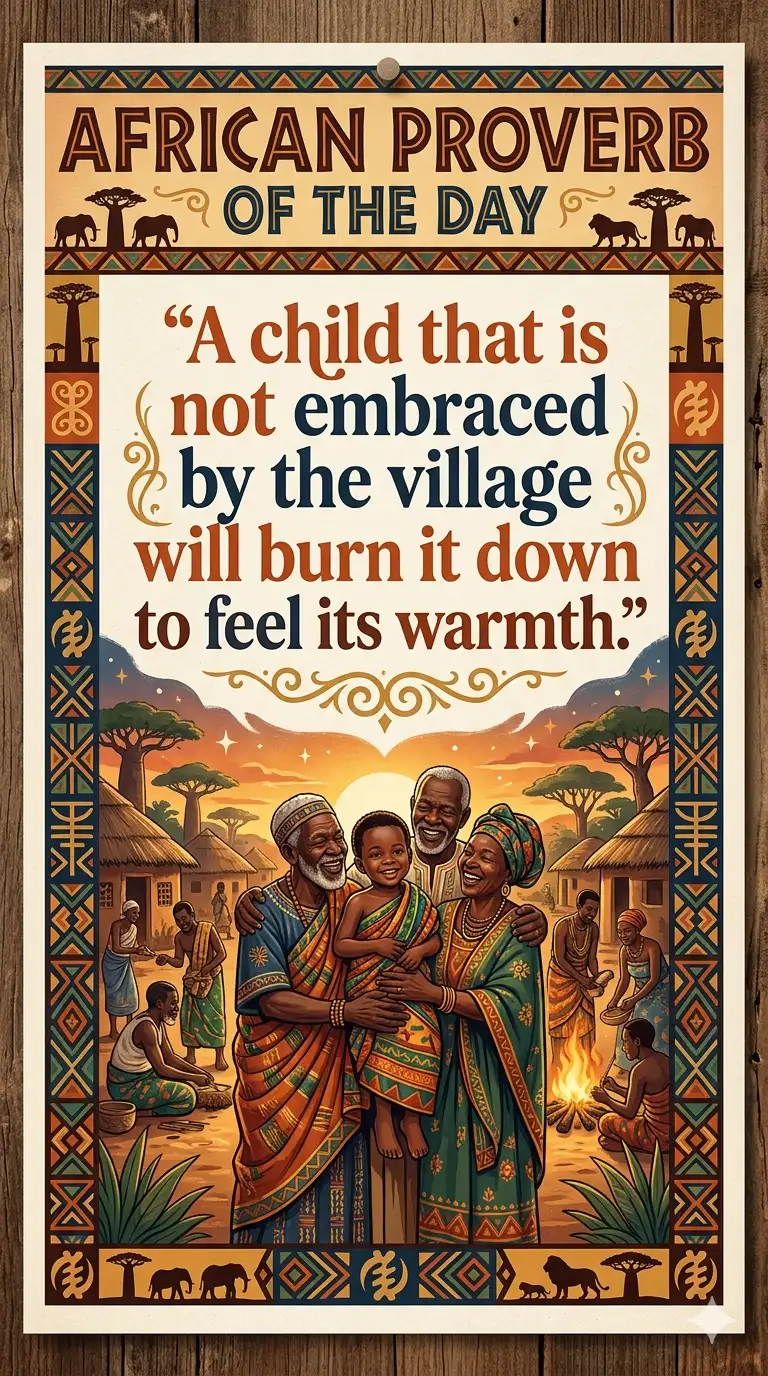
African Proverb of the Day
One of the most powerful and thought-provoking African proverbs states:
“A child that is not embraced by the village will burn it down to feel its warmth," as per Goodreads.
This striking proverb uses dramatic imagery to communicate an important truth about human nature. It suggests that when children are neglected, rejected, ignored, or excluded by their families or communities, they may eventually seek attention, recognition, or belonging in destructive ways. The proverb is not merely about children—it is about the universal human need to feel accepted, valued, and connected.
In an era marked by social isolation, mental health challenges, and increasing concerns about youth development, this ancient African wisdom remains deeply relevant.
The Meaning of the Proverb
At its core, the proverb teaches that human beings need love, acceptance, and a sense of belonging. The “village” symbolizes family, community, society, and the support systems that nurture individuals. The “child” represents anyone who feels unseen, neglected, or disconnected from those around them.
When the proverb says the child may “burn it down to feel its warmth,” it does not necessarily refer to literal destruction. Instead, it highlights how people who feel rejected may seek attention, validation, or recognition through harmful behaviors.
A child who feels ignored may act out. A teenager who feels disconnected may engage in risky behavior. An adult who feels excluded may express frustration in unhealthy ways.
The proverb teaches that many destructive actions are often rooted in unmet emotional needs rather than simple malice.
The Cultural Wisdom Behind the Saying
Traditional African societies often emphasized collective responsibility. Children were not viewed solely as the responsibility of parents but as members of a wider community.
The phrase “it takes a village to raise a child” reflects a similar philosophy.
In many African cultures, elders, neighbors, relatives, and community members all played roles in guiding and supporting young people. The well-being of one child was considered important to the well-being of the entire community. This proverb reflects that understanding.
It reminds communities that neglecting vulnerable individuals can have consequences not only for those individuals but also for society as a whole.
The wisdom recognizes that inclusion, care, and guidance are investments in a healthier future.
The Meaning of Belonging
One of the deepest themes within this proverb is the importance of belonging. Human beings are social creatures. From childhood onward, people need connection, acceptance, and emotional support. Feeling valued contributes to confidence, resilience, and healthy development.
When people feel that they matter, they are more likely to contribute positively to their families, schools, workplaces, and communities.
Conversely, feelings of rejection can create loneliness, anger, and hopelessness. The proverb highlights a reality supported by modern psychology: emotional neglect can be as damaging as many physical hardships.
A person who feels disconnected often searches for belonging elsewhere, sometimes in unhealthy environments.
How This Proverb Applies to Family Life
The proverb carries powerful lessons for families.
Children thrive when they feel loved, supported, and understood. They need attention not only for their physical needs but also for their emotional well-being.
Parents who listen, encourage, and spend meaningful time with their children help build strong foundations of trust and self-worth.
The proverb also reminds adults that children often communicate emotional needs through behavior. What appears to be defiance, anger, or rebellion may sometimes be a cry for attention, understanding, or connection.
Strong family relationships provide the warmth that prevents feelings of emotional isolation.
When children feel embraced, they are more likely to develop confidence, empathy, and healthy relationships.
How the Proverb Applies to Schools and Communities
The wisdom of this proverb extends beyond the family. Schools play a critical role in helping children feel valued and included. Teachers, mentors, and peers can significantly influence a child's sense of belonging.
Students who feel connected to their school communities often perform better academically and socially.
Communities also bear responsibility for creating environments where young people feel supported. Programs that encourage mentorship, education, recreation, and community engagement provide positive pathways for growth. The proverb reminds society that investing in young people is not merely an act of kindness—it is essential for social stability and progress.
Why This Proverb Is Especially Relevant Today
Modern society faces growing challenges related to loneliness, social isolation, and mental health. Many young people struggle with feelings of disconnection despite living in a digitally connected world. Social media can create the appearance of connection while sometimes deepening feelings of exclusion.
The proverb speaks directly to these realities. It reminds parents, educators, leaders, and communities that emotional support matters.
The saying is also relevant in discussions about youth violence, bullying, crime prevention, and mental health. Research frequently shows that individuals who feel connected to supportive relationships are more likely to thrive. Communities that foster inclusion tend to be healthier, safer, and more resilient. The proverb offers a powerful reminder that prevention often begins with connection.
The Underlying Theme: Compassion Creates Stronger Communities
The central theme of this African proverb is compassion. It teaches that people flourish when they feel valued, accepted, and supported. Another major theme is collective responsibility. Communities share a role in nurturing and guiding future generations.
The proverb also emphasizes empathy. Understanding emotional needs can help address problems before they become destructive.
Most importantly, it highlights the transformative power of belonging. People who feel embraced are more likely to contribute positively to the world around them.
“A child that is not embraced by the village will burn it down to feel its warmth” is far more than an African proverb. It is a timeless lesson about belonging, compassion, and the responsibilities communities have toward their members.
The saying reminds us that behind many struggles lies a simple human need: the desire to feel seen, valued, and connected.
In a world where loneliness and disconnection are increasingly common, its message remains profoundly important. Families, schools, communities, and societies all have a role to play in creating environments where people feel accepted and supported.