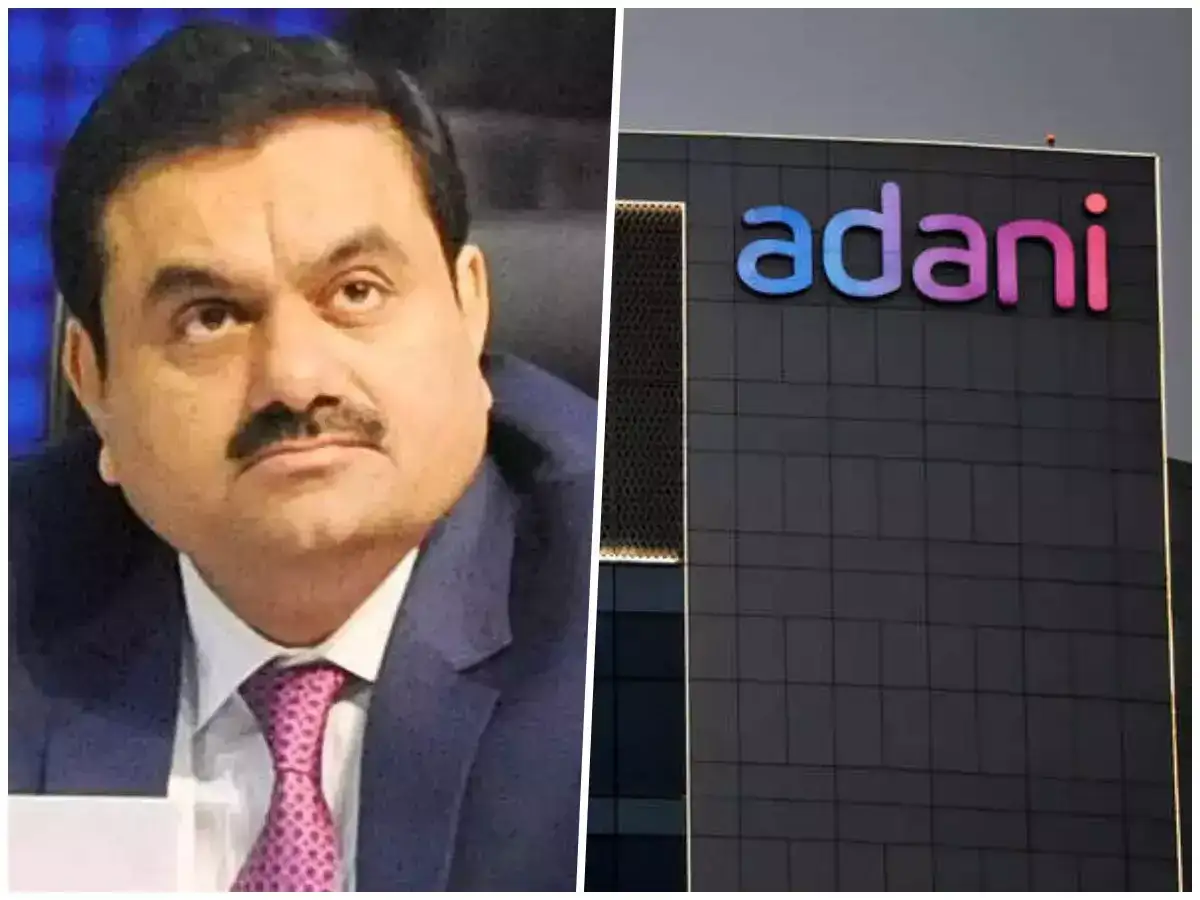
For decades, the Adani story at sea was largely about ports -- giant cargo terminals, logistics corridors and the movement of trade across India’s coastline. Now, the group is preparing for a very different kind of maritime ambition. It is diving right into the depths of Europe’s oceans. Through a new partnership between its arm Astro Offshore and US-based Oceaneering International, Adani Ports and Special Economic Zone Ltd (APSEZ) is entering Europe’s specialised offshore and subsea market, a business that involves deepwater engineering, underwater infrastructure and offshore energy.
Also Read: Adani Ports bets Rs 13,000 crore by FY31 for Europe subsea expansion
The move marks one of the boldest strategic expansions undertaken by APSEZ so far, taking it far beyond conventional port operations and into the technologically demanding world of ultra-deepwater marine services. In doing so, Adani is attempting to reposition APSEZ not merely as India’s largest private ports operator, but as a globally integrated maritime infrastructure and offshore-services platform.
Adani's strategic shift beyond ports
The significance of the Oceaneering partnership lies in the nature of the business APSEZ is entering. This is not an extension of conventional port operations such as cargo loading, towage or harbour management. Instead, it is a move into specialised offshore and subsea services, one of the most technically sophisticated segments of the global maritime industry.
Subsea operations involve underwater engineering activities that support offshore energy and marine infrastructure projects. These include pipeline installation, cable laying, underwater construction, inspection and maintenance of offshore assets, intervention work in deepwater environments and support for offshore oil and wind infrastructure. Such projects require highly advanced vessels equipped with dynamic positioning systems, subsea cranes, remotely operated vehicles (ROVs), moonpools and deepwater operational capability.
Also Read: Adani Ports names insider Niraj Bansal as CEO-Ports, Pranav Choudhary exits
This is where Oceaneering International becomes strategically important. The US-based company is among the world’s recognised specialists in offshore engineering, applied technology and subsea robotics. Its expertise in deepwater engineering and ROV systems gives APSEZ access to capabilities that would otherwise take years to develop organically. By combining Oceaneering’s technical know-how with Astro Offshore’s growing fleet, Adani is attempting to accelerate its entry into complex offshore markets rather than building capabilities from scratch.
“This development supports APSEZ’s ambition to build a globally diversified marine platform. By combining Astro Offshore’s expanding high-specification fleet with Oceaneering’s deepwater engineering and ROV expertise, we are enhancing our capabilities in complex offshore operations while expanding into Europe,” said Mr Ashwani Gupta, Whole-time Director and Chief Executive Officer (CEO), APSEZ.
The importance of Astro offshore
Although the Europe announcement appears transformational, the foundations of this business have been under construction for several years. Adani’s marine-services ambitions first became visible through the acquisition of Ocean Sparkle in 2022. Ocean Sparkle was India’s largest third-party marine-services company, operating tugboats, pilot vessels, harbour support services and offshore support operations across Indian ports and select overseas markets. That acquisition gave APSEZ a large operational base in marine support services and significantly expanded its non-port maritime capabilities. However, Ocean Sparkle remained primarily focused on harbour and coastal operations. The real offshore push emerged through Astro Offshore.
Astro Offshore, a Dubai-based offshore vessel operator acquired by APSEZ in 2024, represented a very different kind of marine business. Unlike traditional harbour services, Astro specialises in offshore support vessels, multipurpose support vessels, anchor handling tug supply vessels, ballastable barges and deepwater marine support operations. It operates across the Middle East, Africa and Asia, serving energy and infrastructure clients.
The acquisition effectively gave APSEZ an international offshore-services platform overnight. According to the company, Astro Offshore already operates a fleet of more than 50 vessels and is positioning itself as one of the region’s youngest and most technologically advanced offshore fleets.
The latest addition to that fleet -- the Energy Savannah, which will be renamed Astro Atlas -- illustrates how rapidly Adani is upgrading its offshore capability.
Why Astro Atlas matters
The introduction of Astro Atlas is central to understanding APSEZ’s offshore ambitions. The vessel is not simply another support ship. It is APSEZ’s entry ticket into the ultra-deepwater segment of offshore operations. Built in 2021, the 97-metre DP2 multipurpose support vessel is equipped with a 150-tonne subsea active heave compensated crane, a 25-tonne secondary crane, moonpool infrastructure and accommodation for up to 100 personnel. Most importantly, it can operate in water depths exceeding 3,000 metres. That capability dramatically changes the type of projects Astro Offshore can pursue.
Ultra-deepwater operations represent the premium end of offshore services. These projects typically involve subsea pipeline installation, deepwater construction, offshore wind infrastructure, underwater cable deployment, inspection and intervention work, and high-value engineering support. Such contracts are technically demanding, asset-intensive and significantly higher-margin compared with traditional marine support operations. Mark Humphreys, CEO of Astro Offshore, described Astro Atlas as the company’s “largest and most capable vessel to date,” highlighting its importance in enabling entry into more complex offshore markets.
Why Europe can be a real prize for Adani
Adani's new geographic focus is also noteworthy. Europe is currently one of the world’s most attractive offshore infrastructure markets due to the rapid expansion of offshore wind energy, subsea transmission networks and underwater energy infrastructure. The North Sea remains one of the most technologically advanced offshore regions globally, with extensive demand for subsea engineering and deepwater support services.
For APSEZ, entry into Europe serves multiple strategic objectives simultaneously. It diversifies the company beyond India-centric port revenues. While APSEZ already operates international ports in Israel, Tanzania, Sri Lanka and Australia, its earnings remain heavily tied to Indian trade volumes. Offshore marine services provide a new international revenue stream less dependent on domestic cargo cycles.
Europe also offers access to higher-value contracts. Offshore engineering and subsea infrastructure work typically command superior margins compared with conventional port operations or standard marine support services.
The move aligns APSEZ with long-term global energy-transition trends. Europe’s offshore wind expansion requires precisely the kind of specialised vessels and subsea capabilities Astro Offshore is now building. This positions Adani not only for oil and gas-related offshore activity, but also for renewable-energy infrastructure growth.
The Europe entry will burnish Adani’s global credibility. Operating in advanced offshore markets such as the North Sea requires technical standards, operational reliability and safety systems comparable to the world’s leading offshore-service companies. Success there would significantly elevate Adani’s standing as a global marine infrastructure operator.
Adani's evolving ports strategy
Instead of being an isolated diversification, Adani's offshore push fits into a much broader strategic evolution underway within APSEZ. Over the past decade, the company has steadily expanded from being a ports operator into a fully integrated transport and logistics platform. Today, APSEZ controls ports, logistics parks, rail networks, warehousing assets, trucking operations and international freight networks. Its strategy has increasingly focused on building “shore-to-door” logistics capability rather than merely operating ports.
Marine services now represent the next part of this strategy. The long-term roadmap is striking in scale. APSEZ has announced plans for a 200-vessel marine fleet by FY31, marine revenue of Rs 6,000 crore and planned capex of Rs 13,000 crore. These targets indicate that marine services are no longer peripheral to APSEZ’s business model but are becoming a major strategic vertical. In a way, APSEZ appears to be modelling itself after large global maritime infrastructure groups that combine ports, logistics, offshore services and marine engineering under integrated platforms.
What this could mean for Adani
With the Oceaneering partnership, APSEZ is entering a new phase of its evolution. The company is no longer content with being India’s largest private ports operator. It is attempting to become a global maritime and offshore infrastructure player with capabilities spanning ports, logistics, marine engineering and subsea operations. What makes this move particularly significant is that Adani is not entering the sector blindly. The groundwork has already been laid through Ocean Sparkle, the acquisition of Astro Offshore and the steady expansion of its marine fleet. The Europe entry is therefore less a standalone diversification and more the result of a carefully sequenced strategic buildout.
If executed successfully, the offshore-services expansion could reshape APSEZ’s earnings profile over the next decade. Traditional port businesses are volume-driven and heavily linked to trade cycles. Offshore engineering and subsea operations, by contrast, are technology-intensive and contract-driven. They often generate higher margins because of the specialised assets and expertise required. The business also creates recurring revenue opportunities through long-term offshore contracts, vessel charters, maintenance agreements, subsea inspection work and engineering support services. Moreover, offshore fleets can be deployed globally, allowing APSEZ to participate in energy and infrastructure projects across multiple regions rather than relying primarily on Indian trade growth.
At the same time, ultra-deepwater operations are capital-intensive and operationally complex. Fleet expansion requires large upfront investment, while offshore markets can be cyclical depending on energy prices and global infrastructure spending. APSEZ will also face competition from established global offshore-service providers with decades of technical experience.
Execution, therefore, becomes critical. The success of this strategy will depend on APSEZ’s ability to integrate technical expertise, maintain operational standards and secure high-value international contracts consistently. If Adani's strategy succeeds, it could fundamentally alter how investors view APSEZ -- from an Indian ports company tied to the country’s trade growth to a globally diversified marine infrastructure enterprise embedded in the future of offshore energy and subsea connectivity.