
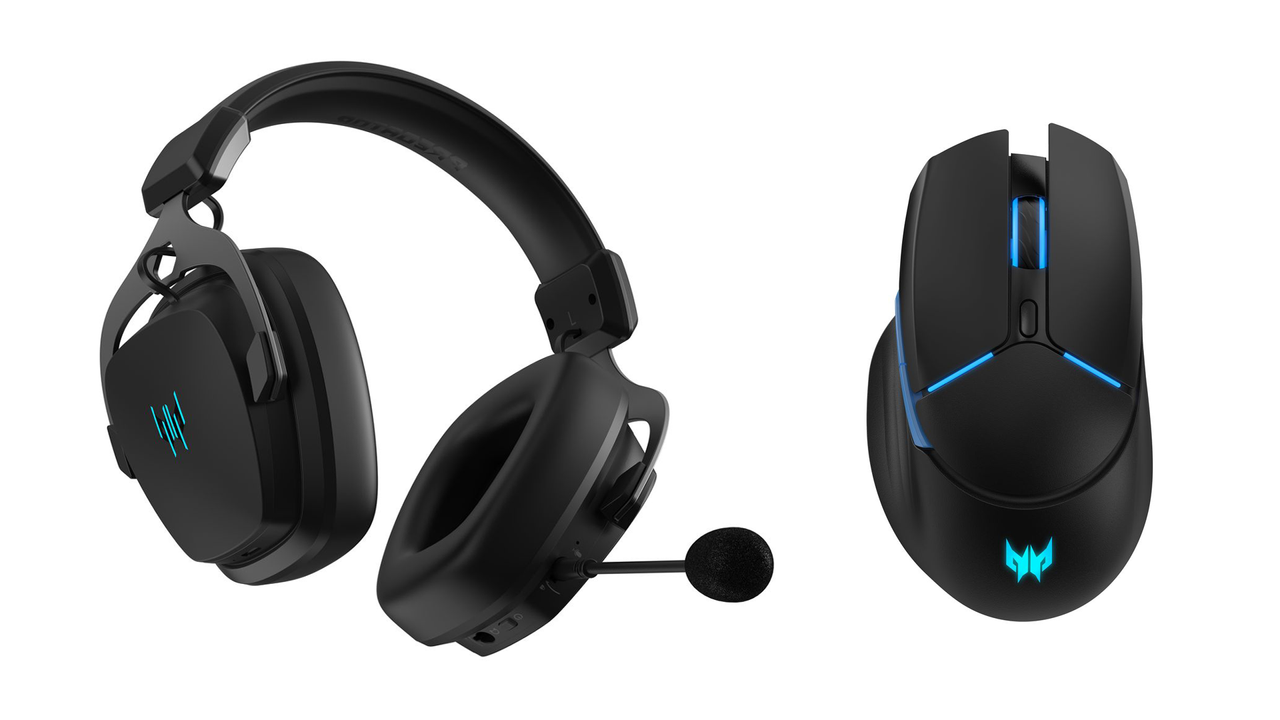
VEGAS — It looks like Acer is trying to break into the premium peripherals market, as it announced a couple of fancy-looking gaming peripherals at CES 2026 alongside its new Nitro gaming laptops. Okay, these aren't brand-new lines or anything, but it's definitely been awhile since Acer has done much with gaming peripherals — the last Acer gaming mouse we reviewed was the Predator Cestus 350 in 2020.
Anyway, it seems like the brand is trying to get in on selling a whole premium gaming experience with its laptops, as there's a new wireless over-ear headset (the Predator Galea 570) and a new wireless 8K polling gaming mouse (the Predator Cestus 530) dropping sometime in the first quarter of this year.
First up is the Predator Galea 570 headset, which is a wireless over-ear (circumaural) gaming headset with a detachable boom microphone. It definitely looks more premium than Acer's previous headsets, with matte metal (?) yokes and plush leatherette-covered earpads, though of course it still has the Acer Predator logo on the earcups (complete with customizable RGB lighting). It features three forms of connectivity: 2.4GHz wireless, Bluetooth 5.4, and wired (3.5mm), and has both a detachable boom mic and a built-in mic for when (if) you want to use it away from your PC.
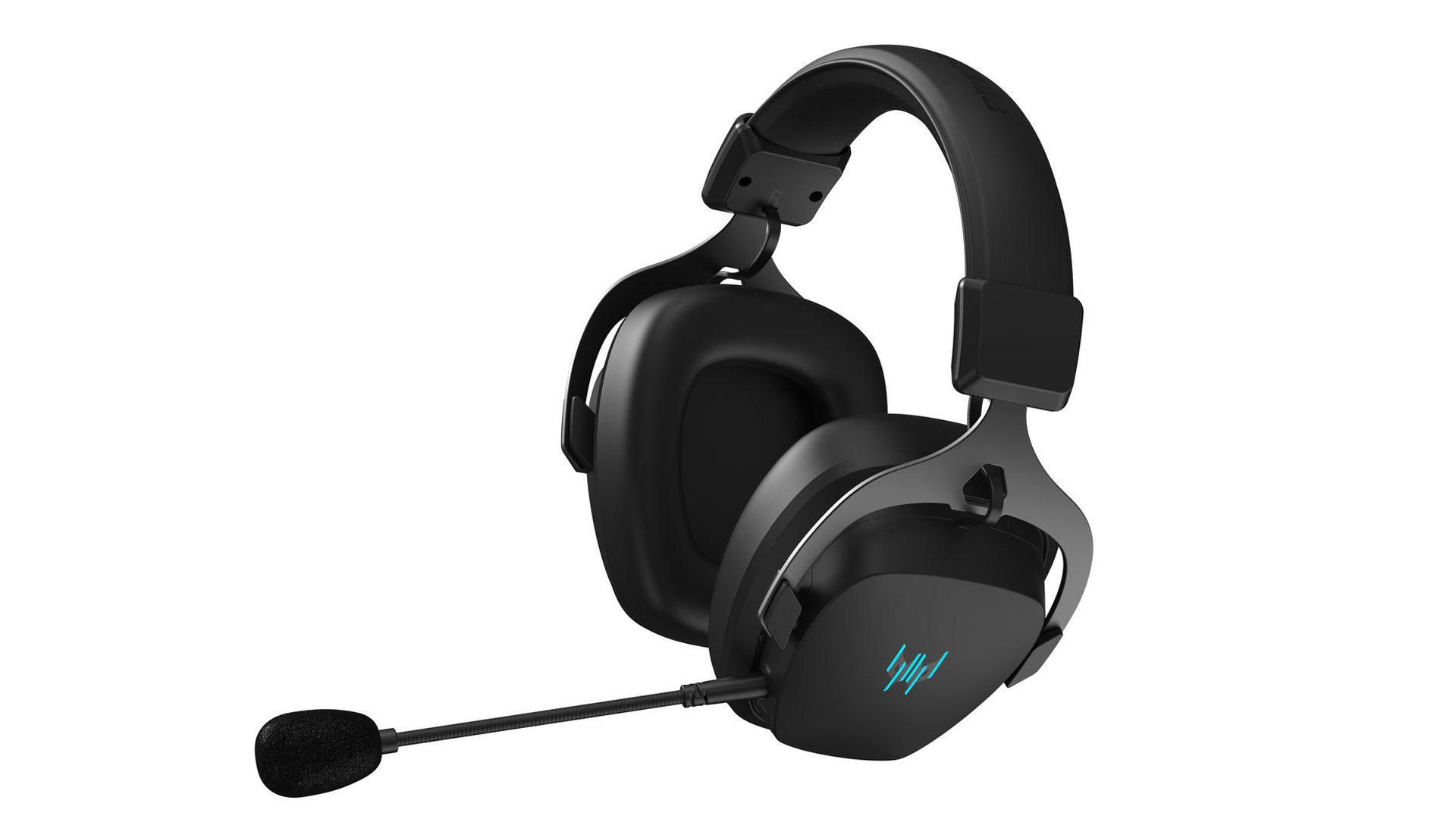
The headset sports 50mm dynamic drivers with an impedance of 32Ω (±15%) and a maximum input power of 40mW. According to Acer, both the detachable boom mic and the built-in mic will work with the headset's ENC (Environmental Noise Cancellation), which "continuously suppresses ambient noise to highlight the user's voice." The headset has a 1,000mAh battery and Acer rates its battery life at 23 hours over a 2.4GHz wireless connection (30 hours over a Bluetooth connection), which is... not great, to be honest; most of the wireless gaming headsets we've tested recently get at least twice that (and many get more than three times that). The Galea 570 is on the lighter side — it weighs just under 11 ounces (310.5g) — but similarly-lightweight headsets still do much better: the Turtle Beach Atlas Air weighs 10.61 ounces (301g) and gets 50 hours; the SteelSeries Arctis Nova 5 weighs 9.5 ounces (265g) and gets 50 - 60 hours.
The Galea 570 will go on sale sometime in Q1 2026 and retail for $149, which puts it in the same price range as the Arctis Nova 5 — though, of course, you can also find the HyperX Cloud III S Wireless (one of the best gaming headsets we've tested) on sale at the moment for the same price.
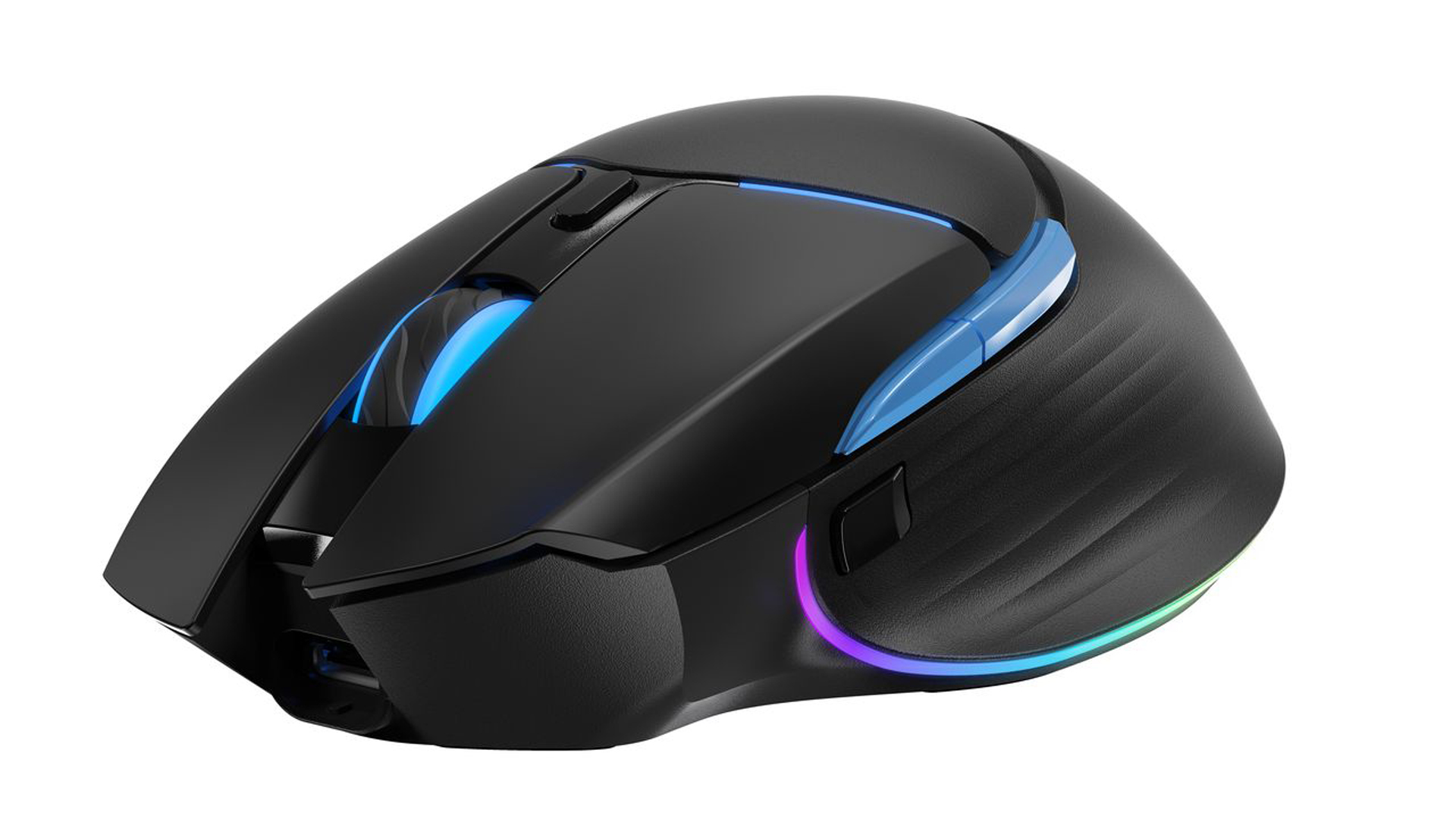
Next up is the Predator Cestus 530 gaming mouse — a wireless gaming mouse with a PixArt PAW3395 optical sensor and a polling rate of up to 8,000 Hz (both wired and wireless). The Cestus 530 looks like a pretty standard all-purpose gaming mouse — it has a right-handed contoured shape similar to that of the Razer Basilisk V3 Pro 35K or the Logitech G502 X Plus, with large primary buttons, two thumb buttons and a trigger button, and a curved thumb rest for comfort. It has a gamer-y design, with what looks like three customizable RGB lighting zones on top, as well as underlighting. The mouse features three forms of connectivity: 2.4GHz wireless, Bluetooth, and wired.
Unlike most of the wireless gaming mice with 8K polling rates on the market today, this isn't an ultra-lightweight mouse aimed at competitive eSports players. It does have an excellent sensor — the PixArt PAW3395 has a maximum resolution of 26,000 DPI and a maximum speed of 650 IPS and can handle up to 50 G's of force — but it weighs around 105g (3.7oz), which makes it pretty hefty compared to something like the 60g Logitech G Pro X Superlight 2 Dex or the 56g Razer DeathAdder V4 Pro (that said, it is lighter than the 112g Basilisk V3 Pro 35K, so there's that). The mouse measures 4.96 x 2.87 x 1.65 inches (126 x 73 x 42mm), so it's on the larger side. Also, Acer says the mouse's primary switches are rated for up to 80 million clicks, but didn't mention if they were optical, mechanical, or hybrid (though if I had to guess, I'd say mechanical).
The Cestus 530 mouse will also hit shelves in the first quarter of this year, and it will retail for $109 — which makes it cheaper than a lot of the competition (though it's also heavier than a lot of the competition). There are a lot of wireless 8K gaming mice on the market right now, and the more budget-friendly models still start a bit higher (e.g., the Turtle Beach Burst II Pro we just looked at, which retails for $139.99) — and also tend to be stripped-down pseudo-symmetrical mice aimed at FPS gamers.

Follow Tom's Hardware on Google News, or add us as a preferred source, to get our latest news, analysis, & reviews in your feeds.